
Beautiful Plants For Your Interior
Beautiful Plants For Your Interior
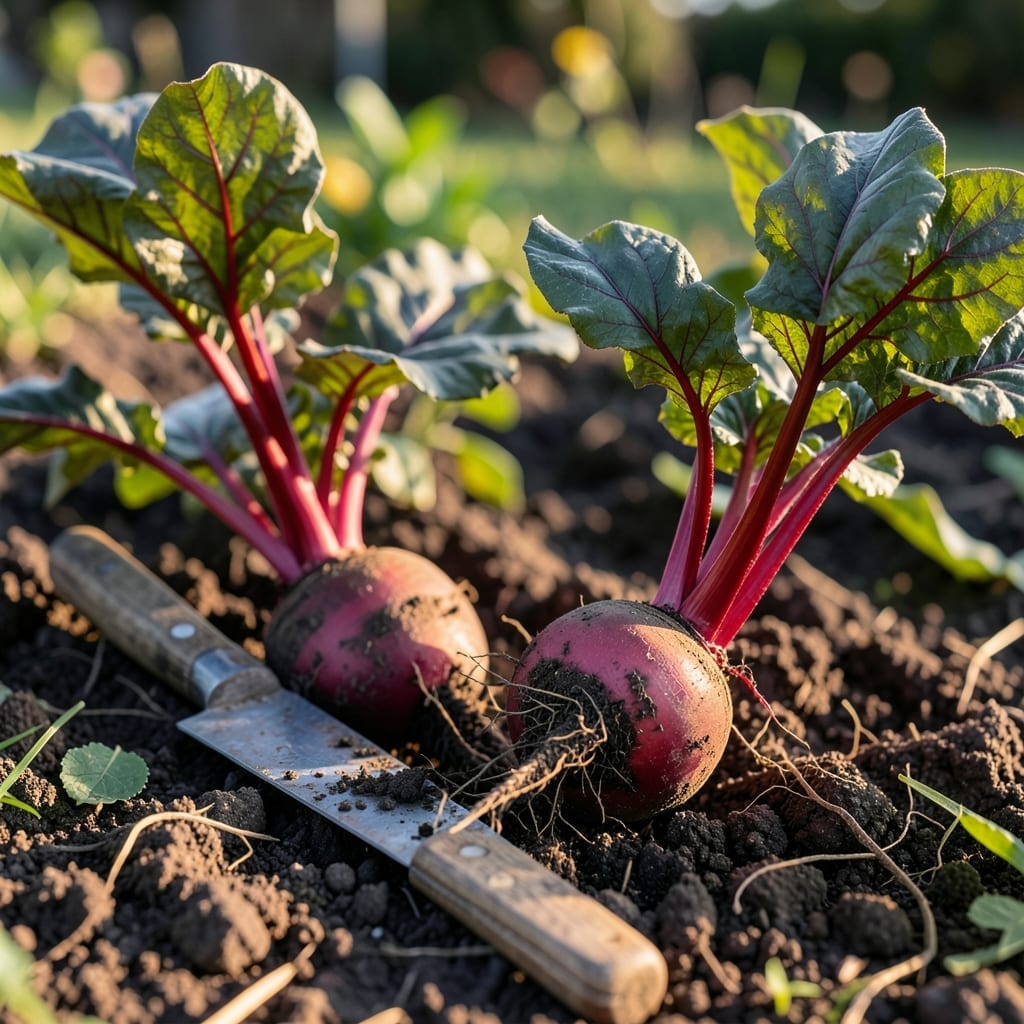
There’s nothing quite like pulling fresh 🟣 Beetroot from your garden, but how do you know it’s truly ready? Timing the harvest perfectly makes all the difference for flavor and texture.
I’ve learned that waiting for the right moment prevents woody or bitter roots. Whether you’re growing them for salads or roasting, recognizing the signs is the key to success.
From shoulder exposure to ideal size, there are clear indicators that your Beetroot has reached its peak. I’ll show you exactly what to look for without disturbing the roots.
Discover how to read your plants’ signals and enjoy the sweetest, most tender harvest every time.


Timing your beetroot harvest perfectly depends on the variety you’ve planted. Early types like Babybeat may be ready in 50 days, while larger Detroit Dark Red often needs 60-70 days to reach full size.
Growing conditions also play a huge role. Beets thrive in loose, well-draining soil with full sun (6+ hours daily) and consistent moisture. Cooler climates can slow growth, while warm, fertile soil speeds it up.
| Variety | Days to Maturity | Size at Harvest |
|---|---|---|
| Babybeat | 50-55 | 1-1.5 inches |
| Boltardy | 55-65 | 2-3 inches |
| Detroit Dark Red | 60-70 | 2.5-3.5 inches |
| Golden Beet | 60-75 | 2-3 inches |
I’ve found that soil temperature matters a lot. Beets grow best when soil is between 60-70°F. If your spring is cold, consider starting seeds indoors or using row covers to warm the earth.
Another factor is planting depth. Sow seeds ½ inch deep and 1 inch apart. Crowded beets compete for nutrients, which can delay maturity by 10-15 days. Thin seedlings to 3-4 inches apart once they sprout.
Watering consistently is key. 1 inch per week keeps roots plump. Drought stress causes woody, bitter beets, so I check soil moisture daily during dry spells and water in the early morning to prevent evaporation.
If you’re growing in containers, ensure pots are at least 12 inches deep. Shallow containers restrict root growth, leading to smaller, slower-maturing beets. Use a well-draining potting mix with compost for best results.
For a continuous supply, I stagger plantings every 2-3 weeks. This way, I harvest tender baby beets at 50 days while larger varieties reach peak size later. It’s a great way to extend your beetroot season from early summer to fall.
Over-fertilizing can cause excessive leaf growth at the expense of roots. I use a balanced 5-10-10 fertilizer sparingly, applying it once at planting and again when plants are 4 inches tall. This supports steady, healthy growth.
Finally, remember that beet greens are edible too! You can harvest a few outer leaves without harming the root. This won’t affect the root maturity but gives you an early taste of your crop.
By tracking these factors, you’ll know exactly when beetroot is ready for the best flavor and texture in your garden 🌱
Spotting the perfect harvest moment for beetroot is easier than you think. The first sign I look for is the shoulders peeking above the soil line, which usually means the roots are nearing maturity.
Another clear indicator is root size. Most varieties are ready when they reach 1-3 inches in diameter. Anything smaller than a golf ball needs more time, while oversized roots can turn woody.
I always check the skin texture too. Ready beets have a smooth surface with vibrant color. If the skin looks rough or cracked, the roots may be overmature or struggling with inconsistent watering.
For a non-invasive check, I gently brush away soil around the base of the plant. This lets me assess the size and condition of the upper root without pulling the entire plant. If it’s not ready, I simply cover it back up.
Leaf health offers clues as well. When beets are nearing harvest, the foliage often looks crowded and robust. Small or sparse leaves usually mean the roots need more time to develop fully.
Finally, remember that baby beets can be harvested early at 1-1.5 inches for tender, sweet flavor. But for full-sized roots, patience pays off. I’ve found that 60-70 days is the sweet spot for most varieties under ideal conditions 🌱