
Beautiful Plants For Your Interior
Beautiful Plants For Your Interior
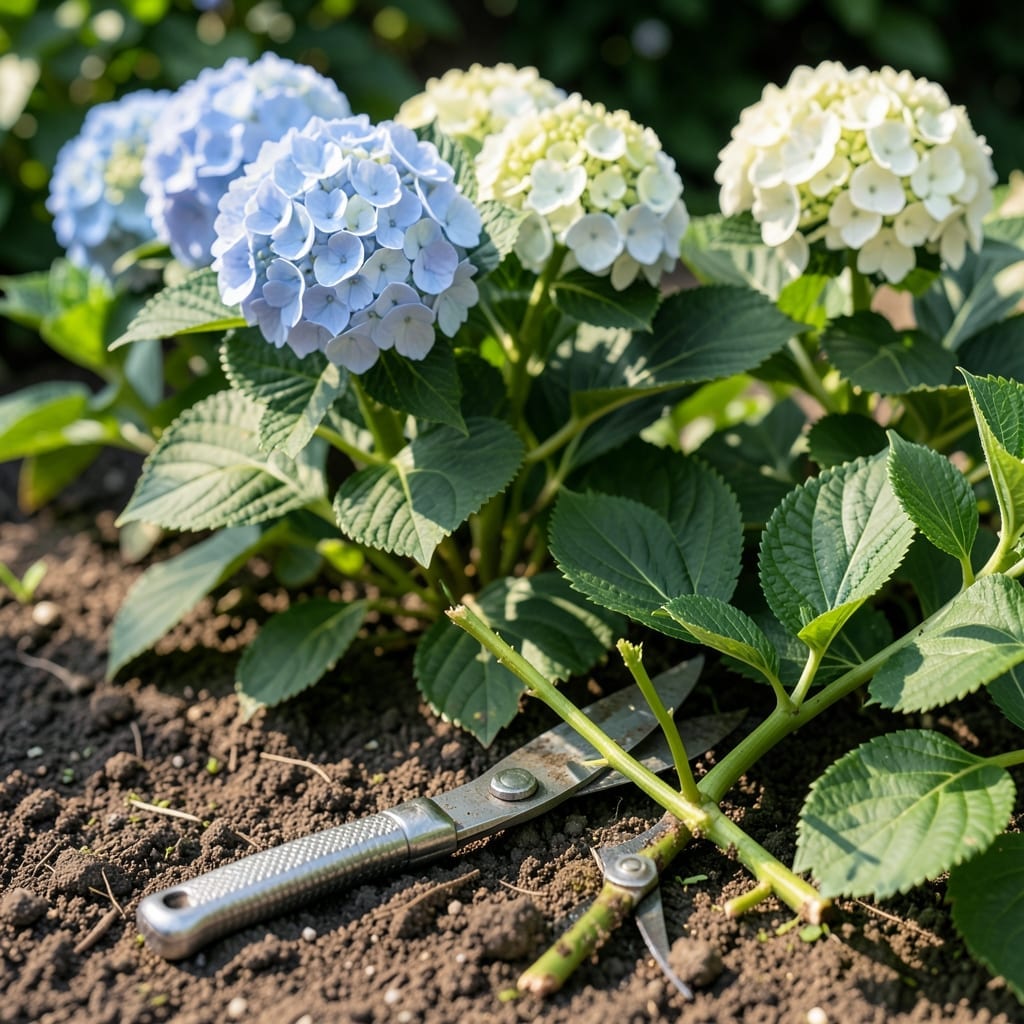
Trimming your 🌸Hydrangea at the wrong time can cost you a season of blooms. I learned this the hard way after accidentally pruning mine in fall and missing out on those beautiful flowers the next summer.
Timing is everything when it comes to keeping these shrubs healthy and vibrant. Whether you’re growing bigleaf or panicle varieties, knowing when to reach for those shears makes all the difference.
Discover the best seasonal windows to trim without harming your plant’s potential. Let me walk you through what works for each type.
I’ve found that the best pruning time depends entirely on your hydrangea variety. Each type has a unique blooming cycle, and trimming at the wrong time can destroy next year’s flowers before they even form.
For example, bigleaf hydrangeas bloom on old wood, meaning they set their flower buds in late summer. Pruning them in fall or winter removes those buds, leaving you with no blooms come spring.
Panicle hydrangeas are more forgiving because they bloom on new wood. I prune mine in late winter just before new growth starts, giving them plenty of time to develop strong stems and abundant flowers.
If you’re growing oakleaf hydrangeas, treat them like bigleaf varieties. They bloom on old wood, so I always wait until after they’ve finished flowering in summer before I reach for my pruning shears.
Smooth hydrangeas, like the popular Annabelle, also bloom on new wood. This means you can safely prune them in late winter or early spring, just like panicle types.
I always check my USDA zone too. In colder areas like Zone 5, I prune a little later in spring to avoid frost damage to new growth. Warmer climates in Zone 7 allow for earlier trimming.
The key is understanding whether your hydrangea blooms on old wood or new wood. I keep a simple garden journal to track my plants’ blooming cycles, which helps me remember the best pruning windows.
If you’re unsure about your hydrangea type, observe when it blooms. Plants that flower in early summer likely bloom on old wood, while those that flower in mid to late summer probably bloom on new wood.
I also recommend taking cuttings for propagation right after pruning. This way, you can expand your garden while keeping your plants healthy and well-shaped ✂️
Pruning hydrangeas correctly ensures healthy growth and abundant blooms. I always start by identifying my plant type, as this dictates the timing and method for the best results.
Using sharp bypass pruners is essential to make clean cuts without crushing stems. I also keep a pair of gardening gloves handy to protect my hands from thorns and sap.
Step 1: Identify Bloom Wood
Check if your hydrangea blooms on old wood or new wood to determine the pruning time.
Step 2: Remove Dead Wood
Cut back any dead or diseased stems to the base to improve airflow and plant health.
Step 3: Shape the Plant
Trim back overgrown stems by one-third to maintain a neat, balanced shape.
Step 4: Thin Out Crowded Areas
Remove weak or crossing branches to allow light and air to reach the center of the plant.
I always prune just above a bud node at a 45-degree angle to encourage healthy new growth. This helps prevent water from pooling on the cut surface, reducing the risk of disease.
For panicle hydrangeas, I remove about one-third of the oldest stems each year to rejuvenate the plant. This keeps the shrub vigorous and ensures plenty of new growth for blooming.
After pruning, I apply a layer of mulch around the base to retain moisture and protect the roots. This also helps suppress weeds that might compete with my hydrangeas for nutrients.
Finally, I water deeply after pruning to help the plant recover. A good soak ensures the roots have access to moisture during this critical time ✂️