
Beautiful Plants For Your Interior
Beautiful Plants For Your Interior
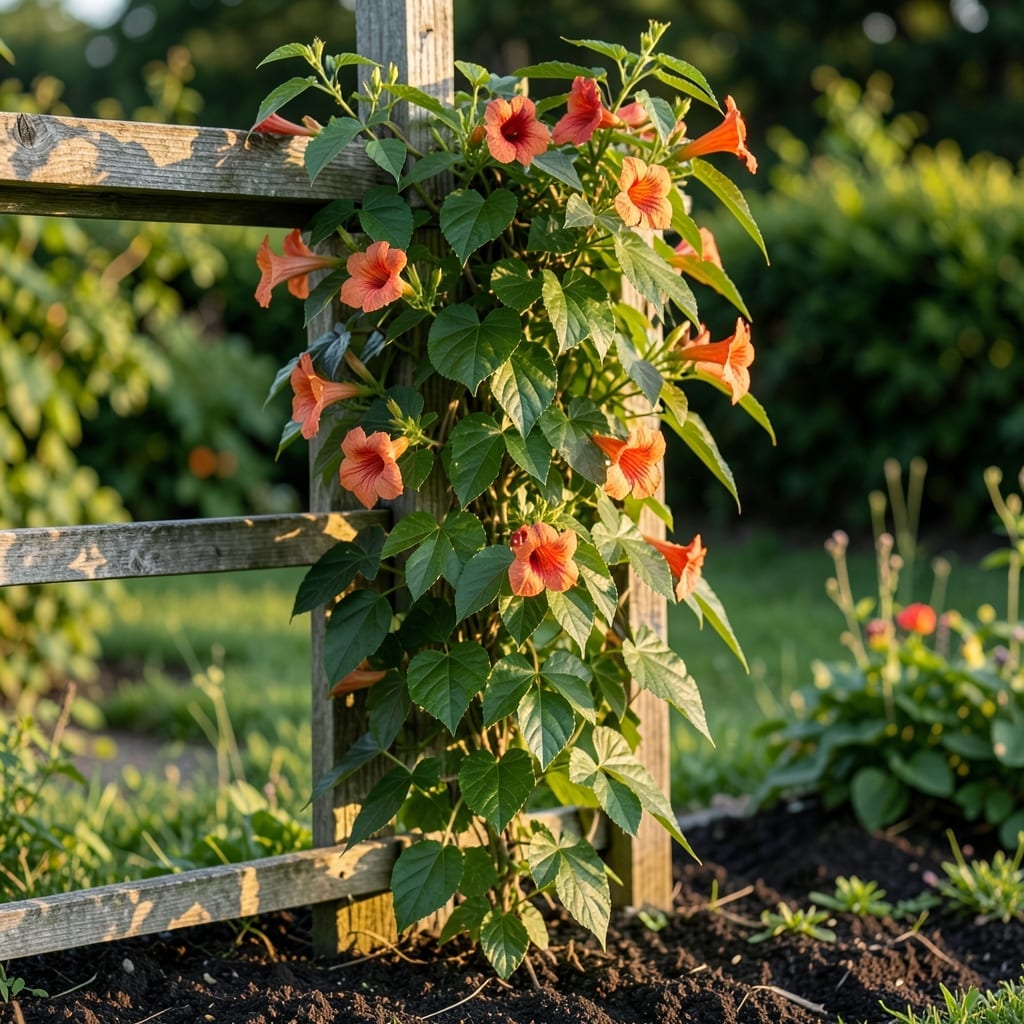
I get it – you planted your 🌸 Trumpet Vine with high hopes, but now you’re staring at leafy stems wondering when the show will start. Those vibrant blooms everyone raves about seem mysteriously absent from your garden.
Here’s what most gardeners don’t realize: timing is everything with these climbers. In zones 4-9, their performance follows a distinct seasonal rhythm that’s easy to miss if you’re not paying attention.
Let me walk you through exactly when to expect those hummingbird-magnet blossoms and what might be holding yours back from their full glory.
I’ve seen many gardeners scratch their heads wondering when their trumpet vine will finally burst into bloom. These vigorous climbers follow a predictable pattern, but timing varies by region and plant maturity.
In most areas, you can expect the first trumpet-shaped flowers to appear in mid to late summer, typically between July and September. This is when the vine has stored enough energy to produce its iconic blossoms.
| Stage | Timeline | Key Notes |
|---|---|---|
| Early Growth | Spring to Early Summer | Leaf development, no flowers yet |
| Bud Formation | June to Early July | Flower buds begin to appear |
| Peak Blooming | July to September | Most vibrant orange-red flowers appear |
| Late Blooming | September to Frost | Flowers continue until first frost |
First-year plants often focus on establishing their root system and vine growth. Don’t be alarmed if you see no blooms during this period. It’s perfectly normal for trumpet vines to wait until their second or third year to flower.
Mature vines, however, can be more reliable. I’ve noticed that in warmer climates like zones 7-9, blooming may start earlier, sometimes as soon as late June. Cooler areas in zones 4-6 might see flowers closer to August.
Climate plays a huge role. A long, hot summer can extend the blooming period, while a cool, wet spring might delay it. I always recommend keeping an eye on your local last frost date as a general guide.
The blooming process itself is fascinating. You’ll first notice small green buds forming along the stems. These gradually swell and change color, finally bursting open into those trumpet-shaped flowers that hummingbirds adore.
For gardeners in northern regions, the blooming window might be shorter. I’ve seen vines in Michigan that only flower for 4-6 weeks, while those in Texas can bloom for 2-3 months or more.
Remember that pruning timing affects blooming. Prune in late winter or early spring to encourage more flowers. Avoid heavy pruning in summer, as this can remove potential flower buds.
If your vine isn’t blooming by August, don’t panic. Check that it’s getting full sun (6+ hours daily) and isn’t over-fertilized, which can promote leaf growth at the expense of flowers. ☀️
I love helping gardeners get the most from their trumpet vines, and with a few simple tricks, you can coax those vibrant blooms to appear earlier or last longer. These methods have worked wonders in my own garden.
Timing and technique are everything. Start by ensuring your vine gets full sun exposure for at least 6-8 hours daily. This is non-negotiable for maximum flower production.
I’ve found that phosphorus-rich fertilizers work best for trumpet vines. Look for a 10-20-10 ratio to give your plant the right balance for flower production rather than just leafy growth.
A common mistake I see is over-watering. Trumpet vines are quite drought-tolerant once established. I water mine deeply once a week during dry spells, which seems to strike the perfect balance for blooming.
Don’t underestimate the power of proper pruning. I prune my trumpet vines in late February or early March, just before new growth starts. This gives the plant time to develop strong new stems that will produce flowers.
For an extra boost, I sometimes add compost tea or a liquid bloom booster in early summer. This can give your vine the extra energy it needs to produce those spectacular trumpet-shaped flowers that hummingbirds love. 🌿