
Beautiful Plants For Your Interior
Beautiful Plants For Your Interior
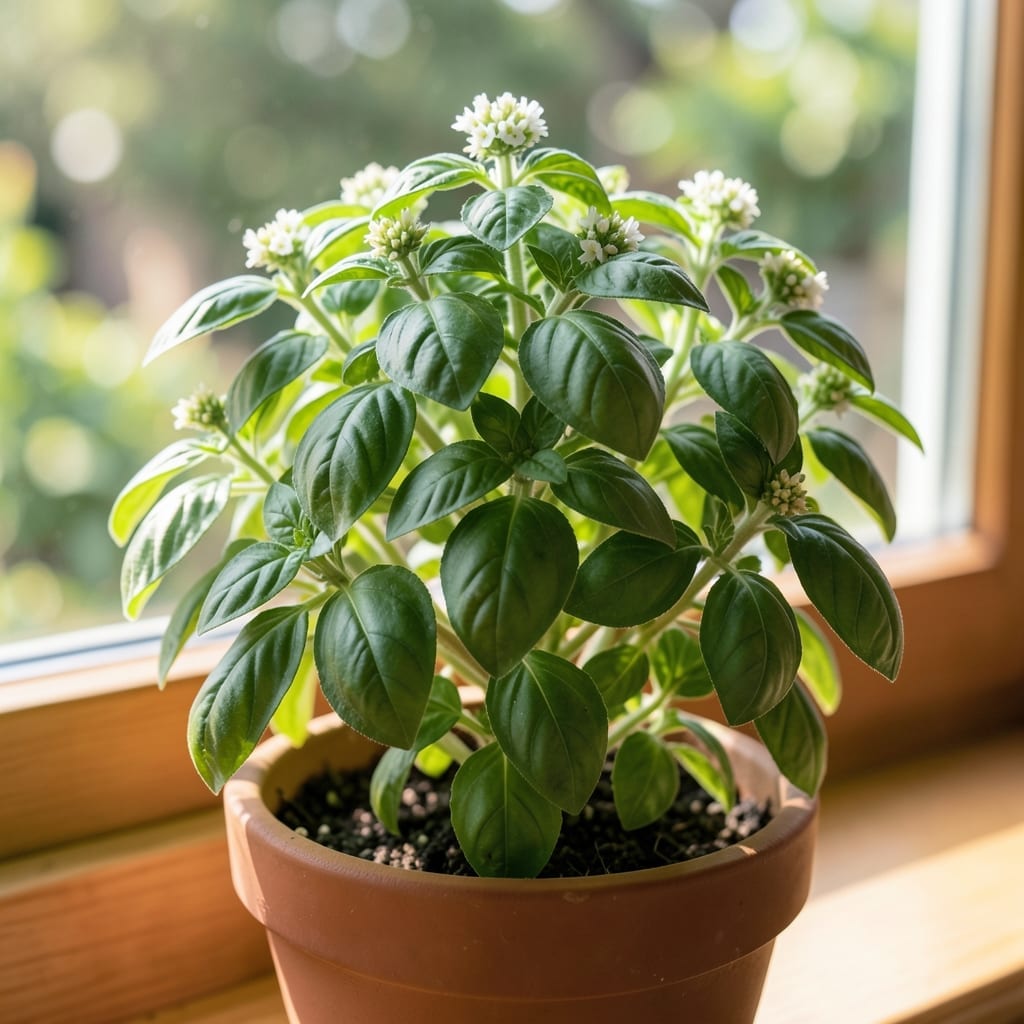
Noticing flowers on your 🌿 Basil plant can spark confusion. Are those pretty blooms a sign of success or a warning that your herb’s best days are behind it?
This natural phase in your plant’s lifecycle actually signals an important shift. Understanding the timing and meaning behind basil blooms can help you make the most important decisions for your garden.
I’ll walk you through what this flowering stage means for your plant’s flavor and growth. You might be surprised by how much control you have over the outcome.
Discover how to respond when you see those first buds appear, and how to keep your basil thriving longer than you thought possible.
When I see basil blooms in my garden, I know my plant is entering a new phase. This natural process typically occurs in late summer as the herb matures and shifts from leaf production to reproduction. 🌿
The appearance of small white flowers signals that your basil is responding to environmental cues like longer daylight hours and warmer temperatures. This is the plant’s way of ensuring its legacy through seeds.
🌱 Basil Blooming Basics
Basil typically blooms 60-90 days after planting when it reaches maturity and senses seasonal changes.
As a gardener, you’ll notice flower buds forming at the tops of stems first. These tiny clusters will eventually open into delicate blooms that can attract pollinators like bees to your garden. ☀️
The blooming phase marks a critical transition in your basil’s lifecycle. Once flowers appear, the plant begins diverting energy from leaf growth to seed production, which can affect both the quantity and quality of your harvest.
I’ve observed that Sweet Basil varieties often bloom earlier than Genovese types. The exact timing depends on your growing conditions, including sunlight, water, and soil fertility. Well-cared-for plants may bloom slightly later.
One important change during blooming is the flavor profile. Many gardeners report that basil leaves become more bitter as flowers develop. This is because the plant is producing different compounds to support reproduction.
For the best leaf harvest, I recommend monitoring your basil closely as it approaches 60 days old. Regularly check the stem tips for any signs of bud formation, which are your first warning of impending blooms.
In my experience, container-grown basil often blooms sooner than in-ground plants. This is typically due to root restriction and slightly different microclimates in pots. Keep this in mind if you’re growing in containers.
Understanding when basil blooms helps you time your harvests and pruning for maximum leaf production. The blooming stage isn’t bad—it’s just your plant’s natural progression. 🌱
When basil blooms, it signals a shift from leaf production to reproductive growth. This natural process can leave gardeners wondering whether to embrace the white or purple flowers or remove them.
Allowing basil flowers to bloom supports pollinators like bees and butterflies. However, the plant’s energy diverts from leaf growth, which may impact your harvest.
If your goal is maximizing leaf harvest, I recommend pinching off blooms as soon as they appear. This redirects the plant’s energy back to foliage growth and maintains sweet basil flavor.
For seed saving or pollinator gardens, letting a few plants flower is beneficial. Just be prepared for reduced leaf quality on those specific basil plants.
I’ve found that regular pruning of the top sets of leaves can delay blooming. This encourages bushier growth and extends your harvest season by several weeks.
Ultimately, the choice depends on your gardening goals. Whether you prioritize culinary use or ecological benefits, understanding these trade-offs helps you make the best decision for your basil plants 🌿