
Beautiful Plants For Your Interior
Beautiful Plants For Your Interior
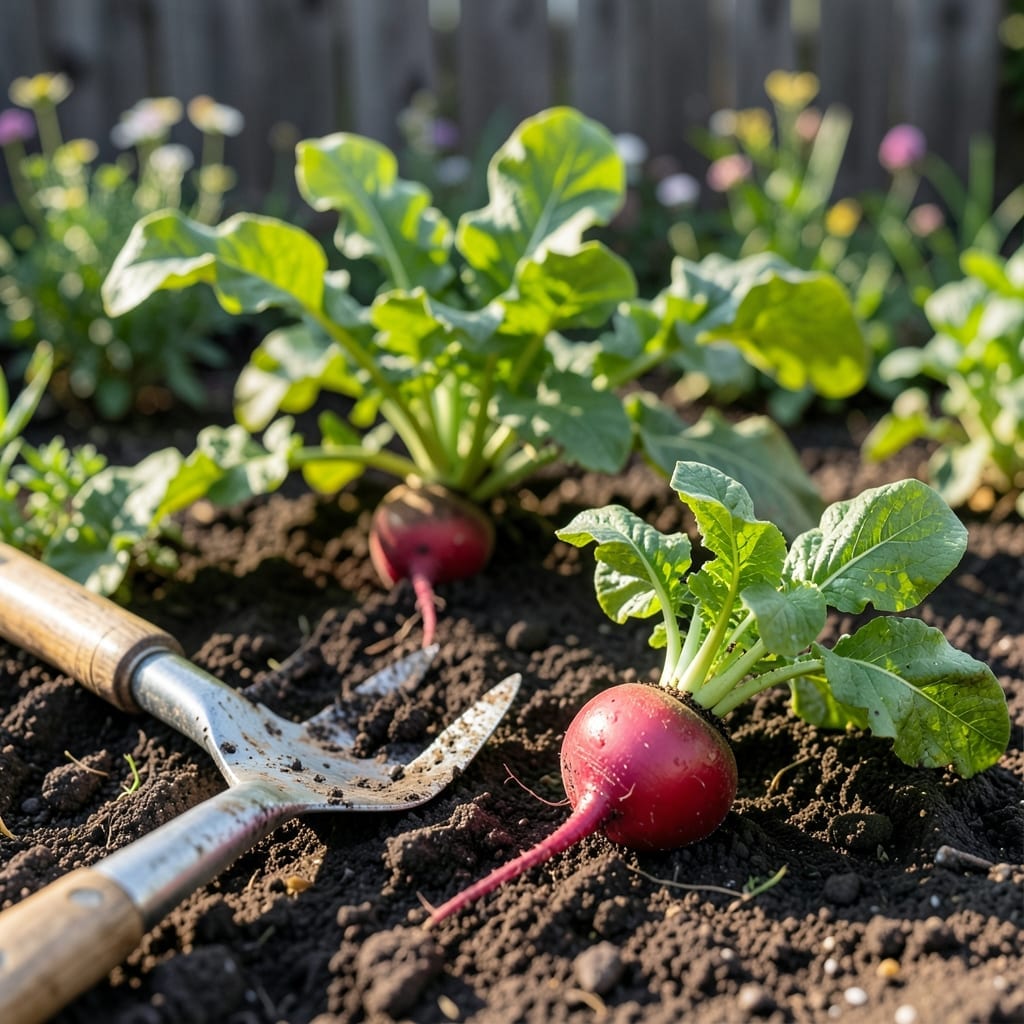
Knowing exactly when to harvest your 🥕 Radish crop can make the difference between a crisp, flavorful bite and a tough, woody disappointment. This fast-growing vegetable rewards patience and observation.
I’ve learned that timing is everything with Radishes. In as little as 25 days, you could be pulling up perfect roots ready for your table. The key is watching for those subtle visual cues.
Whether you’re growing in Zone 6 or elsewhere, the signs are universal. From shoulder emergence to leaf size, your plants will tell you when they’re at their peak.
Discover how to read these signals and never miss that optimal harvest window again. Let’s dig into the details that will transform your Radish game.


I always check for shoulder emergence first—when the top of the radish peeks above the soil, it’s a sure sign they’re nearing readiness. This usually happens when the root diameter reaches about 1 inch for most varieties.
The leaf size is another great indicator. When the tops reach 4-6 inches tall with healthy, vibrant green leaves, your radishes are likely ready. Smaller leaves often mean the roots need more time to develop.
| Visual Sign | Description |
|---|---|
| Shoulder Emergence | Top of root visible above soil |
| Leaf Size | Tops reach 4-6 inches tall |
| Root Diameter | 1-2 inches for most varieties |
| Color Change | Bright, uniform color on visible root |
For round radishes like Cherry Belle, I look for a diameter of 1-1.5 inches. This size ensures the perfect crisp texture and peppery flavor without any woodiness.
With elongated varieties such as French Breakfast, the shoulders will protrude more prominently. The visible portion should be about 1 inch wide and 2 inches long.
I’ve found that color changes are particularly noticeable in red radishes. When the exposed portion turns a deep, consistent red, it’s time to pull them. White or pale spots often indicate they need more time.
The soil conditions can affect visibility. In loose, well-draining soil, radishes will push up more easily. If your soil is compacted, gently brush away some dirt to check for shoulder emergence.
I always recommend checking a test radish first. If it’s smaller than 1 inch, give the rest a few more days. If it’s over 2 inches, harvest immediately to prevent them from becoming woody or pithy.
Remember that growing conditions like temperature and sunlight can speed up or slow down maturity. In cooler weather, radishes may take a few extra days to reach harvest size.
For the best results, I harvest in the morning when the soil is moist and the plants are well-hydrated. This makes pulling easier and helps preserve that fresh, crisp texture we all love.
🌱I’ve found that radish maturity times vary significantly by type. Most spring radishes like Cherry Belle are ready in just 25-30 days after planting. These are your classic round, red varieties that grow quickly in cool weather.
For elongated types such as French Breakfast, you’re looking at a similar 25-30 day window. Their oblong shape makes them easy to spot when the shoulders emerge from the soil.
Daikon radishes take much longer, typically 40-60 days to reach maturity. These winter varieties grow much larger and are best planted in late summer for a fall harvest.
I always remind gardeners that soil temperature affects growth speed. In cooler spring weather (60-65°F), radishes mature at the quoted times. But in warmer conditions, they may be ready 5-7 days earlier.
For fall plantings, the days to maturity might stretch slightly due to shorter daylight hours. I’ve noticed my late-season radishes often take an extra week compared to spring crops.
Remember that overcrowding can delay maturity. I always thin seedlings to 2 inches apart to ensure proper development. This gives each plant enough space to reach its full size on schedule.
🌱