
Beautiful Plants For Your Interior
Beautiful Plants For Your Interior
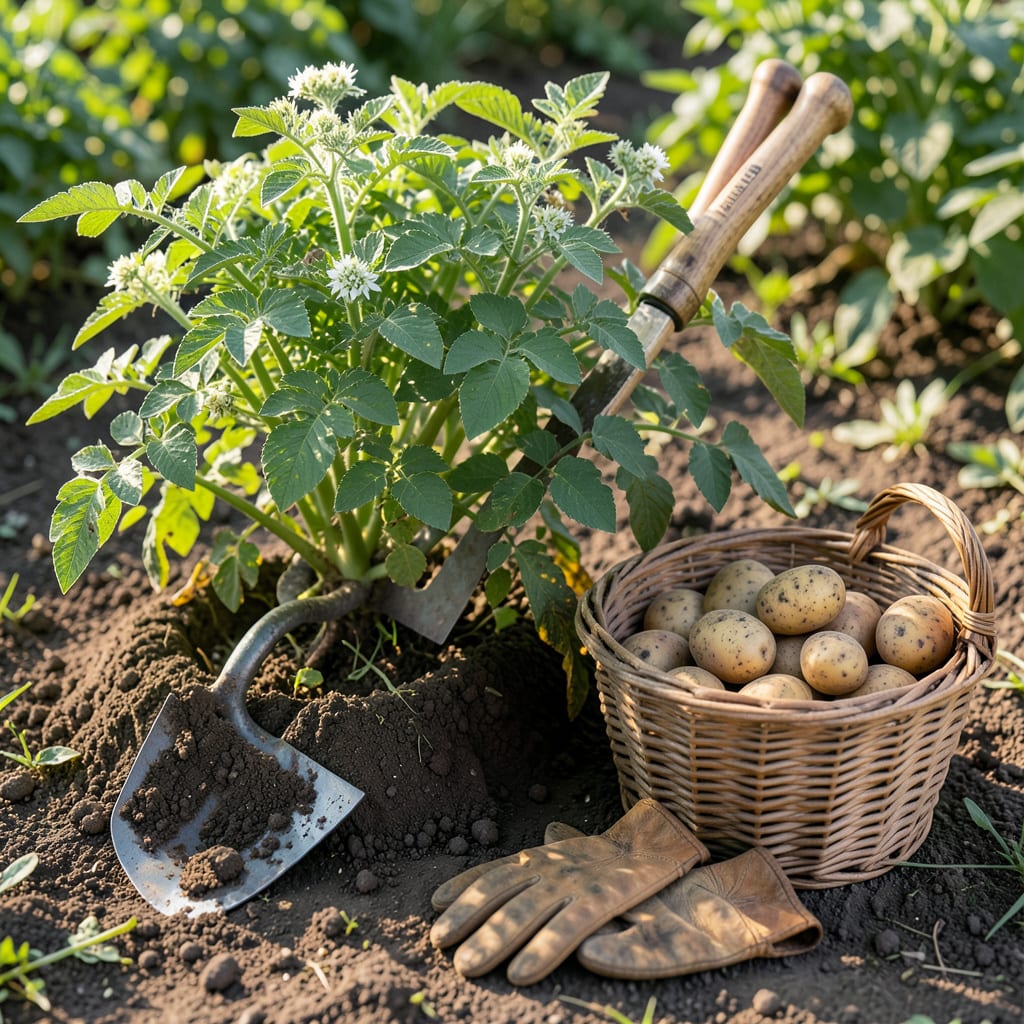
Timing your potato harvest perfectly can make all the difference between a bumper crop and a disappointing yield. The 🥔 Potato gives clear signals when it’s ready, but you need to know what to look for.
From yellowing foliage to firm tuber skins, I’ll show you the field-tested signs that indicate your potatoes are at their peak for picking. Let’s dig into the details.


I always watch for yellowing foliage first—it’s the most reliable sign that potato plants are nearing maturity. This change starts at the lower leaves and works upward as the plant redirects energy to its tubers.
Another clear indicator is when the vines begin to die back. For most varieties, this happens about 2-3 weeks before harvest time. Early potatoes may show this sign sooner, while late-season types hold their greenery longer.
| Stage | Visual Sign | Variety Type |
|---|---|---|
| Early Maturity | Flowers appear | Early |
| Mid Maturity | Foliage yellows | Mid-season |
| Full Maturity | Vines die back | Late |
The flowering stage is another key milestone. When potato plants bloom, it typically means tubers are forming underground. For new potatoes, you can gently harvest a few 2-3 weeks after flowering begins.
For a maincrop harvest, wait until the foliage turns brown and withers completely. This usually occurs 90-120 days after planting, depending on the variety. I check the soil moisture too—dry conditions can accelerate die-back.
If you’re unsure, try the “dig test”. Carefully uncover a small section of soil near the plant’s base. Mature tubers will have firm skins that don’t rub off easily when handled.
Size matters too. Most mature potatoes reach 1-3 inches in diameter. Smaller tubers can still be harvested as “new potatoes”, but they won’t store as well.
Watch for cracked soil around the stem—this can indicate tubers pushing against the surface. It’s a sure sign they’re growing and may be ready soon.
Remember that weather conditions affect timing. A hot, dry spell can speed up maturity, while cool, wet weather may delay it. Always adjust based on your local climate.
Finally, variety matters. Early varieties like ‘Yukon Gold’ may be ready in 70-90 days, while late varieties like ‘Kennebec’ can take 120 days or more. Check your seed packet for specifics.
By combining these visual cues with the days-to-maturity guide, you’ll never second-guess your harvest timing again ✂️
I always use the gentle soil probing method first. Carefully push your fingers 2-3 inches into the soil near the plant’s base to feel for tubers. This tells me if they’ve reached golf-ball size without disturbing the roots.
For a more thorough check, I perform the “dig test”. Using my hands or a small trowel, I carefully expose one or two tubers at the edge of the plant. If they’re 1-3 inches wide with firm skin, they’re ready.
The skin firmness test is crucial. Gently rub a exposed tuber with your thumb—if the skin stays intact, it’s mature. If it rubs off easily, the potatoes need more time to develop.
For new potatoes, I check 2-3 weeks after flowering. These can be harvested small, but wait for the maincrop until vines die back completely. This ensures maximum yield and storage potential.
I also monitor the soil temperature. Potatoes prefer 60-70°F soil for optimal growth. If the ground is too cold, tubers may develop slowly, while hot soil can cause early die-back.
Remember that early varieties like ‘Red Norland’ mature faster than late varieties like ‘Russet’. Always refer to your seed packet for specific days-to-maturity guidance.
With these simple tests, I confidently know when my potatoes are ready to harvest without guessing ✂️
I’ve seen many gardeners make the mistake of harvesting during wet weather. Digging in soggy soil leads to muddy potatoes that are harder to clean and more prone to rot. Always wait for dry conditions to preserve your crop.
Another common error is ignoring variety-specific timelines. Early potatoes like ‘Yukon Gold’ may be ready in 70-90 days, while late varieties like ‘Kennebec’ need 120 days or more. Check your seed packet for guidance.
Never cut vines prematurely—this stops tuber growth. Also, don’t harvest when soil is waterlogged or foliage is still green.
Many gardeners also misread foliage health. Yellowing leaves are natural, but brown, crispy vines may indicate disease or drought stress. Always confirm maturity with a dig test before full harvest.
Premature vine cutting is another pitfall. Some think trimming vines will speed up maturity, but it actually halts tuber growth. Let nature take its course for the best yield.
If you do make a mistake, there’s hope. For overly wet harvests, spread potatoes in a dry, ventilated area to prevent rot. For underdeveloped tubers, leave the rest in the ground for another week or two.
With these cautions in mind, you’ll avoid the most common pitfalls and enjoy a perfectly timed harvest every time ✂️
Check for vibrant green foliage and new growth at the top. If leaves are still lush and stems are upright, tubers are actively developing underground.
Yes, but they’ll be small “new potatoes”. These are tender and delicious but won’t store long. For full-size tubers, wait until after flowering and foliage starts yellowing.
Overmature tubers may develop thick skins and start sprouting. In wet conditions, they risk rotting. Dig within 2-3 weeks after vines die back for best results.
No, early varieties like ‘Red Norland’ mature in 70-90 days, while late types like ‘Russet’ need 120+ days. Always check your seed packet for specific timelines.
