
Beautiful Plants For Your Interior
Beautiful Plants For Your Interior
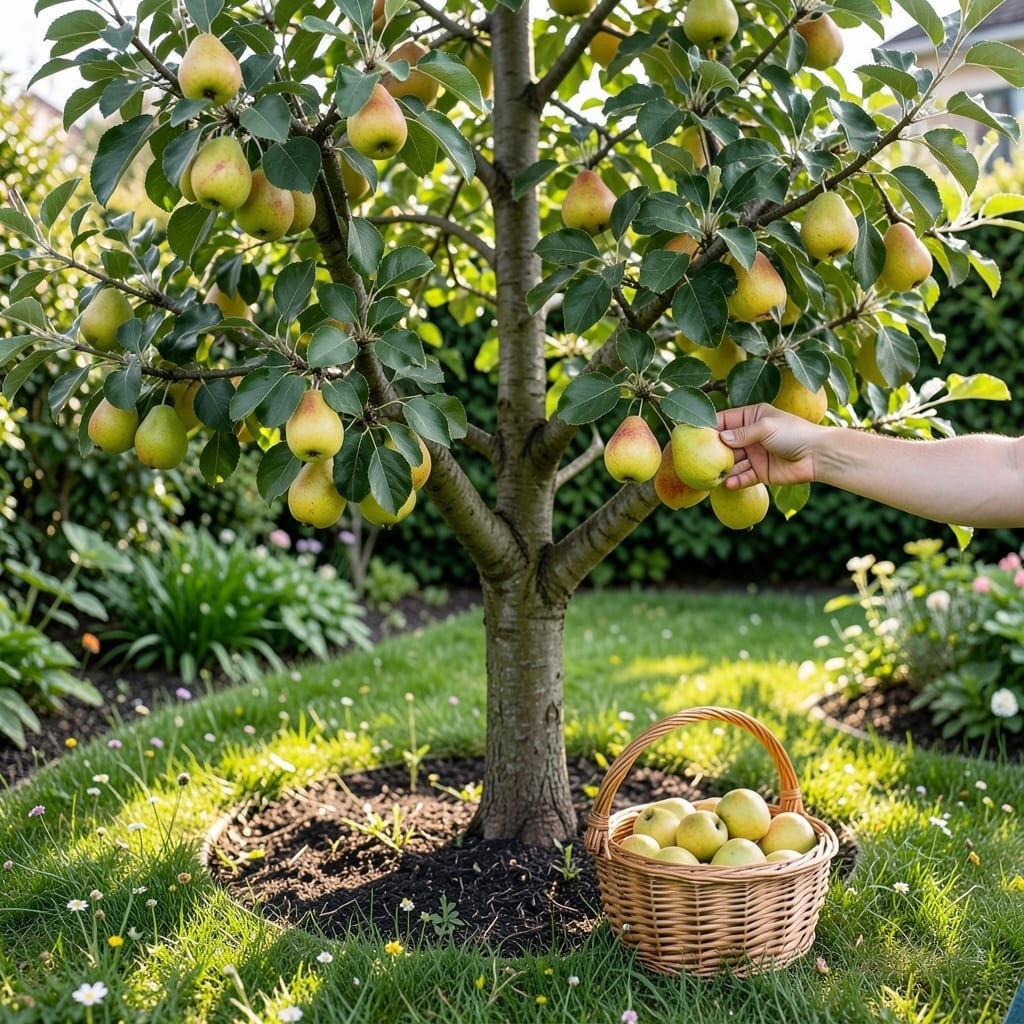
Nothing ruins the joy of homegrown 🍐 pears like biting into one that’s either rock-hard or mushy. I’ve been there, and it’s frustrating when you can’t tell if they’re ready.
Knowing the right moment to pick ensures you get that perfect sweet, juicy flavor every time. It’s not just about color—there are subtle signs most gardeners miss.
Discover the simple visual cues and timing tricks that’ll help you harvest your pears at their peak. Let’s make this season your most delicious yet.


I’ve learned that pears don’t ripen on the tree like apples do. They need to be picked at the right stage and then allowed to mature indoors. This makes knowing the visual signs of ripeness even more important.
Most gardeners focus only on color, but there are four key indicators I always check: color change, stem texture, gentle yield to pressure, and aroma. Each gives me clues about when my pears are ready to come inside for final ripening.
| Ripeness Sign | What to Look For | Variety Notes |
|---|---|---|
| Color Change | Shift from green to yellow or red | Bartlett turns yellow, Anjou stays green |
| Stem Texture | Slightly soft near stem end | All varieties show this sign |
| Gentle Pressure | Yields slightly when pressed | Test near stem, not body |
| Aroma | Sweet fragrance at stem | Strongest in ripe Bartletts |
The first sign I check is color transformation. Most pears change from green to yellow or develop red blushing as they mature. However, some varieties like Anjou stay green even when ripe, so color alone isn’t always reliable.
Next, I examine the stem area. A ripe pear will have a slightly soft texture right at the base of the stem. This is different from the overall softness that indicates overripeness. I use my thumb to gently test this spot.
The pressure test is my go-to method. I apply gentle pressure near the stem with my thumb. If it gives slightly, it’s ready to be picked for indoor ripening. Remember, pears ripen from the inside out, so this test works best.
Finally, I use my sense of smell. Ripe pears, especially Bartletts, emit a sweet, noticeable fragrance at the stem end. If I can smell that characteristic pear scent, I know it’s time to harvest. This is often the first sign I notice with experience.
For Bosc pears, I look for the russeted skin to lighten slightly. With Comice pears, the green color becomes more golden. Each variety has its own subtle signals that I’ve learned to recognize over the years.
I always pick my pears in the cool morning hours to preserve their freshness. This timing helps maintain the fruit’s quality during the final ripening process indoors. It’s a small detail that makes a big difference.
Remember, pears continue to ripen after picking, so I harvest them when they’re mature but still firm. This gives me the best chance to enjoy them at their peak flavor. The combination of these signs never fails me in the garden.
Many gardeners don’t realize pears must be harvested early and ripened indoors. Unlike apples, they won’t develop proper sweetness on the tree. This is why knowing post-harvest techniques is so crucial for perfect flavor.
I always start by picking my pears when they’re mature but firm, then bring them inside to finish ripening. The key is creating the right environment to coax out their natural sweetness without rushing the process.
The paper bag method works beautifully because it traps ethylene gas, which accelerates ripening. I like to add a banana or apple to boost the ethylene concentration. This can ripen pears in as little as 1-2 days.
For slower ripening, I simply place pears in a bowl at room temperature. This takes about 3-5 days, depending on the variety. I check them daily by gently pressing near the stem. When they yield slightly, they’re ready to eat.
Temperature matters more than most realize. If it’s too cold (below 60°F), pears won’t ripen properly. If it’s too warm (above 75°F), they may develop mealy texture. I aim for a consistent 65-70°F environment.
Once ripe, pears can be stored in the refrigerator for 3-5 days. For longer storage, I keep them in a cool, dark place like a root cellar. This extends their freshness while maintaining that perfect texture we all love.
Remember, the ripening process can’t be reversed. That’s why I always monitor my pears closely during this stage. With practice, you’ll recognize that perfect moment when they’re just right for eating.