
Beautiful Plants For Your Interior
Beautiful Plants For Your Interior
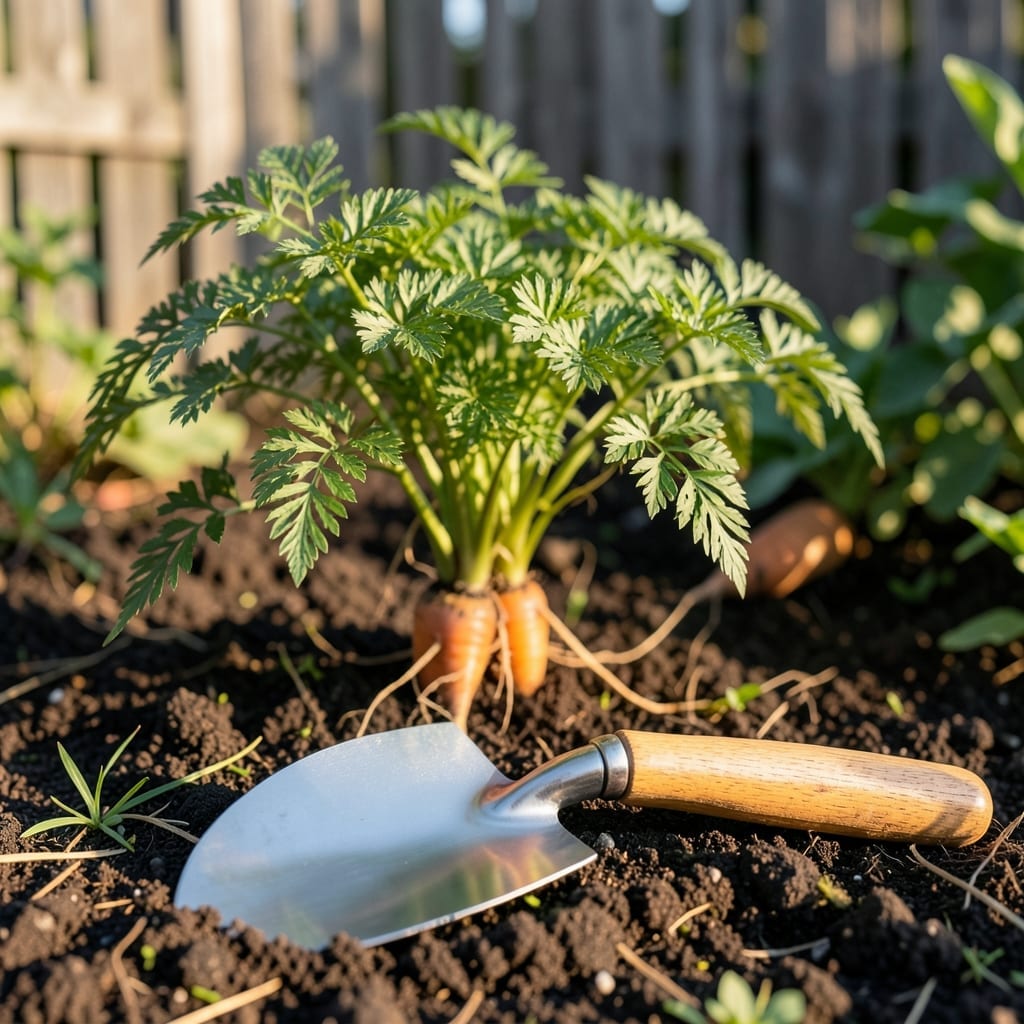
Nothing beats the satisfaction of pulling a perfectly ripe 🥕 Carrot from your garden—sweet, crisp, and ready to eat. But knowing exactly when they’re ready can be tricky.
Unlike fruits that show obvious color changes, Carrots hide their development underground. This makes timing the harvest a bit of a mystery for many gardeners.
I’ve learned that the most important indicator isn’t the green tops but what’s happening below the soil. There’s one simple trick that reveals everything you need to know.
Discover how to check your Carrots’ shoulder diameter and other sure signs they’re at peak sweetness. Your harvest will never be a guessing game again.


I always check the shoulder diameter first when determining carrot readiness. This is the part of the carrot just below the soil line, and it’s the most reliable indicator of maturity and sweetness.
The ideal shoulder diameter for most varieties is 0.75 to 1 inch. If it’s smaller, the carrot likely needs more time to develop its full flavor and texture.
| Indicator | Ready Sign | Not Ready Sign |
|---|---|---|
| Shoulder Diameter | 0.75-1 inch | Less than 0.5 inch |
| Color | Deep orange | Pale or whitish |
| Foliage | Slight yellowing | Vibrant green |
| Texture | Firm and crisp | Soft or thin |
Another key sign is color development. A bright orange hue at the soil line usually means your carrots are maturing nicely. Pale or whitish roots need more time in the ground.
I also look at the foliage height. For most varieties, when the green tops reach about 6 to 8 inches tall, it’s a good indicator that the roots below are nearing harvest size.
Don’t forget to consider the days to maturity for your specific variety. Nantes carrots often mature in about 60 days, while Danvers may take up to 75 days.
Weather plays a role too. In cooler temperatures, carrots may take a bit longer to mature, but they often develop a sweeter flavor as a result of the slower growth.
If you’re unsure, I recommend doing a test pull. Gently brush away the soil from one or two carrots to check their size and color without disturbing the rest of the crop.
Remember, over-mature carrots can become woody or crack if left in the ground too long. It’s better to harvest a little early than too late for the best texture and taste.
Lastly, pay attention to soil conditions. Carrots grow best in loose, well-draining soil. If your soil is compacted, your carrots might not reach their full size, even if they’ve had enough time.
With these indicators in mind, you’ll never wonder when are carrots ready again. Happy harvesting 🌱
I’ve seen many gardeners pull up carrots too soon because the foliage looks tall. But leaf height isn’t a reliable indicator—root development happens underground, not above. Always check the shoulder diameter first.
Another common error is ignoring the days to maturity for your specific carrot variety. A Nantes carrot may be ready in 60 days, while a Danvers could take 75 days. Patience pays off here.
⚠️ Avoid This Mistake
Never harvest carrots right after heavy rain. The excess water can cause cracking and dilute their sweet flavor. Wait 2-3 days for the soil to drain.
Some gardeners assume yellowing foliage means the carrots are past their prime. In reality, slight yellowing often signals peak sweetness, especially in mature roots. Don’t let looks deceive you.
For the most accurate test, I gently brush soil away from the carrot’s shoulder. If it’s 0.75-1 inch wide and bright orange, it’s ready. Thin roots mean they need more time.
Harvesting in midday heat can stress the plants. I always aim for early morning when the soil is cool and the carrots are crisp. This preserves their texture and flavor.
If you’re unsure, pull just one test carrot from different spots in the row. This way, you can check multiple plants without disrupting the entire crop. It’s a simple trick that saves guesswork.