
Beautiful Plants For Your Interior
Beautiful Plants For Your Interior
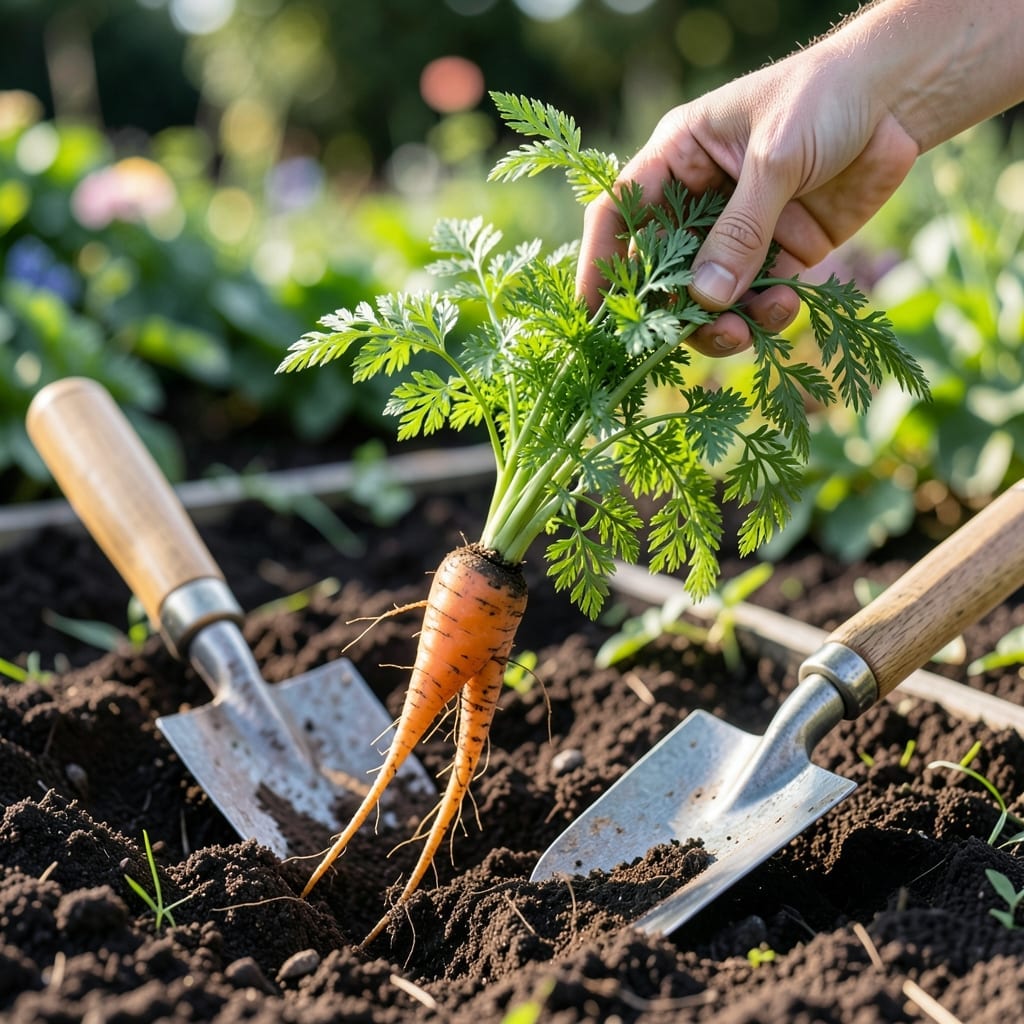
Knowing exactly when to pull Carrots can mean the difference between a bitter, woody harvest and sweet, crisp perfection. Timing is everything with this root vegetable.
I’ve learned that the key is watching for subtle signs above and below the soil. The 🥕 Carrot won’t tell you when it’s ready, but its leaves and shoulders will give you clear clues.
Whether you’re growing in zone 6 or elsewhere, these visual cues work universally. From color changes to diameter measurements, you’ll never guess at harvest time again.
Discover how to check readiness without damaging your plants, and learn the best time of day to pull them for maximum sweetness and crunch.
I’ve found that carrot harvest timing is all about observing subtle changes. The foliage and shoulder of the carrot give the clearest signals when they’re ready to be pulled from the soil.
Most gardeners don’t realize that color changes at the soil line are one of the most reliable indicators. When you see that bright orange hue peeking through, it’s often your first sign of readiness.
| Visual Cue | What to Look For |
|---|---|
| Shoulder Diameter | 3/4 to 1 inch wide |
| Color at Soil Line | Bright orange showing |
| Foliage Condition | Slight yellowing of leaves |
| Root Firmness | Feels solid when pressed |
The shoulder diameter is perhaps the most precise indicator. I always check by gently brushing away soil to expose the top of the carrot without damaging it.
For most varieties, when that orange crown reaches about 3/4 to 1 inch across, it’s time to harvest. This measurement works for Nantes, Danvers, and most other common types.
Another telltale sign is the foliage color. While deep green leaves indicate active growth, a slight yellowing often means the carrots have reached maturity and are ready to come out.
I recommend checking your carrots in the early morning when the soil is moist. This makes it easier to brush away dirt and see the true color of the carrot shoulders.
Remember that days to maturity varies by variety. Most carrots take 50-80 days from seeding, but I’ve found that visual cues are more reliable than counting days alone.
If you’re growing in zone 6 like me, you’ll typically start seeing these signs in late spring for early varieties, with main crops ready by mid-summer.
One pro tip I swear by: check a test carrot first. Gently pull one to see if it’s reached the desired size before harvesting the entire row.
This prevents the disappointment of pulling an entire crop too early or too late. 🌱
Not all carrot varieties mature at the same pace. I’ve found that early types like Nantes often reach harvest in 50-60 days, while main crop varieties may need 70-80 days. This timing difference is crucial for planning your harvest schedule.
The days to maturity on your seed packet is your best starting point. But I always recommend checking visual cues too, as weather and soil conditions can speed up or slow down growth. Late season types often develop deeper color and sweeter flavor as they mature.
| Variety | Days to Maturity | Best For |
|---|---|---|
| Nantes | 50-60 days | Early harvests |
| Danvers | 65-75 days | Heavy soil |
| Chantenay | 70-80 days | Storage crops |
| Imperator | 75-85 days | Late season |
For early varieties, I start checking at 50 days by gently brushing soil away from the carrot shoulders. If they’re 3/4 inch wide, they’re likely ready. Late varieties benefit from staying in the ground longer, but don’t leave them past their prime.
I’ve noticed that cooler weather can extend the growing season, allowing carrots to develop more natural sugars. But be careful – if temperatures drop too low, growth may stall. In my zone 6 garden, I aim to harvest before the first frost.
Remember that baby carrots can be pulled earlier at 1/2 inch diameter, while full-sized ones need that extra time. The color at the soil line is another good indicator – it should be a rich orange hue when ready 🌱
For the sweetest flavor, I harvest in the cool morning hours. This is when the plant’s sugars are most concentrated. Plus, the soil is easier to work with, and the carrots will keep better in storage.