
Beautiful Plants For Your Interior
Beautiful Plants For Your Interior
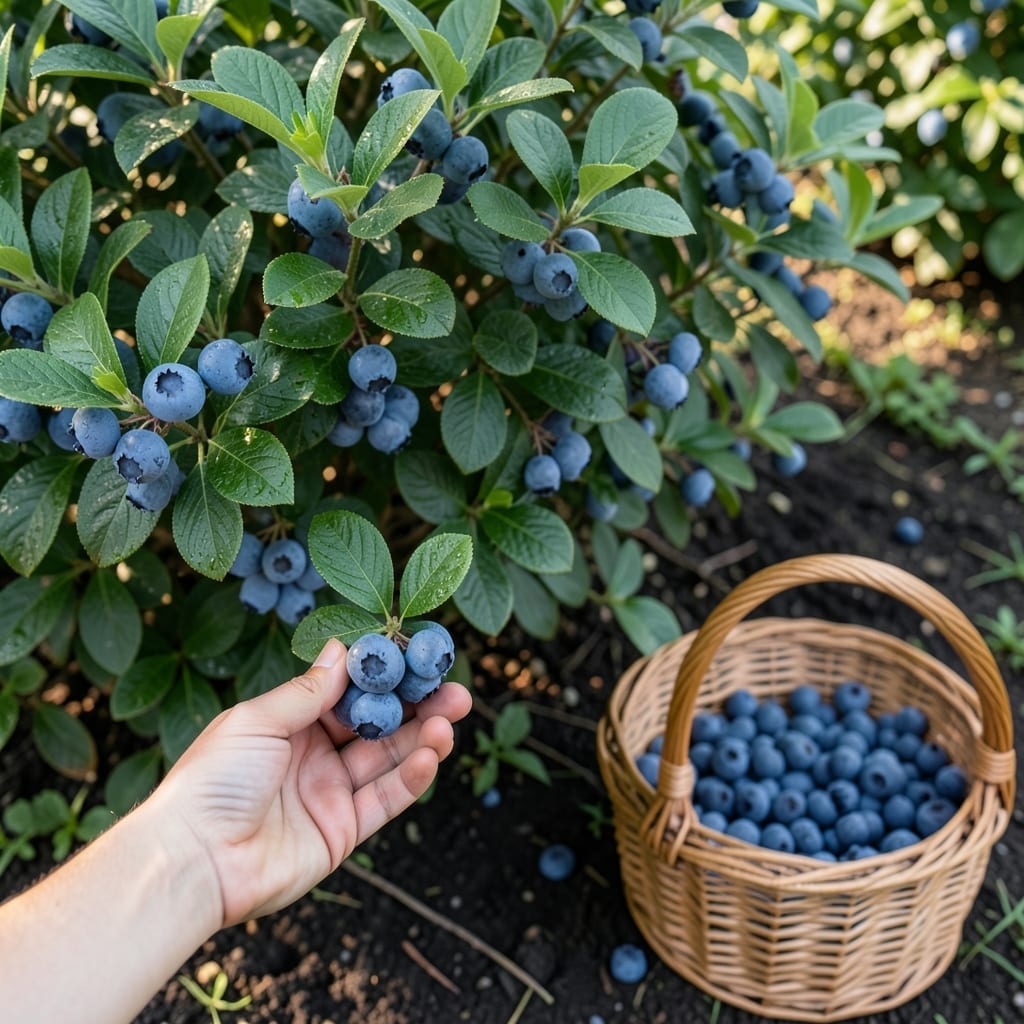
Ever stood in front of your blueberry bushes wondering if today’s the day? Timing your harvest perfectly can transform your July-August pickings from disappointing to delicious.
With the 🫐 Blueberry, knowing when to pluck those berries makes all the difference. One day too early and you’ll get a mouthful of tartness instead of sweetness.
I’ve learned that watching for deep blue color and a gentle give when touched are the telltale signs. These simple clues take the guesswork out of harvesting.
Discover how to spot the perfect moment and enjoy the best flavor from your garden. Your taste buds will thank you for getting it just right.

I’ve found that perfectly ripe blueberries reveal themselves through clear visual and tactile cues. The first sign is a deep blue-purple color that covers the entire berry, with no red or green patches remaining.
Another key indicator is the powdery white bloom on the skin, which signals full ripeness. The berries should feel firm yet plump when gently squeezed, not hard or mushy.
| Sign | Ready | Not Ready |
|---|---|---|
| Color | Deep blue-purple | Red or green |
| Texture | Firm but plump | Hard or mushy |
| Bloom | Powdery white | Absent or patchy |
| Detachment | Easily comes off | Hard to pick |
If the berries still have a reddish tint, they’re not ready. This is a common mistake I see gardeners make, leading to tart and underripe harvests. Patience is key here.
On the other hand, if the berries feel too soft or squishy, they may be overripe. These can still be used but won’t store as well.
I always check for easy detachment from the stem. A ripe blueberry will come off with a gentle twist, while unripe ones will resist.
The sweet aroma is another giveaway. Ripe blueberries have a distinct, pleasant scent that’s hard to miss when you’re close to the bush.
For best results, I recommend harvesting in the morning when the berries are cool and fresh. This helps maintain their firm texture and flavor.
If you’re unsure, taste-test a few berries from different spots on the bush. This gives you a good sense of whether the entire crop is ready for picking.☀️
Remember, blueberries don’t ripen all at once. You’ll likely need to harvest in stages, picking the ripest ones first and returning every few days for more.
I’ve learned that blueberry harvest times vary by region and variety. Most gardeners see their first ripe berries in June through August, depending on the climate and cultivar.
Early-season varieties like Duke often ripen in late June, while mid-season types such as Bluecrop peak in July. Late varieties like Elliott can extend the harvest into August or early September.
Numbered Highlights
In cooler climates, the ripening window shifts later. Gardeners in USDA Zone 4-5 often wait until mid-July for their first harvest, while those in Zone 7-8 may start picking in early June.
I always track my plant’s specific timeline by noting when flowers appear. Typically, blueberries take 60-90 days from bloom to harvest, so this helps me predict ripening.
For the most accurate timing, I recommend observing your bushes daily once the berries start changing color. The transition from green to blue happens quickly, often within 5-7 days.
Local weather plays a big role too. A warm spring can accelerate ripening, while a cool, rainy June might delay it by a week or more.☀️