
Beautiful Plants For Your Interior
Beautiful Plants For Your Interior
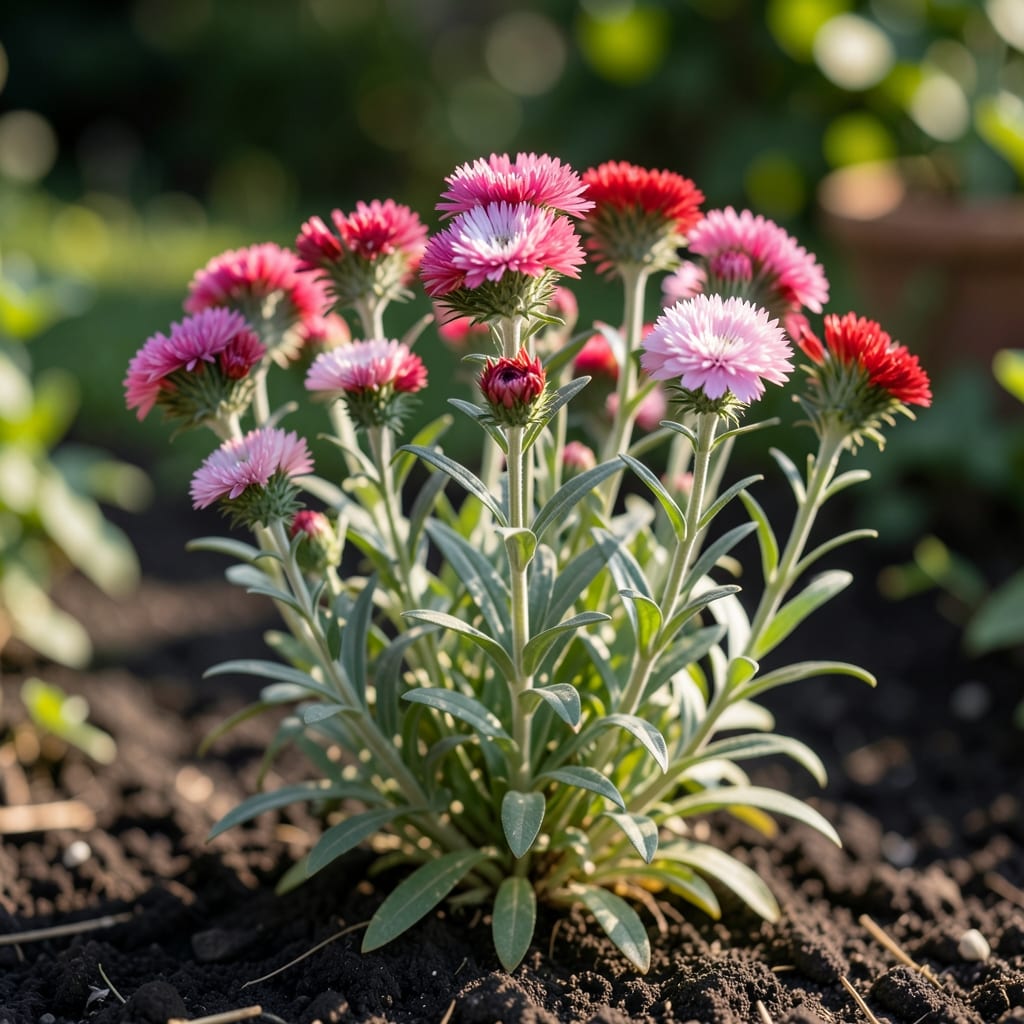
Sweet William is a fragrant, clove-scented flowering plant with clusters of small, colorful blooms that attract pollinators. It’s a popular biennial or short-lived perennial often used in gardens and cut flower arrangements.
I love how this plant brings both beauty and function to any garden space. Its rich clove-like aroma adds a sensory dimension that complements its visual appeal. 🌟 In my experience, Sweet William thrives in well-drained soil and partial shade, making it versatile for various growing conditions.
💡 In This Article
Dianthus barbatus belongs to the carnation family, featuring dense clusters of small, five-petaled flowers that bloom in late spring to early summer. The plant typically grows 6-18 inches tall with slender, lance-shaped leaves arranged oppositely along the stem. Its distinctive clove-like scent comes from eugenol compounds, the same aromatic oils found in actual cloves. ✨
The flowers display remarkable color diversity, ranging from pure white and soft pink to deep red, purple, and even bicolor varieties. Some cultivars like ‘Auricular Eyed’ showcase striking dark centers, while ‘Sooty’ varieties offer near-black petals. Each bloom measures about 1-1.5 inches across, creating a carpet-like effect when planted in masses. 🌟
This plant thrives as a biennial, meaning it grows foliage the first year and flowers the second, though many gardeners treat it as an annual for continuous blooms. The stems are slightly woody at the base, supporting the weight of multiple flower clusters. In optimal conditions, a single plant can produce 20-50 blooms simultaneously. 💫
Sweet William’s growth habit makes it ideal for borders, rock gardens, and container plantings. The serrated petal edges and velvety texture add visual interest, while the long 4-6 inch stems make excellent cut flowers. Unlike many ornamentals, it maintains its fragrance when dried, preserving its appeal in potpourri and dried arrangements. 🔥
Regional variations exist, with Alpine types developing more compact forms at higher elevations. The plant’s adaptability to different climates (USDA zones 3-9) contributes to its widespread popularity. Its ability to self-seed ensures returning blooms year after year with minimal maintenance. ⚡
It has a distinct clove-like aroma thanks to eugenol compounds. This fragrance is most noticeable in the late afternoon and intensifies when the flowers are dried.
Most varieties reach 6-18 inches in height. Dwarf cultivars stay compact at about 6 inches, while taller types can approach 2 feet in ideal conditions.
Yes! Use pots with drainage holes and quality potting mix. Container plants need more frequent watering, about 1 inch per week, and should receive 4-6 hours of sunlight daily.
Lack of blooms often means insufficient sunlight. These plants need at least 4-6 hours of direct sun daily. Over-fertilizing with nitrogen can also reduce flowering.