
Beautiful Plants For Your Interior
Beautiful Plants For Your Interior
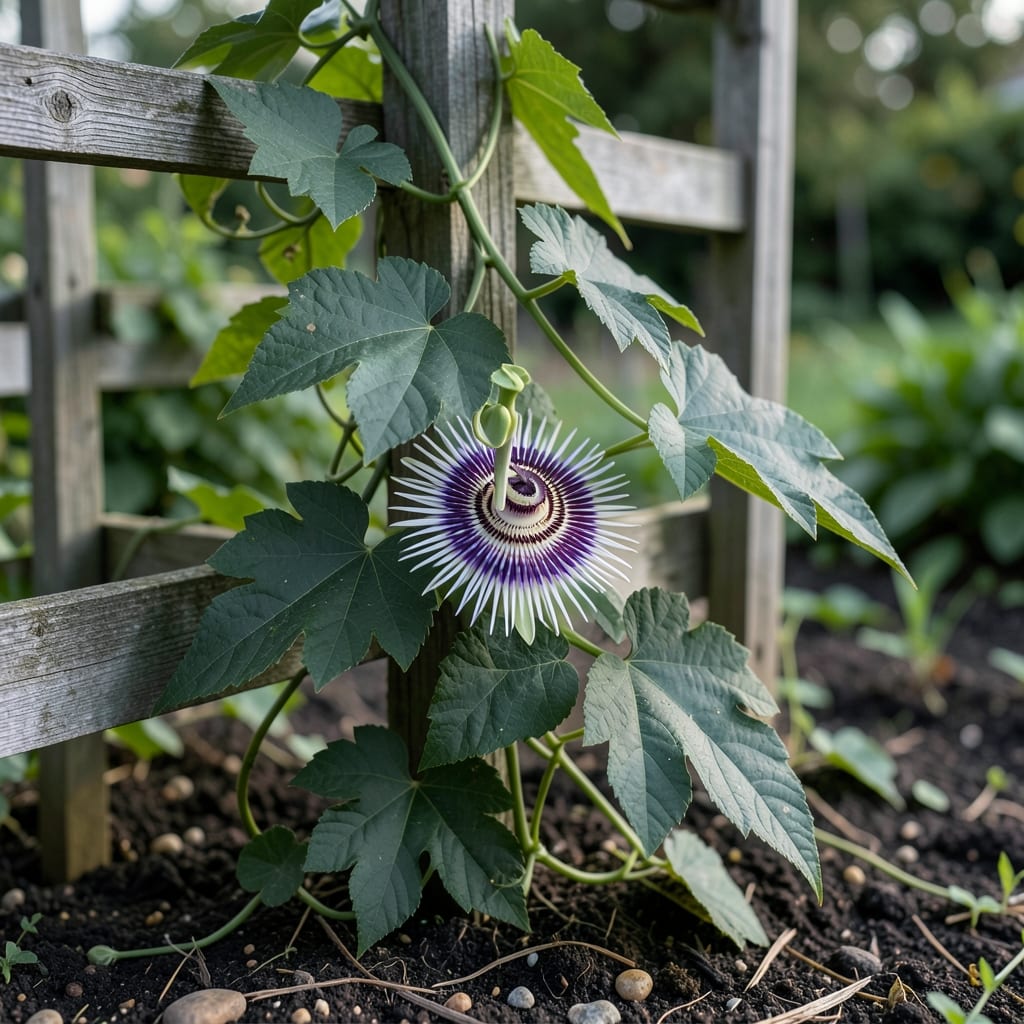
Passiflora is a genus of flowering vines, commonly known as passionflowers, featuring intricate blooms and edible fruits like passionfruit. Native to tropical regions, they thrive in warm climates and attract pollinators.
I’ve grown these in my own garden and can attest to their unique charm. The exotic flowers often draw hummingbirds, while the edible fruits add a tropical flair to any landscape. They’re surprisingly resilient once established, though they do need consistent warmth to truly flourish. ✨
💡 In This Article
Passionflowers display a unique radial symmetry with five petals and sepals. The most striking feature is their corona—a crown-like structure of filaments that creates the intricate, almost alien appearance. These filaments come in vivid purples, blues, and whites, with some species like Passiflora edulis showcasing deep purple centers. 🔥
The leaves are typically deeply lobed, ranging from 3-6 inches across, with a glossy dark green surface. The vine itself can climb 15-20 feet in a single season when given proper support.
What makes the growth habit fascinating is their tendril system—modified stems that coil around supports with incredible strength, allowing them to scale trellises and fences effortlessly.
Each flower lasts only 24-48 hours, but the plants produce them continuously during warm months. The blooms open fully in morning sunlight and close by afternoon. This daily cycle maximizes pollination opportunities, as the flowers release their sweetest fragrance during peak pollinator activity. ✨
The fruit development is equally remarkable. After successful pollination, the ovary at the flower’s base swells into what we know as passionfruit. The Passiflora edulis variety produces fruits 2-3 inches in diameter with a hard purple rind and jelly-like interior filled with edible seeds. The transformation from flower to fruit takes approximately 80-90 days. 💫
What most people don’t realize is that passionflowers have developed specialized leaf structures. The stipules—small leaf-like appendages at the base of each leaf stem—act as protective shields for new growth. These adaptive features, combined with their rapid growth rate, make passionflowers highly competitive in their native tropical environments.
There are over 500 species in the Passiflora genus, each with unique flower shapes and colors. Most are native to tropical regions of the Americas.
They thrive in zones 7-11 but can be grown in containers and brought indoors for winter. In colder areas, choose hardy varieties like Passiflora incarnata.
No, only certain species like Passiflora edulis produce edible fruits. Others may be ornamental only or even toxic if consumed.
Provide full sun, consistent moisture, and regular fertilization. Prune back leggy growth in early spring to stimulate new flowering stems.
Carpenter bees are the primary pollinators in their native habitats. Hummingbirds and butterflies also visit the flowers, drawn by their nectar.