
Beautiful Plants For Your Interior
Beautiful Plants For Your Interior
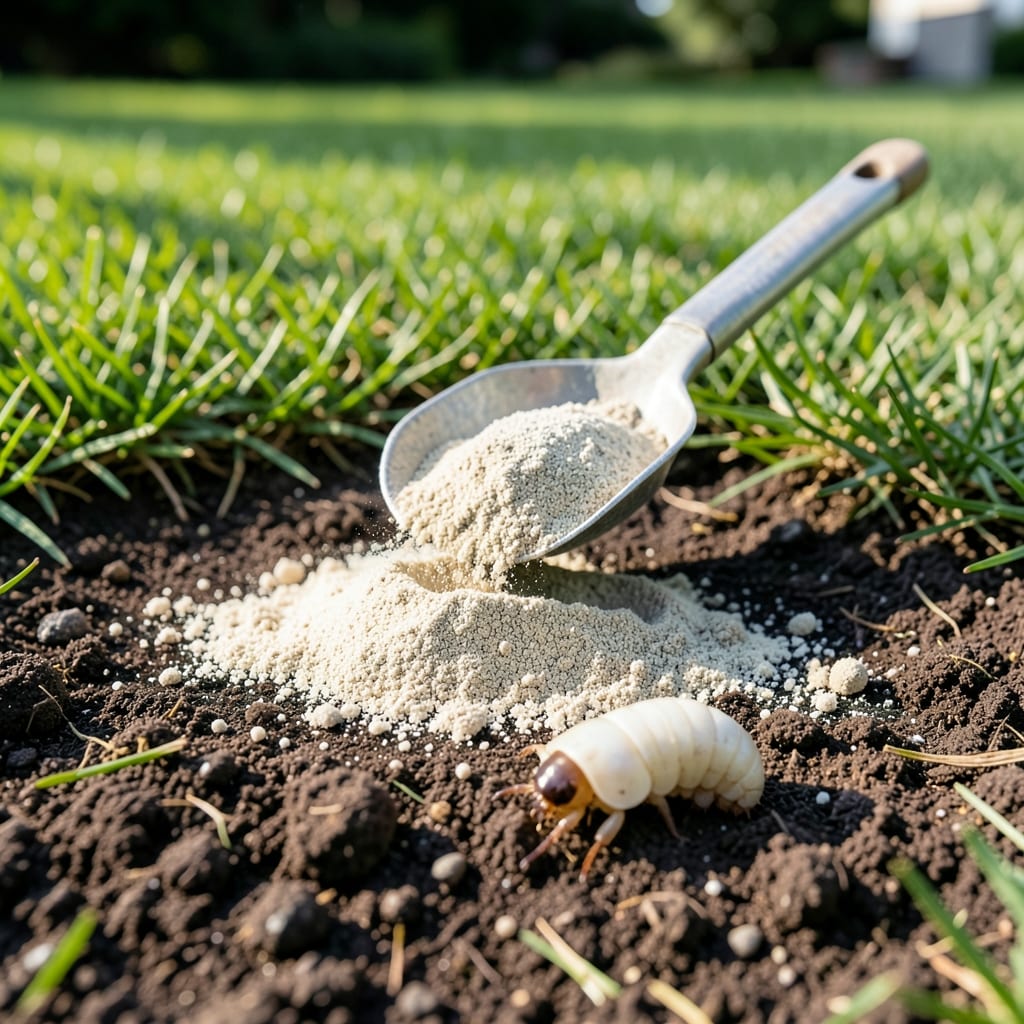
Milky spore is a naturally occurring soil bacterium, Bacillus popilliae, that targets and kills Japanese beetle grubs without harming beneficial insects, plants, or humans.
I love this organic solution because it works like a biological pest control agent. When grubs ingest the spores, they multiply inside and release more spores into the soil, creating a self-sustaining cycle. 🌟 It’s most effective in late summer when grubs are actively feeding near the surface.
Best of all, one application can protect your lawn for years, making it a cost-effective choice for long-term Japanese beetle management.
💡 In This Article
The process begins when grubs ingest Bacillus popilliae spores while feeding on grass roots. Inside their digestive tract, the spores germinate and penetrate the gut wall, entering the bloodstream. This triggers a rapid bacterial multiplication that overwhelm the grub’s internal systems within 7-21 days. 🔥
As the bacteria proliferate, they produce toxins that liquefy the grub’s internal tissues, giving it a characteristic milky appearance. This is where the name “milky spore” originates. The infected grub eventually dies and ruptures, releasing billions of new spores into the soil to continue the cycle. ✨
What makes this solution so effective is its self-perpetuating nature. Each infected grub can produce 1-2 billion spores, which remain viable in the soil for 10-20 years. The spores lie dormant until ingested by another grub, making this a long-term biological control method. 💫
The bacteria are highly specific to Japanese beetle grubs and a few closely related species. They don’t affect earthworms, beneficial insects, or other soil organisms. This specificity comes from the grub’s unique gut chemistry that activates the spores. 🌟
For optimal results, the soil temperature should be between 60-75°F during application. The grubs must be actively feeding in the top 2-3 inches of soil for the spores to be ingested. This typically occurs in late summer when grubs are newly hatched and most vulnerable. ⚡
Yes, it’s completely non-toxic to humans, pets, and beneficial insects. The bacteria only targets Japanese beetle grubs, making it one of the safest lawn treatments available.
Initial effects may appear within 2-3 weeks, but full benefits develop over 2-3 years as spores multiply. You’ll notice fewer beetles and less lawn damage as the population declines.
It works best in well-drained soils with pH 6.0-8.0. Heavy clay or waterlogged soils may reduce effectiveness. For best results, ensure good soil-to-spore contact during application.
Yes, it combines well with other organic methods like nematodes. Avoid chemical pesticides though, as they may harm the beneficial bacteria. Always follow application timing guidelines for each product.