
Beautiful Plants For Your Interior
Beautiful Plants For Your Interior
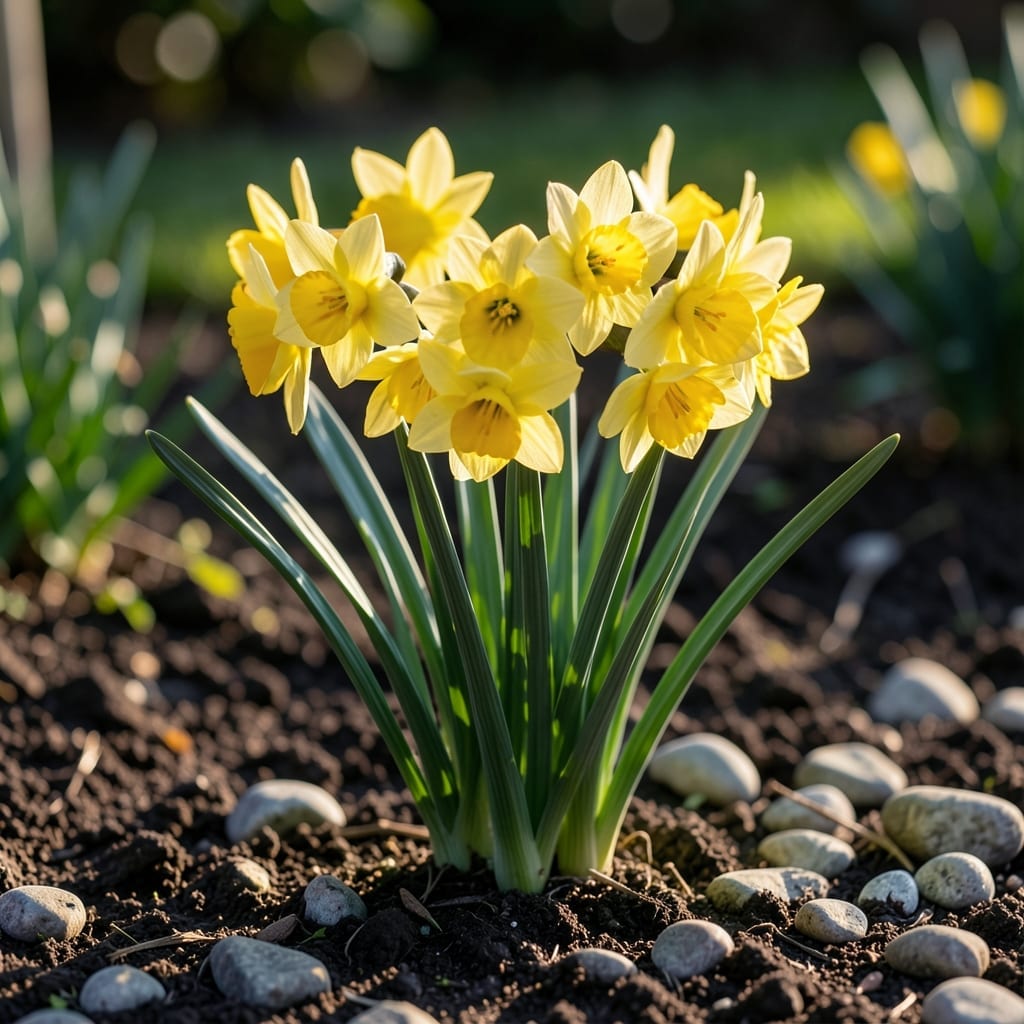
Jonquil is a fragrant spring-flowering bulb in the narcissus family, known for its small, bright yellow or white blooms and narrow, rush-like leaves. It thrives in well-drained soil and partial to full sunlight.
I love how these bulbs bring early color to gardens after long winters. Their slender foliage creates elegant ground cover, while the intense fragrance makes them perfect for cut flower arrangements. 🌟 In my experience, they naturalize beautifully over time, multiplying into larger clusters each year with minimal care.
💡 In This Article
Jonquils belong to the Narcissus jonquilla species, a distinct group within the daffodil family. Their flowers feature a unique structure with 6 petal-like tepals surrounding a central corona, often in contrasting colors like deep yellow or white.
This corona is typically 1/3 the length of the tepals, creating a distinctive flat-faced appearance unlike other narcissus varieties.
The foliage is equally distinctive with narrow, rush-like leaves that are 1/4 to 1/2 inch wide and 12-18 inches long. These leaves emerge in early spring before the flowers, forming neat clumps. The plants grow from true bulbs with brown tunics, typically 1-2 inches in diameter. 🌟
What sets jonquils apart is their growth habit. They produce 2-5 flowers per stem, creating a clustered appearance. The stems reach 8-12 inches tall, making them shorter than many daffodil varieties. This compact size makes them ideal for rock gardens or border plantings.
Seasonally, jonquils bloom in mid to late spring, about 2-3 weeks after the early daffodils. Their foliage persists for 6-8 weeks after flowering, during which time the plant photosynthesizes to store energy in the bulb for next year’s growth. This post-bloom period is crucial for their long-term health.
The fragrance is another defining characteristic. Jonquil flowers emit a sweet, spicy-sweet scent that’s more intense than most daffodils. This aroma is strongest in the morning and on sunny days, as the warmth helps release the volatile compounds. ✨
In the wild, jonquils are native to Mediterranean regions, particularly Spain and Portugal. They’ve naturalized in many parts of the world, thriving in USDA zones 4-9. Their ability to adapt to various climates while maintaining their distinctive characteristics makes them a favorite among gardeners.
Jonquils are a specific type of Narcissus jonquilla with multiple small, fragrant flowers per stem, while most daffodils have one large bloom. Their leaves are narrower and rush-like, and they bloom 2-3 weeks later than early daffodils.
Plant in fall, about 4-6 weeks before the first frost. This allows roots to establish before winter dormancy. In warmer climates (zones 8-9), you can plant as late as early winter.
They prefer well-drained soil with moderate fertility. Amend heavy clay with 2-3 inches of compost or sand. Avoid waterlogged areas—bulbs will rot in soggy conditions.
Lack of fragrance often means they’re not true jonquils. Some hybrid daffodils look similar but lack the signature spicy-sweet aroma. Also, scent is strongest in morning sun, so check then.
Yes! Use pots with drainage holes and a gritty potting mix. Plant bulbs 4-6 inches deep, water moderately, and place in full sun. They’ll naturalize over time if left undisturbed.