
Beautiful Plants For Your Interior
Beautiful Plants For Your Interior
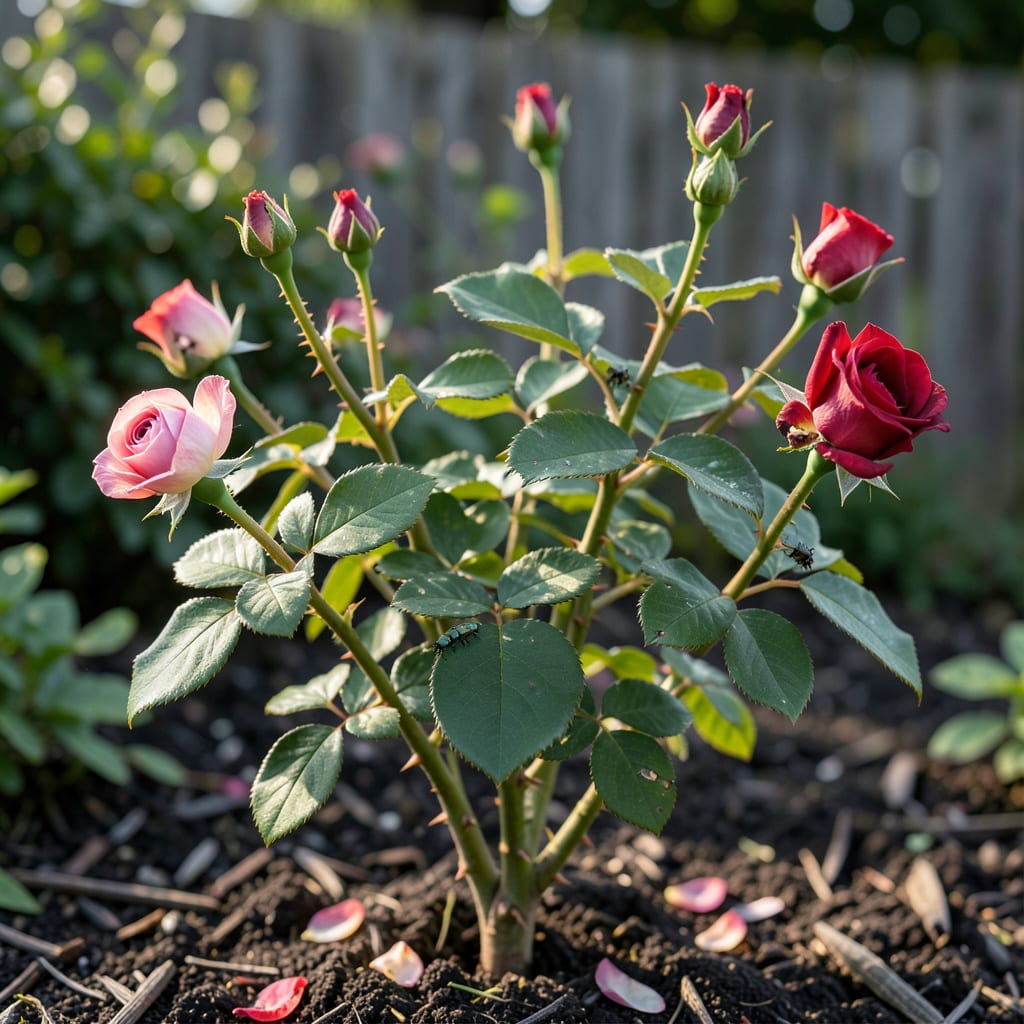
Rose buds are commonly eaten by Japanese beetles, aphids, rose slugs, or deer. Beetles chew visible holes, aphids suck sap and distort growth, while deer leave jagged edges from biting entire buds off.
These uninvited visitors target roses at different stages—some feast on tender new growth while others attack fully formed buds. 🌹 Japanese beetles are particularly aggressive during summer mornings, often skeletonizing leaves before moving to buds. Aphids, though tiny, multiply rapidly and secrete sticky honeydew that attracts ants and promotes sooty mold. Meanwhile, deer damage is usually obvious: they browse at waist height or higher, leaving clean cuts where buds once were.
What’s frustrating is how quickly these pests can ruin a season’s blooms. I’ve seen healthy rose bushes stripped overnight by hungry deer or beetle infestations. The key is catching the problem early—inspect buds daily during peak growing seasons, especially after rain when slugs become most active. ✨
💡 In This Article
Each rose bud predator leaves a distinct calling card. Japanese beetles create lacy, skeletonized leaves before moving to buds, where they chew irregular holes between veins. Their damage appears overnight because they’re most active at dawn when temperatures hit 70-85°F.
Look for metallic green bodies with copper wings—they’re about ½ inch long and often cluster on the sunniest parts of plants. 🌞
Aphids reveal themselves through curled leaves and sticky honeydew residue that makes buds feel tacky. These pear-shaped insects (1/16 to 1/8 inch) come in green, black, or pink varieties and reproduce rapidly—one female can produce 80 offspring per week.
The honeydew they secrete attracts ants and grows black sooty mold, which blocks sunlight and weakens plants. Check undersides of leaves where they hide in colonies.
Rose slugs (sawfly larvae) create translucent “windowpane” damage by eating leaf tissue between veins, leaving a clear, papery membrane. They’re most active in May-June when new growth is tender. The slugs themselves are ½ inch long, green with orange heads, and blend perfectly with foliage. Unlike beetles, they avoid buds until they’ve defoliated surrounding leaves.
🐛
Deer damage is unmistakable—clean, jagged cuts where entire buds or stems vanish overnight. They browse at 2-6 feet high, leaving no insect evidence. Look for hoof prints in soft soil and torn leaves caught on nearby branches. Bucks may also rub antlers on canes during fall, stripping bark.
The timing matters: deer pressure peaks in early spring when other food sources are scarce.
Timing clues help narrow the culprit. Japanese beetles emerge in late June and peak for 4-6 weeks. Aphid populations explode in warm, dry weather (above 65°F). Rose slugs hatch in early spring from eggs laid the previous fall.
Deer patterns follow seasonal food availability—they’ll sample roses year-round but cause most damage when natural forage is limited. ✨
Pro tip: Shine a flashlight on plants at night to catch slugs and beetles in action. Aphids glow under blacklight due to their waxy coatings. For deer, look for 45-degree angle cuts (their biting pattern) versus the ragged edges insects leave.
The more you observe these patterns, the faster you’ll spot new infestations before they spread.
Japanese beetles leave lacy, skeletonized leaves with irregular holes between veins, while rose slugs create translucent “windowpane” damage by eating tissue between veins. Beetles are metallic green with copper wings, while slugs are green with orange heads and blend into foliage.
That’s honeydew secreted by aphids as they feed. This sticky substance attracts ants and grows black sooty mold, which weakens plants. Check leaf undersides for tiny pear-shaped insects—green, black, or pink in color.
Early morning or evening is ideal for spraying treatments like neem oil or insecticidal soap. Avoid midday heat above 90°F to prevent leaf burn. For prevention, apply milky spore in early spring and fall before pests emerge.
Install 8-foot tall fencing or electric wire at 30 inches height. Repellents like rotten eggs work temporarily but need reapplication after rain. Planting thorny bushes like barberry around roses creates a natural deterrent zone.
Ladybugs devour aphids, while parasitic wasps target rose slugs. Attract these beneficial insects by planting companion flowers like marigolds and avoiding broad-spectrum pesticides. A balanced garden ecosystem reduces pest problems over time.
