
Beautiful Plants For Your Interior
Beautiful Plants For Your Interior
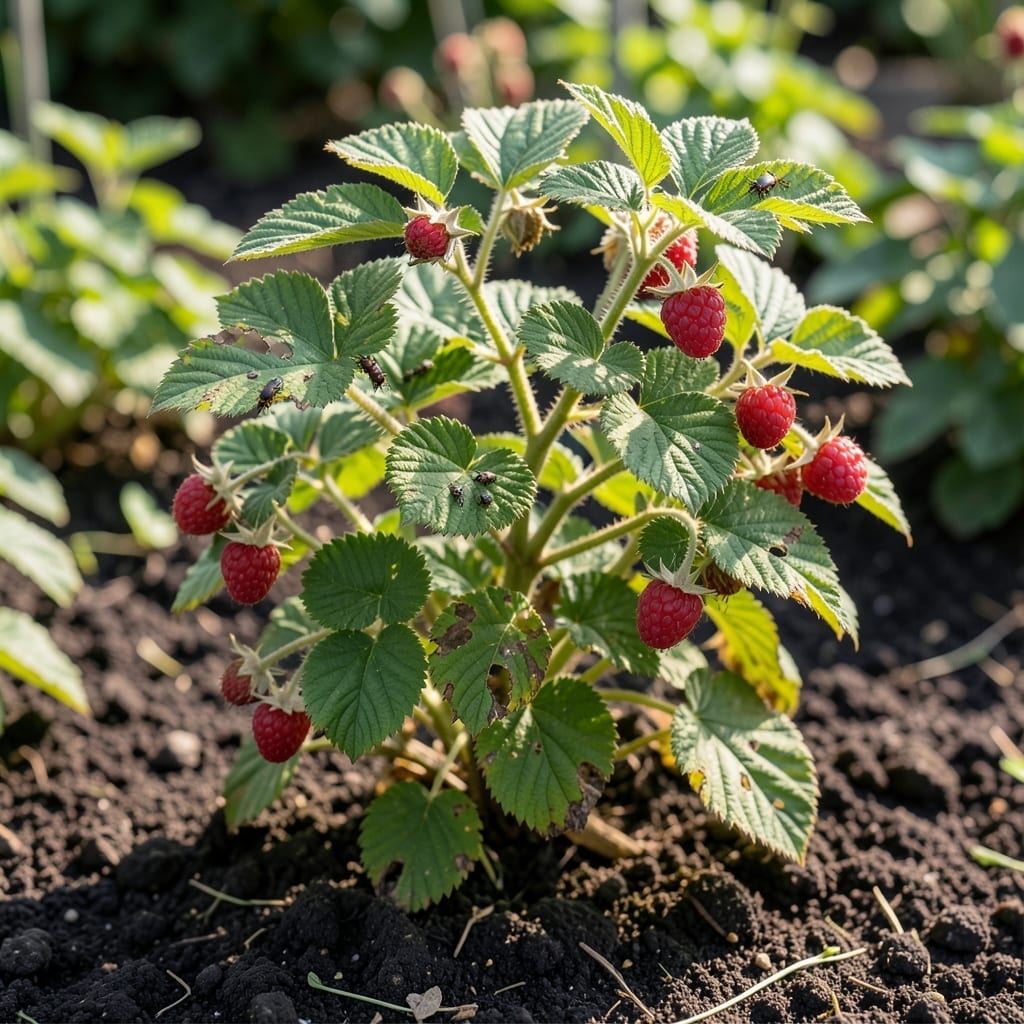
Common culprits include Japanese beetles, spider mites, sawfly larvae, and slugs. Check for chewed edges, holes, or webbing to identify the specific raspberry leaf predator.
I’ve seen these invaders firsthand in my garden. Japanese beetles leave skeletal leaves, while spider mites create fine webbing on the undersides. Sawfly larvae often roll the leaves as they feed, and slugs leave silvery slime trails near the damage. 🔥
Early detection is key to saving your crop before the problem spreads. 💫
💡 In This Article
Japanese beetles create distinctive lace-like patterns by eating leaf tissue between the veins. They’re most active on warm, sunny days, typically feeding in groups at the top of plants. These 1/2-inch metallic green and copper pests can defoliate a raspberry bush in 48 hours if left unchecked. 🔥
Spider mites are nearly invisible to the naked eye but leave telltale signs. Look for yellow or bronze stippling on the upper leaf surfaces and fine silk webbing on the undersides. They thrive in hot, dry conditions and can multiply rapidly, with a single female laying up to 20 eggs per day in ideal conditions.
✨
Sawfly larvae, often mistaken for caterpillars, cause window-pane-like damage by eating the soft tissue between leaf veins. These green or yellow larvae, about 1 inch long, often curl up when disturbed. They’re most active in spring and early summer, and can completely defoliate raspberry canes if present in large numbers. 💫
Slugs leave irregular holes with smooth edges, often targeting young, tender leaves. The most obvious sign is their glistening slime trail, which they leave behind as they move. These pests are primarily nocturnal, feeding at night and hiding under debris or in soil during the day. ⚡
Each pest leaves a unique signature. Japanese beetles skeletonize, mites stipple, sawflies window-pane, and slugs leave ragged holes with slime. Observing these patterns at different times of day can help you pinpoint the exact culprit. 🌟
Look for 1/2-inch metallic green and copper beetles feeding in groups at the top of plants. They create lace-like patterns by eating tissue between leaf veins, often defoliating bushes in 48 hours.
Check for yellow or bronze stippling on upper leaves and fine silk webbing underneath. These tiny pests thrive in hot, dry conditions and multiply rapidly, with females laying up to 20 eggs daily.
Inspect plants at dawn or dusk when slugs are most active. Look for irregular holes with smooth edges and their characteristic glistening slime trails on leaves and soil.
Yes! Introduce beneficial nematodes to soil in early spring before larvae emerge. Hand-pick visible larvae and drop them in soapy water. They’re most active in spring and early summer.