
Beautiful Plants For Your Interior
Beautiful Plants For Your Interior
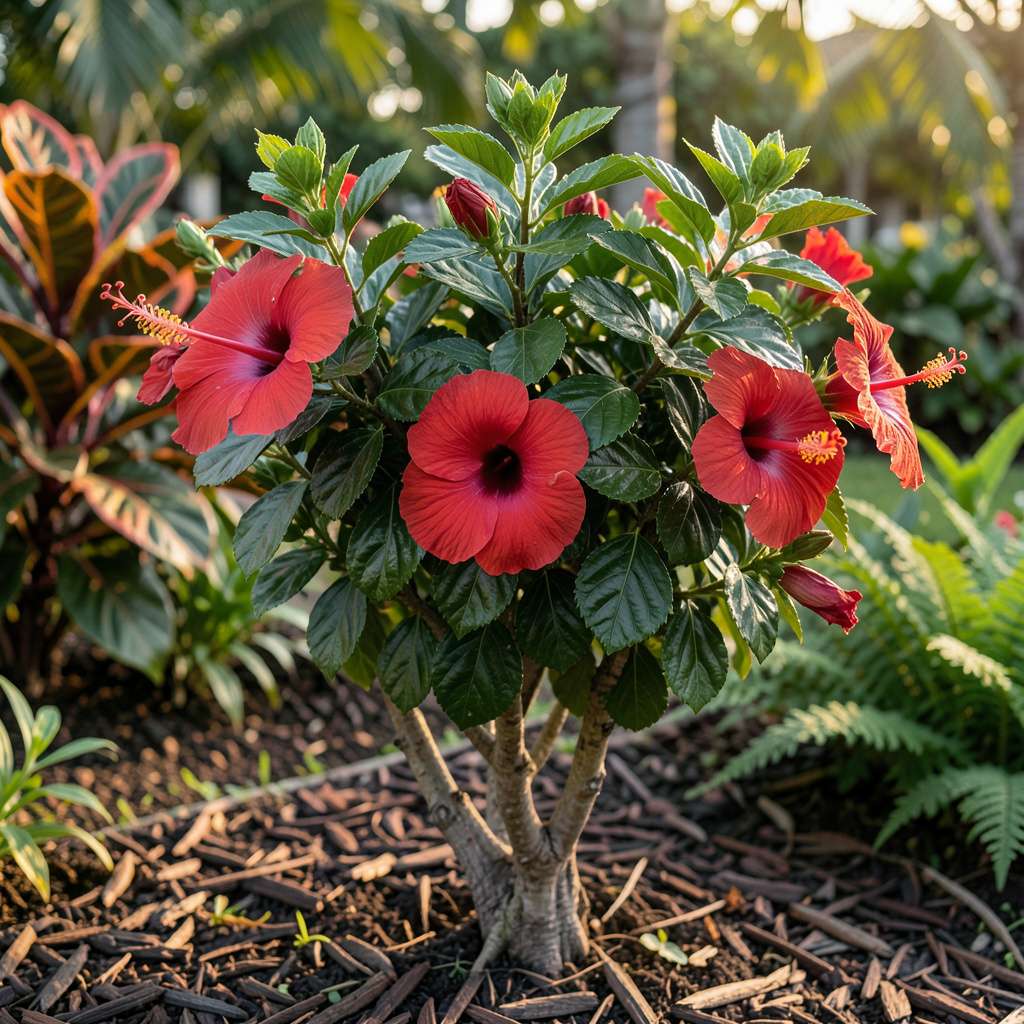
The most common culprits eating hibiscus leaves are Japanese beetles, aphids, sawfly larvae, or spider mites. Look for chewed edges, holes, or webbing to identify the pest and act quickly to prevent further damage.
I’ve found that these pests target hibiscus because of its tender foliage and high moisture content, which makes it particularly vulnerable during warm months. 🌿 Japanese beetles, for example, are most active in early summer and can defoliate a plant overnight if left unchecked. The key is early detection—inspect the undersides of leaves where many pests hide and lay eggs. Aphids often cluster on new growth, while spider mites leave behind fine silk threads that are easier to spot in morning light.
What many gardeners don’t realize is that stress factors like drought or poor soil can make hibiscus even more attractive to pests. ✨ I always recommend improving plant health first—proper watering and balanced fertilization create natural resistance. For immediate action, a strong blast of water can dislodge many soft-bodied insects before they establish colonies.
💡 In This Article
Each pest leaves a unique calling card on your hibiscus leaves. Japanese beetles create a lace-like pattern by eating tissue between veins, leaving only the leaf’s skeleton.
These metallic green and copper beetles are most active between 9-11 AM when temperatures reach 85-95°F, which is why you’ll often find them clustered on sun-facing leaves during summer mornings. 🌞
Sawfly larvae, often mistaken for caterpillars, leave semi-circular notches along leaf edges. These pale green worms (about ½ inch long) feed in groups and can strip a plant in days. Look for their distinctive “hunched” posture when moving—unlike caterpillars, they have prolegs only at the rear.
Spider mites create tiny yellow speckles that eventually turn leaves bronze, with fine webbing visible on undersides when populations explode. 🕷️
Aphids cause curled, distorted new growth and leave behind sticky honeydew that attracts ants. The green peach aphid (common on hibiscus) reproduces asexually, meaning a single female can produce 50-100 clones in a week. Check leaf undersides with a magnifying glass—you’ll see pear-shaped bodies and two tailpipe-like cornicles.
Whiteflies create similar honeydew but scatter when disturbed, forming a “snowstorm” effect around the plant. ✨
The life cycle matters for control timing. Japanese beetles spend 10 months as grubs in soil before emerging as adults. Sawfly larvae drop to pupate in soil after 2-3 weeks of feeding. Spider mites complete a generation in 5-20 days depending on heat.
This is why early June treatments work best for beetles, while mites require repeated applications every 5-7 days during hot spells. 🔄
Consider these visual clues for quick ID:
Pro tip: Shake a branch over white paper to spot tiny pests.
Mites will appear as moving specks, while thrips (another common pest) leave silvery streaks from their rasping mouthparts. The paper test works best in early morning when pests are most active but dew makes them slower. 💡
Pest damage typically shows as chewed edges, holes, or visible insects, while diseases cause spots, discoloration, or mold. Check leaf undersides for pests or their eggs—diseases rarely leave physical traces of insects. When in doubt, shake the plant over white paper to spot tiny moving pests.
Early morning is ideal for most treatments. Pests are less active, and cooler temperatures prevent solutions from evaporating too quickly. Avoid midday heat (especially above 90°F) when applying oils or soaps, as this can damage leaves. Evening applications work well for beneficial nematodes in soil.
Simple solutions like soapy water or neem oil mixtures can be very effective for mild infestations. However, severe problems often require targeted commercial products. Homemade sprays need frequent reapplication (every 5-7 days) and work best as preventive measures rather than cures for established infestations.
You’ll typically notice reduced pest activity within 24-48 hours of proper treatment. Complete elimination may take 7-14 days depending on the pest’s life cycle. Spider mites often require multiple treatments every 5-7 days, while beetles may need physical removal combined with chemical controls for full eradication.
Start with healthy soil and proper watering to strengthen plants naturally. Companion planting with herbs like basil or rosemary deters many pests. Apply 2-3 inches of organic mulch to disrupt pest life cycles. Regular inspections (especially leaf undersides) let you catch problems early before they become major infestations.
