
Beautiful Plants For Your Interior
Beautiful Plants For Your Interior
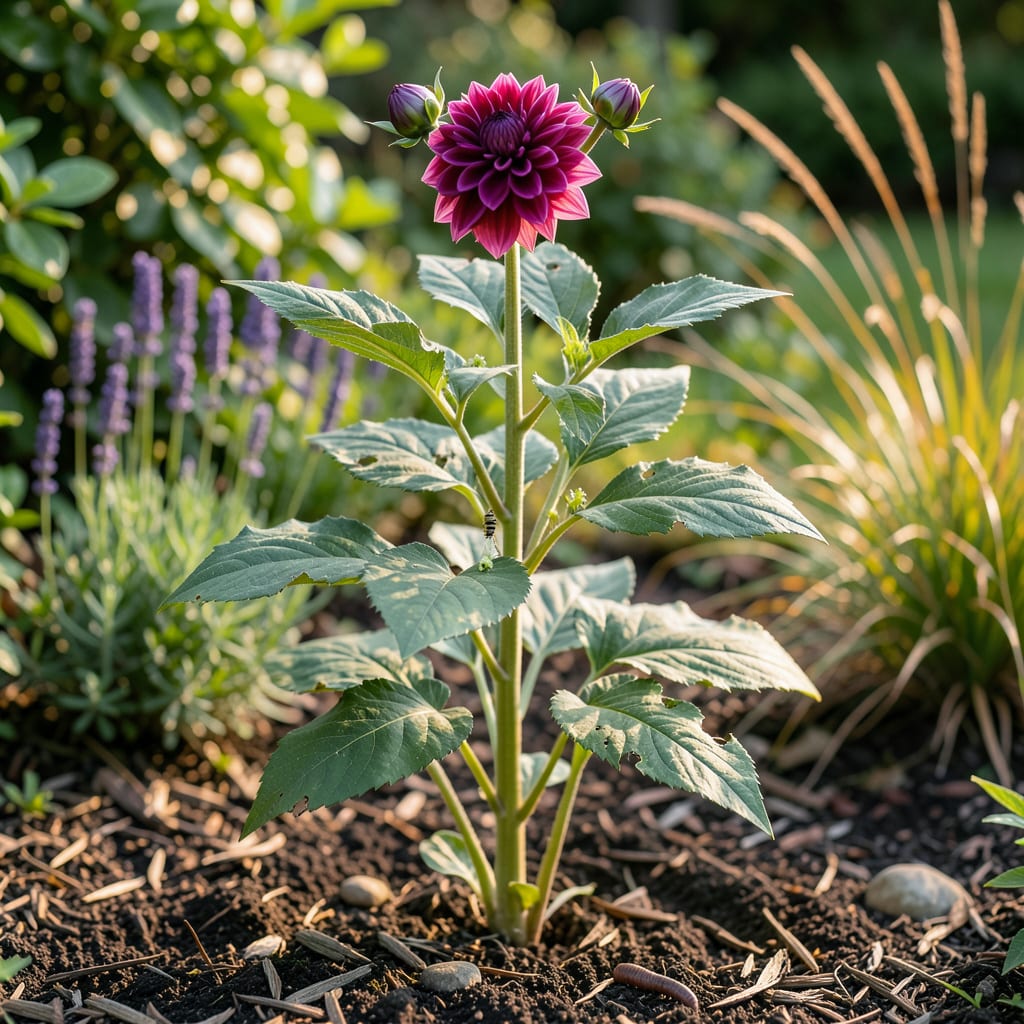
Slugs, snails, earwigs, and Japanese beetles are the most common culprits eating dahlia leaves. Look for irregular holes, chewed edges, or silvery slime trails to identify the pest and take action.
These garden invaders are particularly drawn to dahlias because of their tender foliage and high moisture content. 🌿 I’ve noticed that slugs and snails are most active during damp conditions, while Japanese beetles tend to strike in broad daylight, often skeletonizing leaves as they feed. Earwigs, on the other hand, prefer to hide during the day and munch on leaves at night, leaving behind distinctive jagged edges that set them apart from other pests.
What’s critical here is understanding their feeding patterns. This knowledge helps you choose the right control method—whether it’s setting up beer traps for slugs, applying neem oil for beetles, or creating barriers to deter earwigs. 💫
💡 In This Article
Each pest leaves a unique “signature” on dahlia leaves that reveals its identity. Slugs and snails create irregular, ragged holes with smooth edges, often accompanied by shiny silvery slime trails that glisten in morning light.
These trails are actually mucus secretions containing calcium carbonate, which helps them glide while protecting their soft bodies from sharp leaf edges. 🌿
Earwigs operate differently—they chew from the leaf edges inward, creating distinctive jagged, uneven patterns that resemble tiny bite marks. Their damage often appears overnight since they’re nocturnal feeders. Japanese beetles, however, work during daylight hours, systematically skeletonizing leaves by eating the soft tissue between veins, leaving behind a lacy, transparent framework.
The feeding patterns correlate directly with each pest’s mouthparts. Slugs use a rasp-like radula with thousands of microscopic teeth, while beetles employ powerful mandibles that can consume 300% their body weight daily. Earwigs have pincer-like cerci they use to hold leaves while chewing with their mandibles.
These biological differences explain why the damage looks so distinct.
Timing matters too—slug damage peaks after rain when humidity exceeds 80%, while beetle activity surges when temperatures hit 85°F+. Earwigs thrive in 60-70°F conditions with moderate moisture. Observing when damage appears helps pinpoint the culprit before you even see the pest. ✨
Look for these additional clues: slugs leave dried mucus trails that turn white, beetles often feed in clusters starting at the top of plants, and earwigs may leave behind small black droppings near damaged areas. The location of damage on the plant also tells a story—ground-level holes suggest slugs, while upper-leaf skeletonization points to beetles.
Pro tip: Use a flashlight to inspect plants 2 hours after sunset when most pests are active. The slime trails will appear most visible under angled light, and you might catch earwigs in action. This nighttime inspection reveals what daytime observations miss. 💫
Look for irregular holes with smooth edges and silvery slime trails on leaves or soil. These trails glisten in morning light and dry to a white residue. Slugs/snails are most active after rain when humidity exceeds 80%.
Their powerful mandibles target soft tissue between veins, leaving the tougher vein structure intact. This creates the characteristic lacy pattern. Beetles feed in groups during daylight, often starting at the top of plants where tender new growth appears.
Inspect plants 2 hours after sunset when earwigs are most active. Use a flashlight to spot their jagged chewing patterns along leaf edges. You might even catch them in action—earwigs hide during the day in moist, dark places.
Beer traps (for slugs), copper tape (creates mild electrical charge), and diatomaceous earth (microscopic cuts) work well. Even crushed eggshells around plants can deter soft-bodied pests. Refresh beer traps every 2-3 days for best results.
Neem oil needs reapplication every 7-10 days or after rain. Diatomaceous earth works until wet—reapply after watering or rain. Beer traps should be refreshed every 2-3 days. Rotate methods monthly to prevent pests from adapting.
