
Beautiful Plants For Your Interior
Beautiful Plants For Your Interior
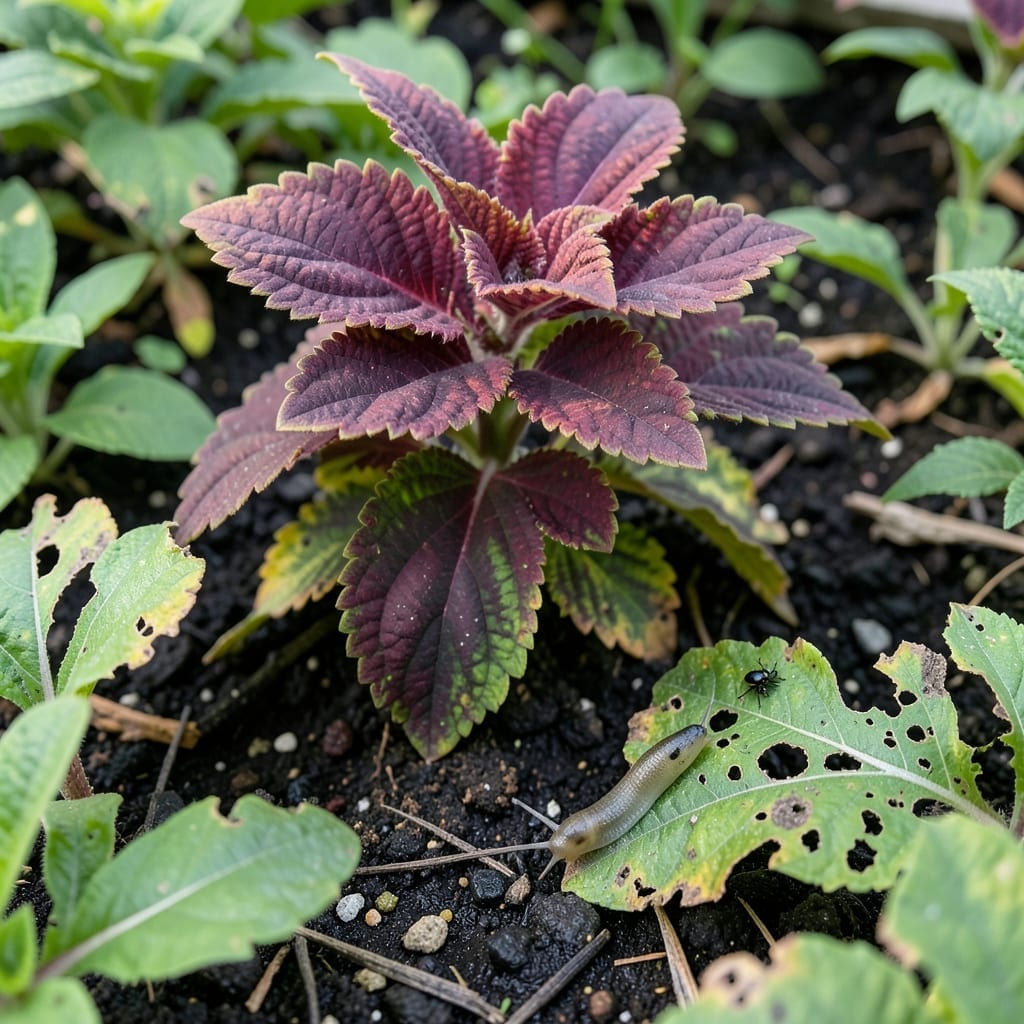
Common pests like slugs, snails, Japanese beetles, or caterpillars are likely eating your coleus leaves. Check for jagged edges or holes, and look under leaves for eggs or larvae.
These invaders thrive in moist, shaded environments where coleus often grows. I’ve noticed slugs and snails leave slimy trails near damaged foliage, while beetles tend to skeletonize leaves by eating tissue between veins. 🔥 Caterpillars often roll leaves into tubes as they feed, so inspecting both surfaces reveals their presence.
💡 In This Article
Each pest leaves a unique signature on coleus foliage. Slugs and snails create irregular holes with ragged edges, often leaving a telltale silver slime trail on leaves and soil. These mollusks feed primarily at night or during damp conditions, when humidity levels exceed 85%.
Their damage appears suddenly, with entire leaves disappearing overnight in severe cases. 🔥
Japanese beetles, on the other hand, work during daylight hours. They skeletonize leaves by consuming tissue between veins, leaving a lacy pattern. Adult beetles are 1/2-inch long with metallic green bodies and copper wings. Their grubs (white, C-shaped larvae) feed on roots, causing wilting even when foliage looks intact.
This dual attack makes them particularly destructive to coleus plants. ✨
Caterpillars and loopers create different damage patterns. Armyworms chew large, irregular holes in leaf margins, while cabbage loopers create small, scattered holes. Both pests often hide under leaves or in soil during the day. Their frass (insect waste) appears as small, dark pellets on foliage—a key identification clue most gardeners overlook. 💫
Life cycle timing affects when you’ll spot these pests. Slugs lay eggs in clusters of 10-50 in moist soil, hatching in 2-4 weeks. Japanese beetles emerge as adults in early summer, with peak activity between 9 AM and 3 PM on sunny days.
Caterpillars go through 4-6 instars (developmental stages) over 2-3 weeks, with each stage causing progressively more damage. 🌟
Environmental conditions influence pest activity. Coleus grown in shaded areas with consistent moisture are 3 times more likely to attract slugs than those in sunnier spots. Japanese beetles prefer plants in full sun, while caterpillars thrive in both sunny and shaded locations. Monitoring these patterns helps predict and prevent infestations before they cause significant damage.
⚡
Look for irregular holes with ragged edges and a silver slime trail on leaves or soil. Slugs feed at night, so check plants early in the morning for fresh damage.
They consume the soft tissue between veins, leaving a lacy pattern. These 1/2-inch metallic green pests are most active on sunny days between 9 AM and 3 PM.
Use neem oil or spinosad. Mix 1 tablespoon neem oil with 1 quart of water and spray every 7-10 days. Spinosad is OMRI-listed and effective against chewing pests.
Sprinkle it in the evening when slugs are active, focusing on soil and lower leaves. Reapply after rain or watering, as it must stay dry to work effectively.