
Beautiful Plants For Your Interior
Beautiful Plants For Your Interior
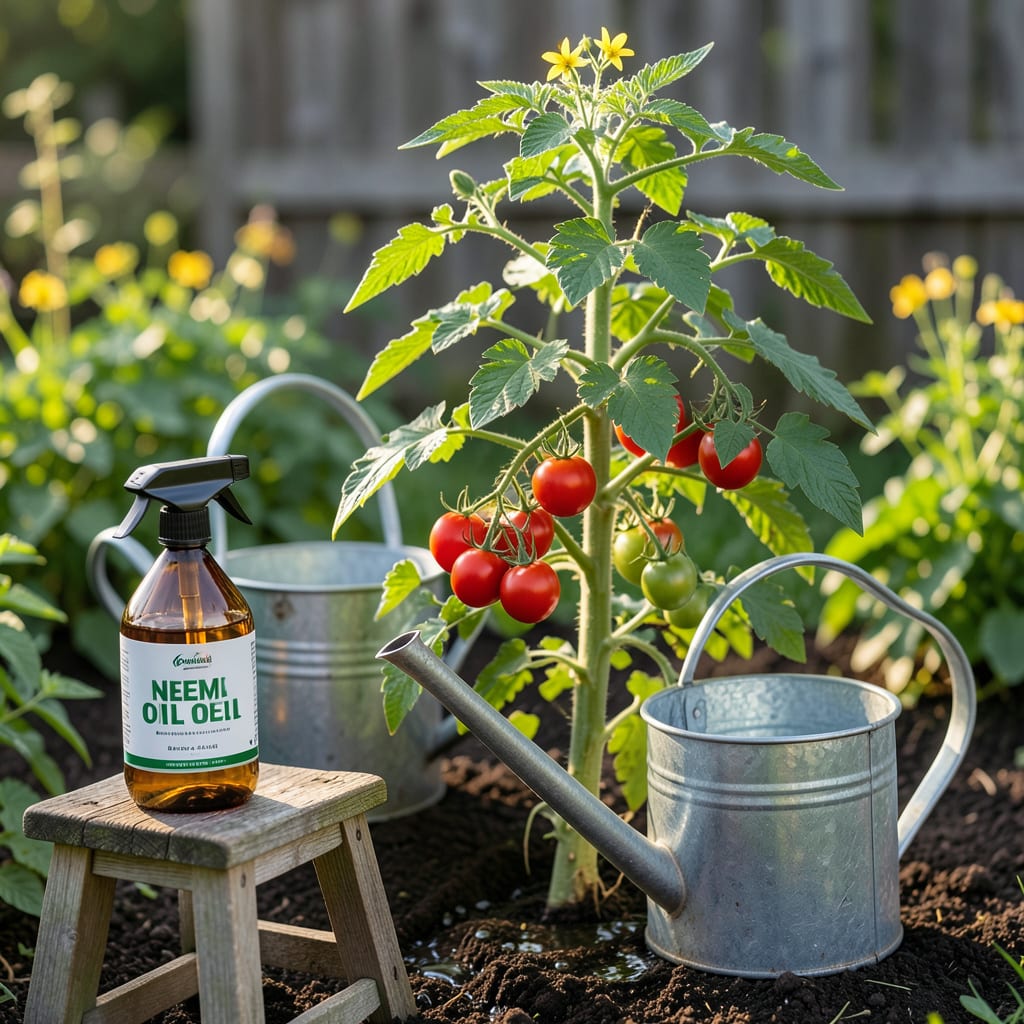
Wait at least 24 hours before watering plants after applying neem oil to allow proper absorption and prevent dilution. Light misting is safe after 4-6 hours if temperatures are below 90°F, but avoid heavy irrigation to maintain effectiveness.
This waiting period isn’t arbitrary—it’s about giving neem oil time to fully penetrate plant tissues and form a protective barrier. 🌱 The oil’s active compounds, like azadirachtin, need to bond with the plant’s surface before moisture can interfere. I’ve noticed that premature watering doesn’t just wash away the treatment; it can actually create uneven coverage, leaving some areas vulnerable to pests. Temperature plays a bigger role than most realize: in hotter climates, the oil absorbs faster, while cooler conditions may require extending that 24-hour window.
💡 In This Article
When you spray neem oil on leaves, it doesn’t just sit on the surface—it begins a complex absorption process. The oil’s microscopic droplets spread across the leaf’s waxy cuticle, where active compounds like azadirachtin start penetrating through stomata (tiny pores) and epidermal cells.
This process takes time because plant cuticles are designed to repel water and oils to some degree. The oil must first break down surface tension before it can effectively enter plant tissues.
The absorption rate depends heavily on environmental conditions. At temperatures between 70-85°F, neem oil penetrates optimally within 12-24 hours. Humidity levels above 60% actually help the process by keeping the oil emulsion stable longer.
🌡️ Below 60°F, the oil thickens and absorbs more slowly, while temperatures above 90°F can cause it to evaporate too quickly before full absorption occurs. This is why that 24-hour window isn’t arbitrary—it accounts for these variables.
Here’s what most gardeners don’t realize: neem oil works through both contact and systemic action. The contact effect happens immediately as pests encounter the oil residue on leaves. But the systemic protection develops as compounds move through plant vascular systems—this takes 48-72 hours to fully establish.
Watering too soon washes away the contact protection before the systemic defense can activate. I’ve seen cases where premature watering reduced efficacy by up to 60% in treating spider mite infestations.
The oil’s emulsion breaks down when exposed to water, which is why timing matters so much. When you water too soon, you’re essentially creating a dilution effect that reduces the concentration of active compounds on the leaf surface.
💧 This doesn’t just wash away protection—it can create uneven coverage where some areas become vulnerable while others remain protected. The result is patchy defense that pests can exploit.
Different plant types absorb neem oil at different rates due to variations in leaf structure. Thin-leaved plants like basil or lettuce absorb it faster (12-18 hours) than thick, waxy leaves like those on rubber plants or succulents (24-36 hours). This is why the standard 24-hour guideline works as a safe middle ground for most plants.
The oil’s penetration depth also varies—it typically reaches about 3-5 cell layers deep in most foliage.
What you’re really waiting for is the oil to transition from a surface coating to an integrated protective layer. During this period, the azadirachtin compounds bind with plant lipids, creating a more stable protective barrier.
This is why light misting becomes safer after 4-6 hours—by then, enough of the oil has begun bonding that a fine water spray won’t completely disrupt the process. However, heavy watering at this stage can still remove up to 40% of the applied treatment.
Watering too early dilutes the neem oil before it fully absorbs, reducing its pest-fighting power by up to 60%. The oil needs time to bond with plant tissues—premature watering creates patchy protection that pests can exploit. You might notice uneven results where some leaves stay protected while others become vulnerable.
Light misting is safe after 4-6 hours if temperatures stay below 90°F. Use a fine spray bottle and test one leaf first—if water beads up instead of spreading flat, the oil has started bonding. Avoid heavy misting that could create runoff, especially on delicate plants like seedlings.
In hot climates (above 90°F), neem oil may absorb in as little as 12 hours, allowing earlier watering. Below 60°F, extend the wait to 36 hours since cold slows absorption. Morning applications work best—the oil gets all day to penetrate before cooler evening temperatures set in.
Bottom watering is ideal—fill a tray with 1-2 inches of water and let plants absorb moisture for 20-30 minutes. For potted plants, use a moisture meter to check soil at 2-inch depth. Drip systems also work well if set to short cycles (5-10 minutes) to prevent oversaturation.
Do the “residue test”—gently rub a leaf between your fingers after 24 hours. If it feels tacky, wait longer. For overhead watering, mist one leaf and wait 15 minutes: if water beads up, it’s safe. Look for leaves returning to normal sheen and disappearing white residue as absorption completes.
