
Beautiful Plants For Your Interior
Beautiful Plants For Your Interior
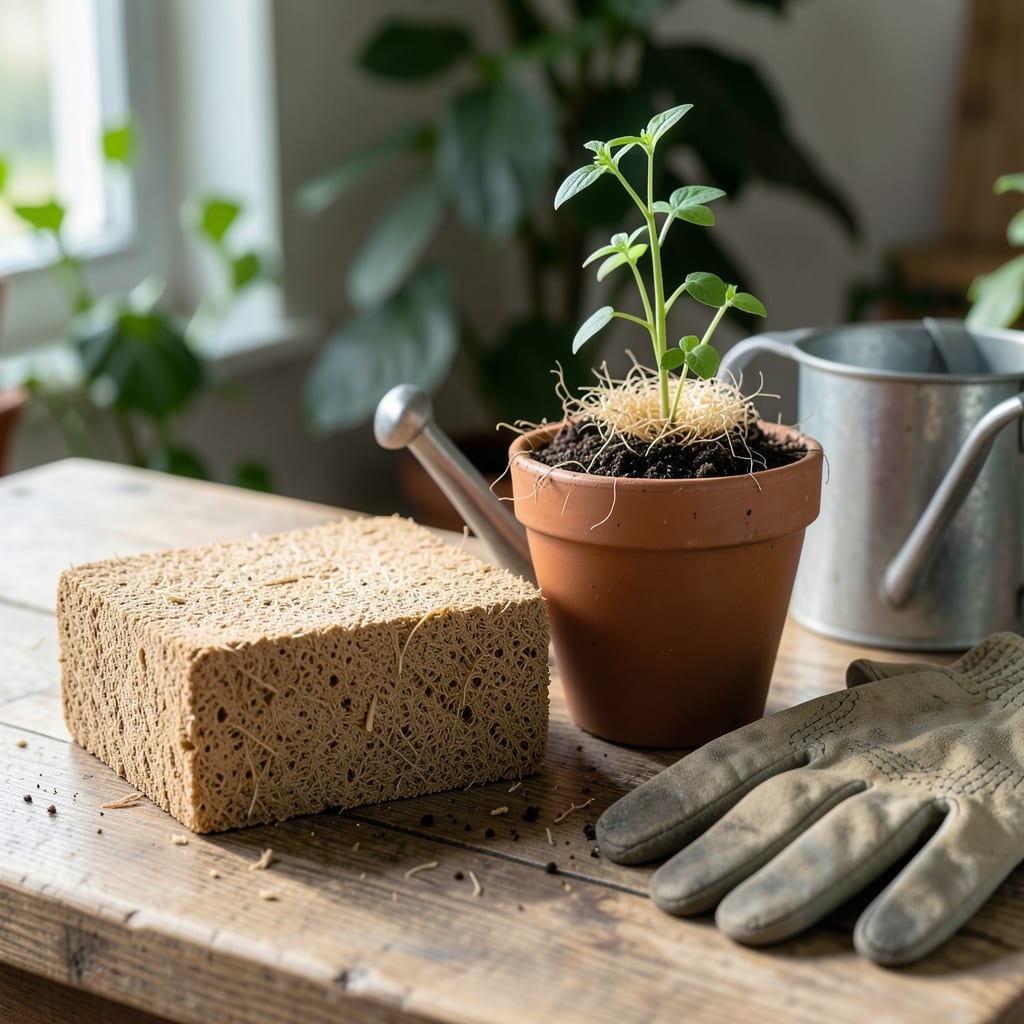
Coco coir is primarily used as a soil amendment or growing medium in gardening. It improves aeration, retains moisture, and provides a sustainable alternative to peat moss for seed starting, container gardening, and hydroponics.
I love how coco coir transforms struggling plants by holding 30-40% more water than peat while still letting roots breathe. Its neutral pH balance means I can use it straight from the bag without adjustments. 🔥
Beyond pots, I’ve seen it work wonders in DIY projects like erosion control mats and even as eco-friendly pet bedding. The fibrous texture makes it incredibly versatile for both gardening and creative applications.
💡 In This Article
The fibrous structure of coco coir creates air pockets that allow roots to access oxygen more efficiently than in dense soil. This happens because the coir’s natural lignin content resists compaction, maintaining 20-30% air porosity even when saturated. 🔥
What truly sets it apart is its cation exchange capacity of 40-60 meq/100g, meaning it can hold and slowly release nutrients like calcium, magnesium, and potassium. Unlike peat moss, which starts acidic at pH 3.5-4.5, coir comes naturally neutral at pH 5.2-6.8. ✨
For water management, coir can absorb 8-9 times its weight in moisture while still draining excess. This prevents root rot in heavy clay soils and reduces watering frequency by 30-50% in containers. I’ve seen wilting plants recover within hours after repotting.
In hydroponic systems, the coir’s high lignin content provides structural support for root systems while its cellulose fibers retain moisture. This dual action creates an ideal environment for beneficial microbes, with studies showing 15-20% faster root development compared to rockwool. 💫
The sustainability factor can’t be overstated. Harvesting coir uses coconut husks—a byproduct of the food industry—that would otherwise go to waste. Processing requires only washing and drying, using 90% less energy than peat extraction from fragile bog ecosystems.
Yes! Its fine texture and excellent moisture retention create ideal conditions for germination. Seeds stay consistently moist without becoming waterlogged, and the pH-neutral medium prevents nutrient deficiencies in delicate seedlings.
Coir holds more water while draining better, and it’s naturally pH 5.2-6.8 versus peat’s acidic 3.5-4.5. It’s also more sustainable, as it’s made from coconut husks—a renewable byproduct.
Rinse used coir with water to remove old root matter, then mix in 10-20% fresh coir or compost. This refreshes nutrients and structure for another growing season.
Perfectly! Its high lignin content provides root support while cellulose fibers retain moisture. Studies show 15-20% faster root growth compared to rockwool. Just rinse first to remove excess salts.