
Beautiful Plants For Your Interior
Beautiful Plants For Your Interior
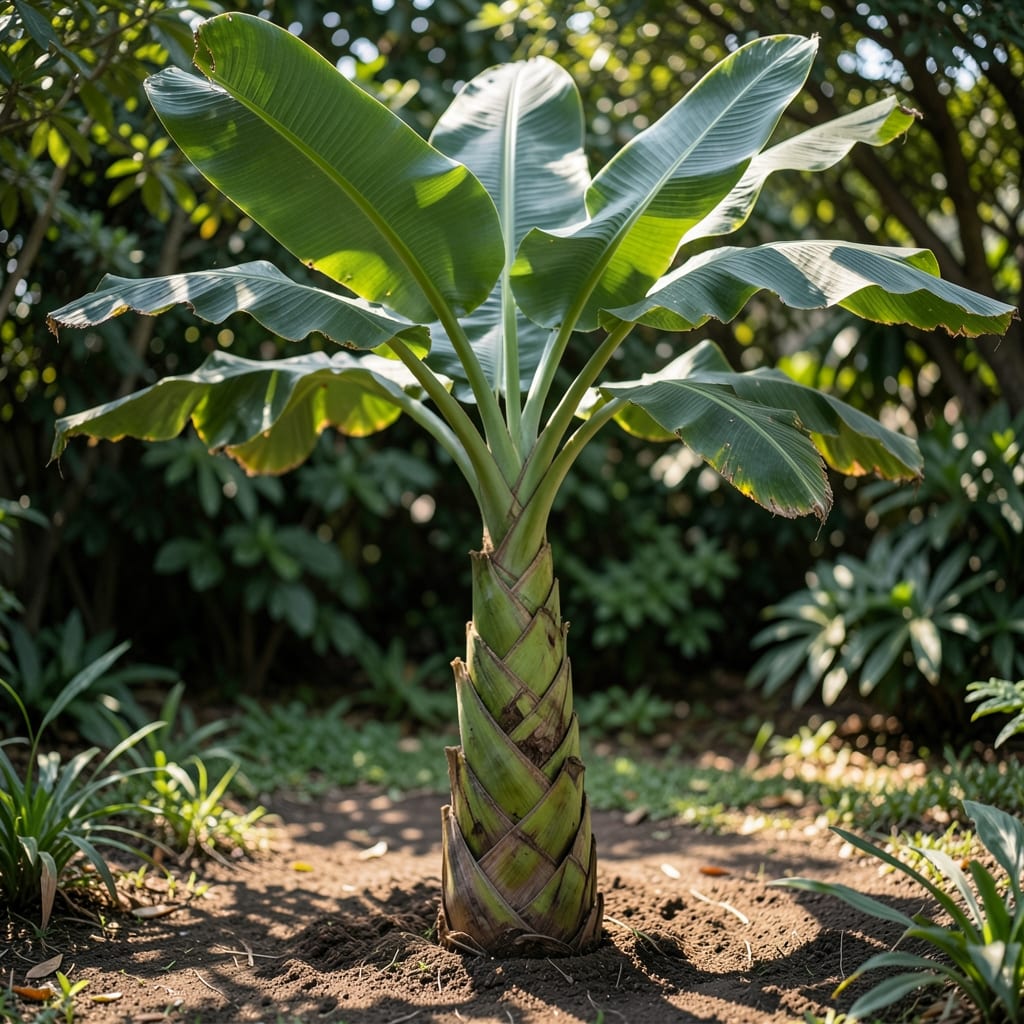
Musa is a genus of flowering plants in the banana family, commonly known as bananas or plantains. They are tropical herbs with large leaves and edible fruit, widely cultivated for food and ornamental purposes.
I love how these plants transform landscapes with their massive, paddle-shaped leaves that can grow up to 9 feet long. 🌿 What many don’t realize is that what looks like a trunk is actually a pseudostem made of tightly packed leaf bases. The fruit develops in hanging clusters, with some varieties producing sweet bananas while others yield starchy plantains used in cooking.
💡 In This Article
The pseudostem of Musa plants is a marvel of nature. It forms from overlapping leaf sheaths that wrap around each other, creating what appears to be a trunk. This structure can reach heights of 15-30 feet, though it’s not woody at all.
The actual stem grows underground as a corm, storing nutrients and energy for the plant’s rapid growth. 🌱
Each leaf emerges as a tightly rolled spear from the center, unfurling to reveal its full 2-9 foot length. The leaves are arranged in a spiral pattern, with new growth pushing older leaves outward. Their large surface area maximizes photosynthesis, which is why these plants thrive in tropical climates with abundant sunlight.
Musa plants produce impressive flower clusters called thyrses. These hang downward from the pseudostem and contain both male and female flowers. The female flowers develop into fruit without fertilization (parthenocarpy), which is why commercial bananas are seedless. Each cluster can bear 50-150 individual fruits, arranged in tiers called “hands.” ✨
The fruit varies significantly between species. Sweet bananas typically have 3-4 sides and a yellow peel when ripe, while plantains are more angular with thicker skins that stay green or turn black. The flesh color ranges from white to deep orange, depending on the variety and ripeness stage.
These plants are classified as giant herbs, not trees, despite their size. Their growth rate is astonishing—some varieties can produce new leaves every 7-10 days under ideal conditions.
The entire life cycle from planting to fruiting can take 9-12 months, with the mother plant dying after fruiting but producing offsets (suckers) at its base to continue the growth cycle. 💫
Yes, Musa is the genus that includes all banana and plantain varieties. The “tree” is actually a giant herb with a false stem made of layered leaves.
Most cultivated varieties reach 15-30 feet tall. Dwarf types stay under 10 feet, perfect for containers or small gardens.
They prefer 78-86°F and high humidity. In cooler zones, grow in pots to move indoors or protect the corm with thick mulch during winter.
Brown edges usually indicate underwatering or low humidity. Ensure consistent moisture and mist leaves in dry climates. These plants communicate needs through their foliage.