
Beautiful Plants For Your Interior
Beautiful Plants For Your Interior
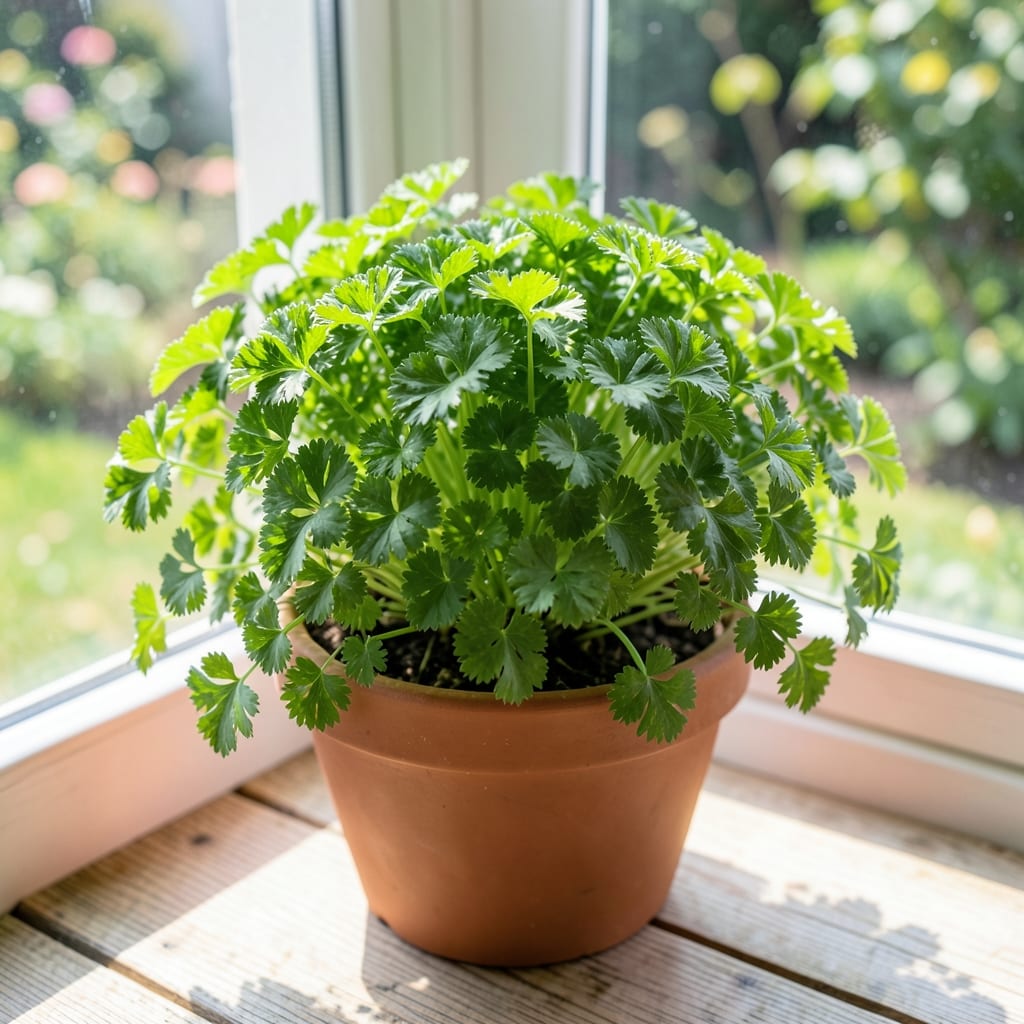
Parsley leaves are bright green, finely divided into small, curly or flat segments with jagged edges. Curly varieties have tight, ruffled clusters, while flat-leaf types feature broader, tooth-edged leaves.
I notice curly parsley has a more decorative appearance with its dense, frilly growth, making it a favorite garnish. Flat-leaf varieties, on the other hand, have a more robust structure with serrated edges that resemble tiny saw blades. This visual distinction helps me pick the right type for cooking or presentation. ✨
Both varieties share the same vibrant emerald hue, but their shapes serve different purposes in the kitchen and garden. 💫
💡 In This Article
Curly parsley displays a dense, almost fern-like growth pattern. Its leaves form tight, spiral clusters that can reach 12-18 inches in height, with each leaflet measuring about 0.5-1 inch long. The ruffled edges create a textured, three-dimensional appearance that catches light beautifully, making it ideal for decorative purposes. 🌟
The leaf arrangement follows a pinnate pattern, where leaflets grow in pairs along a central stem. This gives curly parsley its characteristic bushy silhouette. Under close inspection, you’ll notice the surface has a slightly bumpy texture due to the curled edges, which also helps it retain moisture better than flat varieties.
Flat-leaf parsley, also called Italian parsley, presents a more streamlined look. Its leaves grow in a similar pinnate pattern but remain smooth and broad, typically measuring 1-2 inches long. The edges feature distinct serrations that resemble miniature saw teeth, creating a more angular silhouette compared to the rounded appearance of curly parsley. ✨
This variety tends to grow taller, often reaching 18-24 inches, with a more open, airy structure. The leaves have a glossier surface and a slightly thicker texture, which contributes to its more robust flavor profile. Gardeners often prefer flat-leaf for its easier cleaning and more uniform growth habit.
Both types share the same vibrant, deep green coloration, though flat-leaf parsley may appear slightly darker due to its smoother surface reflecting less light. The color remains consistent from base to tip, with no variegation or discoloration in healthy specimens. 💫
The stems of both varieties are thin and fibrous, ranging from light to medium green. Curly parsley stems tend to be more flexible, while flat-leaf stems show greater rigidity to support the heavier leaf structure. This stem difference becomes particularly noticeable when the plants reach maturity at about 70-90 days after planting.
Curly parsley has tight, ruffled clusters with densely packed leaflets. Flat-leaf, or Italian, features broader, smoother leaves with serrated edges.
Variations occur due to growing conditions or maturity. Younger leaves appear lighter green and less defined, while mature ones show deeper color and clear textures.
Yes! Curly parsley feels springy and textured, while flat-leaf has a smoother, sturdier surface. Both should feel fresh and slightly crisp when healthy.
Healthy parsley stays deep green. Yellowing or browning indicates stress from overwatering, poor soil, or age. Remove discolored leaves promptly.