
Beautiful Plants For Your Interior
Beautiful Plants For Your Interior
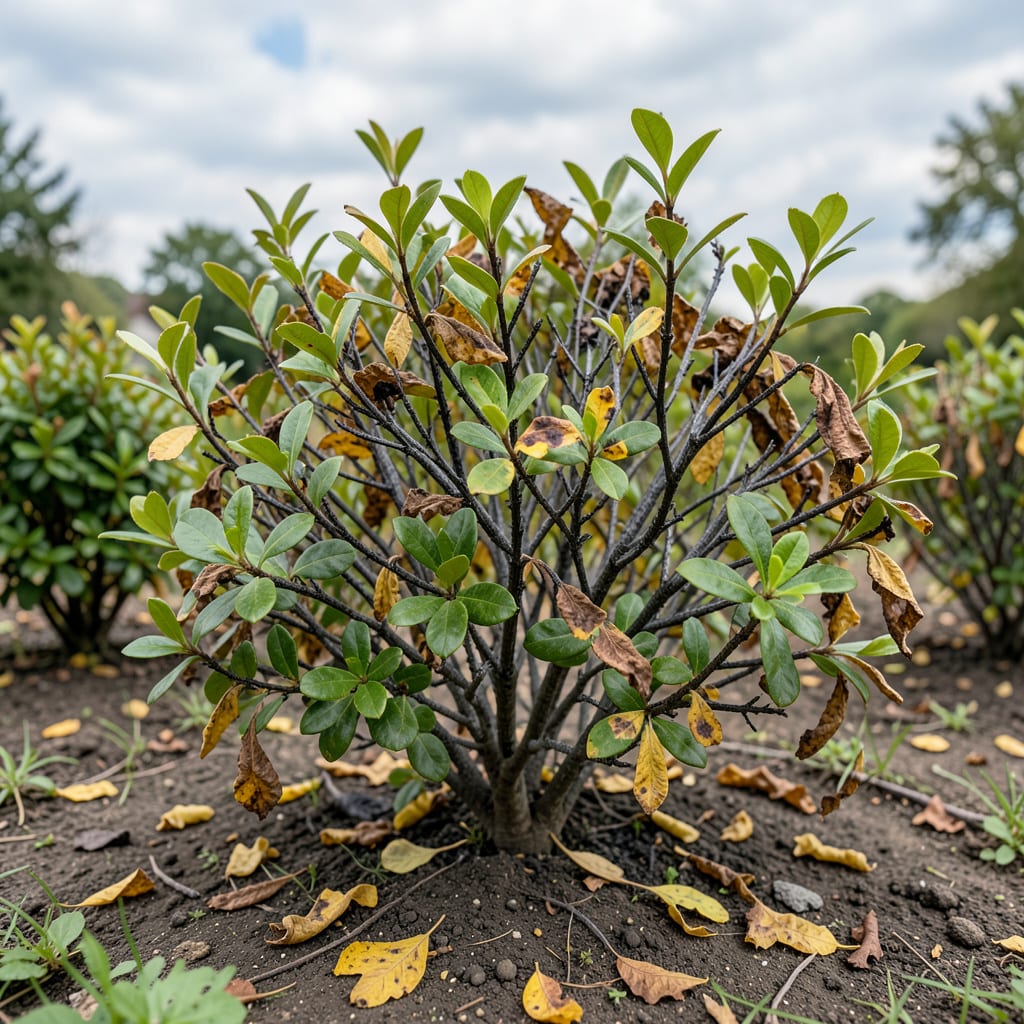
I first noticed it as strange dark spots on my boxwood leaves last spring. Within days, those spots turned into large brown patches, and the leaves started dropping fast—like the plant was shedding its skin.
This isn’t just normal browning. The disease moves quickly, turning healthy green foliage into bare stems almost overnight. You’ll see circular lesions with dark borders, often starting on the lower branches where moisture lingers.
Left unchecked, entire shrubs can defoliate in 2-3 weeks. The worst part? It spreads through water, tools, and even your hands, jumping from plant to plant before you realize what’s happening.
Early detection is your best defense. Here’s how to spot it before it’s too late.
Boxwood blight is a destructive fungal disease caused by Calonectria pseudonaviculata (syn. Cylindrocladium pseudonaviculatum). This pathogen thrives in warm, humid conditions, making it a persistent threat to boxwood shrubs, especially in poorly ventilated or densely planted areas. Below are the primary causes behind its development and spread.
The disease spreads through microscopic spores produced by the fungus. These spores are easily carried by water—splashing rain, irrigation, or even dew can transport them from infected plants to healthy ones. Contaminated tools, clothing, or wildlife (e.g., birds, deer) can also move spores between locations. Once spores land on susceptible boxwood foliage, they germinate under moist conditions, initiating infection.
Boxwood blight flourishes in temperatures between 60–80°F (15–27°C) with high humidity or prolonged leaf wetness (6+ hours). Overhead watering, crowded plantings, and shaded areas create a perfect breeding ground. The fungus can survive in leaf litter and soil, reinfecting plants when conditions turn favorable. Drought-stressed or over-fertilized boxwoods are particularly vulnerable due to weakened defenses.
While all boxwood (Buxus spp.) can be affected, some cultivars—such as Buxus sempervirens (American boxwood) and Buxus sinica (Korean boxwood)—are highly susceptible. The fungus can also infect related plants like Pachysandra and Sarcococca, which may serve as alternate hosts, perpetuating the disease cycle in gardens.
Once you’ve confirmed boxwood blight in your garden, act fast to stop its spread. Here’s how to tackle it effectively:
Dig up and destroy (do not compost) any heavily infected boxwoods. Bag the plants in sealed plastic to prevent spores from spreading. Sanitize your tools with a 10% bleach solution or rubbing alcohol after handling.
Apply a copper-based fungicide or chlorothalonil to healthy plants as a protective measure. Reapply every 7–14 days during wet weather or as directed. Rotate fungicides to avoid resistance.
Rake and remove fallen leaves, as the fungus Calonectria pseudonaviculata thrives in leaf litter. Disinfect garden tools, gloves, and even shoes to avoid cross-contamination.
Thin out dense plantings to reduce humidity. Space boxwoods at least 2–3 feet apart and prune to allow airflow. Avoid overhead watering to keep foliage dry.
Prevention Tips:
Early intervention is key—don’t wait for the blight to worsen!
Rapidly! Under ideal conditions, it can move through an entire shrub in 2-3 weeks. Early detection is crucial to prevent it from jumping to neighboring plants.
No. American and Korean boxwoods are highly vulnerable, while some hybrids show better resistance. Still, no variety is completely immune to this fungal disease.
Maybe. If caught early, removing affected branches and applying fungicide may help. Severe cases often require removing the entire plant to protect others.
Ignoring early signs and using contaminated tools. Always sanitize pruners with 10% bleach solution between cuts. Prevention is easier than treatment!
