
Beautiful Plants For Your Interior
Beautiful Plants For Your Interior
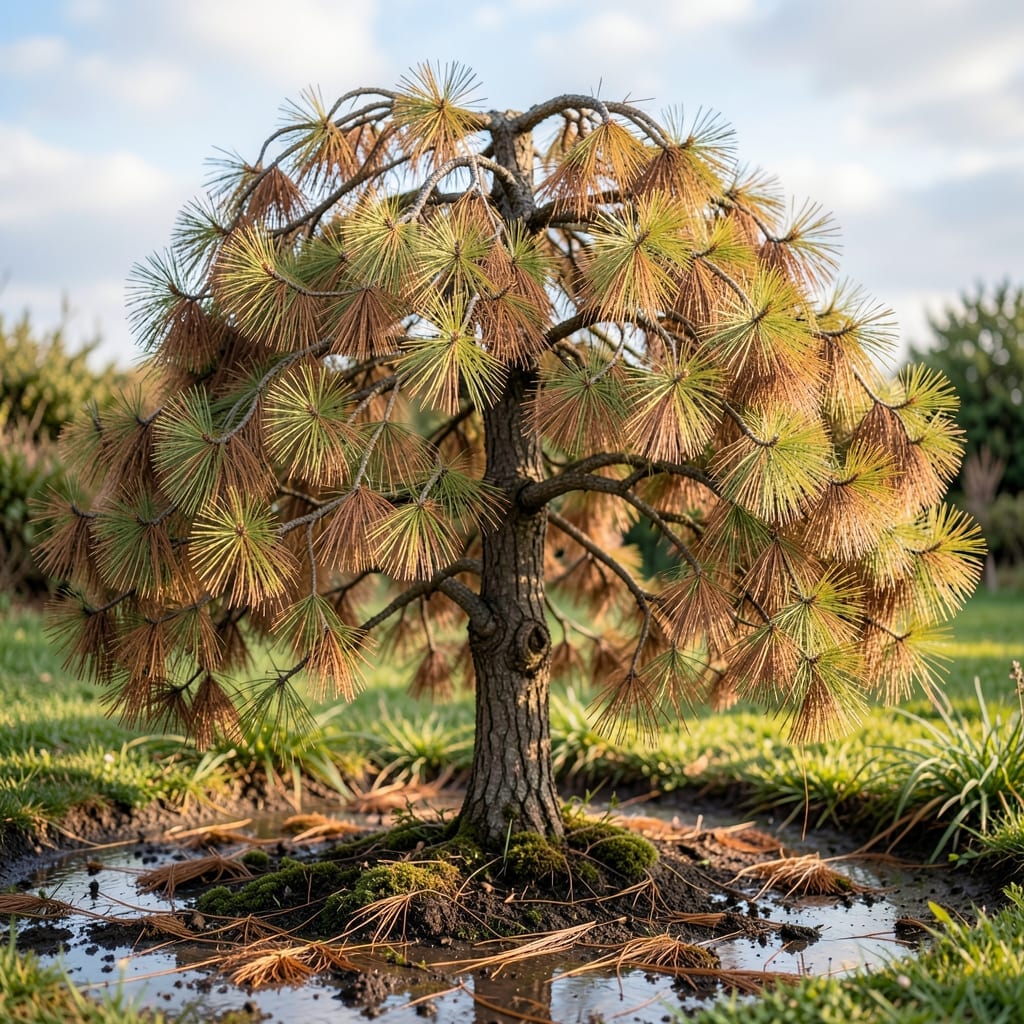
Yellow needles dropping like autumn in July. I’ve seen this too many times—pine trees drowning from kindness, their roots gasping under soggy soil while well-meaning gardeners keep the hose running.
The telltale signs go beyond color: wilting new growth, bark that darkens or peels, and a faint sour smell from the base. Most people mistake these for drought stress and double down on watering.
Catching it early means the difference between revival and removal. The fix is simpler than you’d think: stop watering and let the soil dry to a 3-4 inch depth before checking again.
Works for young transplants and established pines alike. Here’s how to spot the red flags before it’s too late.
Overwatering a pine tree often stems from well-intentioned but misguided care. Here’s why it happens, broken down by common causes:
Pine trees are adapted to drought-tolerant conditions and thrive in well-drained soil. When gardeners water them too often—especially in heavy or clay-rich soils—the roots suffocate. Unlike lawns or annuals, pines need deep, infrequent watering (about 1–2 inches per week, including rainfall). Overdoing it prevents oxygen from reaching the roots, leading to rot.
Soil that retains moisture (e.g., compacted or high-clay soils) is a major culprit. Pine roots require aerated, sandy loam to avoid waterlogging. If water pools around the base or drains slowly after rain, the tree’s fine feeder roots drown, disrupting nutrient uptake. Amending soil with organic matter or sand can improve drainage before planting.
Automatic sprinklers or drip systems set for thirstier plants can accidentally drown pines. These trees prefer moist but not soggy conditions. Audit your irrigation zones—pines should never share a watering schedule with water-loving species like hostas or ferns. Adjust timers to match the tree’s seasonal needs (less in cool, wet months).
Weather plays a role: cool, rainy seasons reduce evaporation, so pines need less supplemental water. Conversely, some gardeners overcompensate during heatwaves, not realizing pines are naturally drought-resistant. Always check soil moisture 2–3 inches down before watering—if it’s damp, hold off.
Overwatering your pine tree can lead to serious issues, but the good news is that it’s often reversible with the right steps. Below are practical solutions tailored to the most common causes of overwatering, along with prevention tips to keep your pine healthy.
If your pine tree is drowning, stop watering immediately and let the soil dry out. Pines generally need deep but infrequent watering—about 1-2 times per week for young trees and even less for mature ones. Stick your finger 2-3 inches into the soil; if it’s damp, hold off on watering. Use a moisture meter for precision.
Prevention Tip: 💡 Water early in the morning to reduce evaporation and fungal growth. Mulch around the base (but not touching the trunk) to retain moisture without suffocating roots.
Pine trees hate soggy roots. If your tree is in compacted or clay-heavy soil, amend it with sand, perlite, or organic matter to boost drainage. For potted pines, ensure the container has drainage holes and use a well-draining potting mix.
Prevention Tip: 🌡️ Plant pines in slightly elevated mounds or slopes to prevent water pooling. Avoid low-lying areas where water naturally collects.
If overwatering has led to root rot (signs: black, mushy roots or a foul odor), act fast. Trim away affected roots with sterilized pruners and repot or replant the tree in fresh, dry soil. Apply a fungicide labeled for pines if the infection is severe.
Prevention Tip: ✨ Space trees properly for airflow, and avoid overhead watering to keep foliage dry. A thin layer of pine bark mulch can also deter fungal spores.
While mulch helps retain moisture, too much can suffocate roots. Keep mulch layers 2-4 inches deep and 6 inches away from the trunk. If the mulch is waterlogged or moldy, remove and replace it with fresh material.
Prevention Tip: 🎯 Use coarse mulch (like wood chips) instead of fine materials that compact easily.
Look for yellowing needles, especially near the base, and wilting new growth. The bark may darken or peel, and the soil will stay soggy days after watering. A sour smell near the roots is another red flag.
Yes, if left untreated. Constant soggy soil suffocates roots, leading to rot. This prevents the tree from absorbing nutrients, eventually causing it to die. Catch it early to improve survival chances.
With proper care, most pines show improvement in 2-4 weeks. Stop watering, let the soil dry to 3-4 inch depth, and ensure good drainage. Severe cases may take longer or require professional help.