
Beautiful Plants For Your Interior
Beautiful Plants For Your Interior
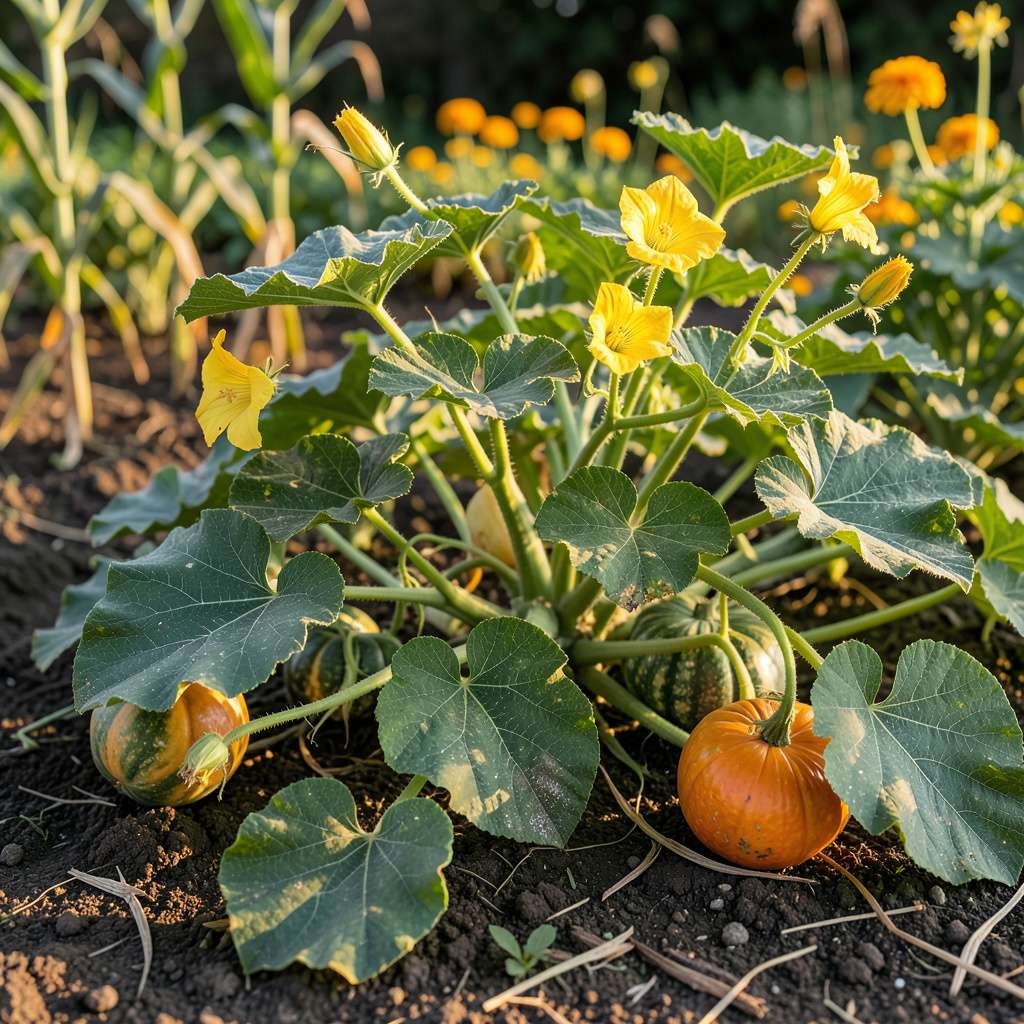
Pumpkin vines feature long, sprawling stems with large, rough, lobed leaves that are deep green with prominent white veins. They produce bright yellow flowers and develop tendrils for climbing, spreading up to 20 feet in ideal conditions.
I’ve always been fascinated by how these vines transform a garden space—their aggressive growth habit makes them perfect for vertical gardening when trained properly. 🌿 The leaves often feel slightly prickly to touch, which helps deter some pests naturally. What’s particularly interesting is how the tendrils spiral tightly around supports, allowing the vines to climb fences or trellises with surprising strength.
From my experience, the flowers appear first thing in the morning and close by afternoon, which is why pollinators like bees are most active during those early hours. The vine’s rapid expansion means you’ll need to plan for space—some varieties can cover 50 square feet or more in a single growing season!
💡 In This Article
The pumpkin vine’s leaves are its most distinctive feature, typically measuring 8-12 inches across with 5-7 deep lobes that give them a maple-leaf-like appearance. These leaves emerge with a rough, sandpaper-like texture due to tiny hairs covering both surfaces—a natural defense against pests.
The deep green coloration comes from high chlorophyll content, while the prominent white veins create a striking contrast that’s especially visible when backlit by sunlight. 🌱
Stems on pumpkin vines develop with a distinctive angular, ridged pattern and grow up to 1 inch thick at maturity. The surface feels slightly fuzzy to the touch, similar to peach skin, and often develops a mottled green-brown coloration as the plant ages.
What’s fascinating is how these stems can extend 6 inches per day during peak growing season, with some varieties reaching 20+ feet in length by harvest time. The rapid growth is supported by an extensive root system that can spread 3-4 feet in all directions.
The vine’s climbing mechanism relies on coiled tendrils that emerge opposite the leaves. These tendrils are incredibly sensitive to touch—when they contact a support structure, they begin curling within 1-2 hours, eventually tightening to form a secure grip. I’ve watched these tendrils support pumpkins weighing 10+ pounds without breaking.
The tendrils also help orient the plant toward sunlight, as they’ll grow longer on the shaded side to pull the vine in the right direction. ☀️
Seasonal changes dramatically alter the vine’s appearance. Early growth shows bright green, almost translucent leaves that darken as they mature. By late summer, you might notice powdery mildew appearing as white spots on older leaves—a common issue in humid climates.
The flowers transition from male (appearing first) to female (with tiny fruit at the base) as the season progresses. What many gardeners don’t realize is that the vine’s growth slows significantly once fruit begins developing, as energy gets redirected to pumpkin production.
Compared to other squash vines, pumpkins have several distinguishing features. Their leaves are generally 2-3 times larger than zucchini leaves and lack the silvery markings found on cucumber vines. The stems maintain their angular shape throughout growth, unlike butternut squash vines that become more rounded with age.
The tendrils also differ—they’re thicker and more robust than those on delicate cucumber vines, capable of supporting much heavier loads. 💪
One practical tip I’ve learned: The direction of leaf growth can indicate the vine’s health. Healthy vines produce leaves that face upward at about a 45-degree angle, maximizing sunlight absorption. If you notice leaves lying flat or curling downward, it often signals stress from underwatering or nutrient deficiency.
The vine’s growth pattern also changes with available space—when crowded, it grows upward more aggressively, while in open areas it spreads outward in a radial pattern.
For gardeners working with limited space, understanding these growth patterns is crucial. The main vine typically produces the strongest fruit, while secondary vines (which emerge later) often yield smaller pumpkins. I’ve found that strategically pruning these secondary vines can increase fruit size on the main vine by 20-30%.
The tendrils’ strength also means you can train vines vertically up trellises, saving ground space while improving air circulation to reduce disease risk. 🌿
Under ideal conditions, pumpkin vines can grow 6 inches per day during peak season. Most varieties reach 15-20 feet in length by harvest time. This rapid growth requires ample space and nutrients to support the sprawling habit.
The rough texture comes from tiny hairs covering both leaf surfaces. This natural feature helps deter pests while reducing water loss. It’s completely normal and actually indicates healthy growth.
The strong tendrils can support 10+ pound pumpkins when trained properly. Use sturdy trellises at least 5-6 feet tall and guide vines upward. Vertical growing improves air circulation and reduces disease risk.
Male flowers appear first and have straight stems. Female flowers develop later with a small bulbous base (the future pumpkin). Both are bright yellow, but only female flowers produce fruit.
Healthy leaves face upward at about 45 degrees. Flat or downward-curling leaves often signal stress from underwatering or nutrient deficiency. Check soil moisture and consider a balanced fertilizer if growth slows.
