
Beautiful Plants For Your Interior
Beautiful Plants For Your Interior
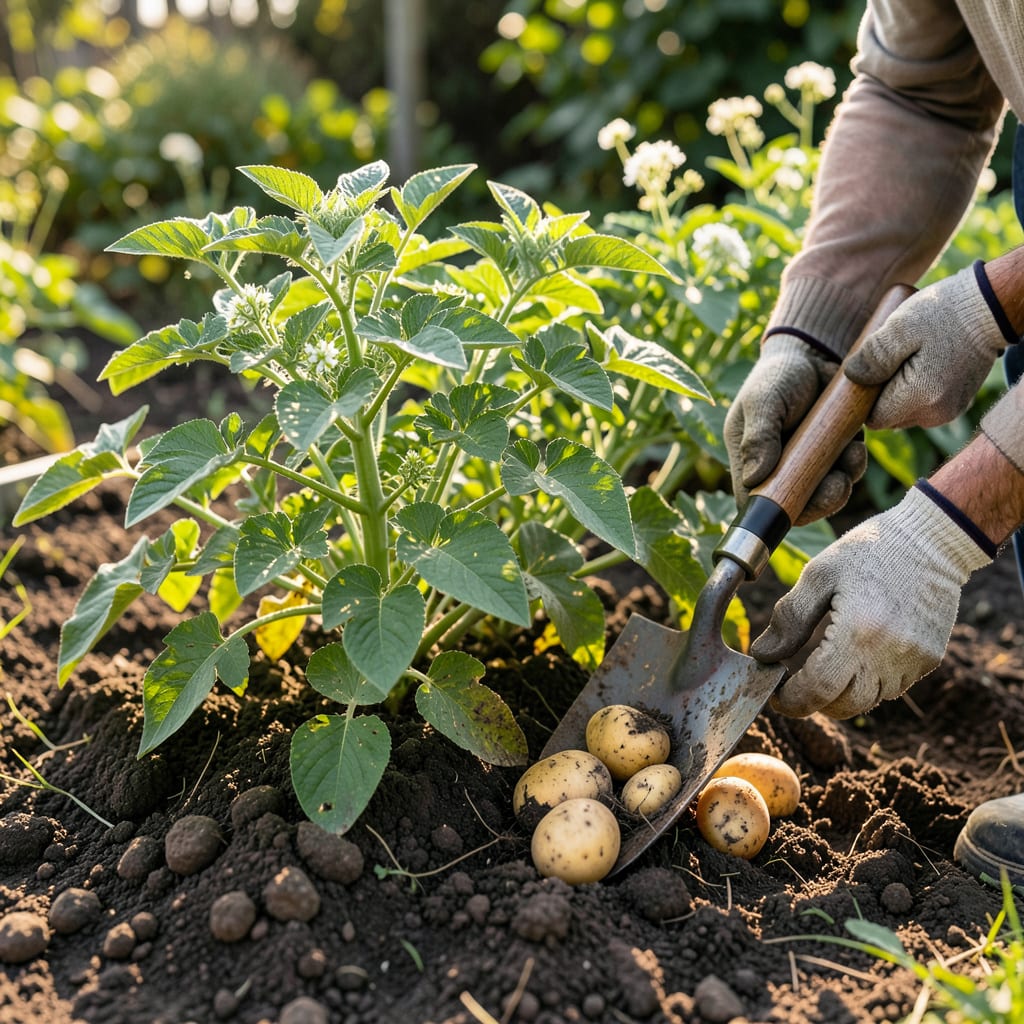
I remember the first time I grew 🥔 Potato plants, staring at the green foliage wondering when to dig. Timing is everything with these underground gems.
Those yellowing leaves and dying back aren’t signs of failure – they’re nature’s way of saying your potatoes are ready. Let me show you how to read these most important harvest signals.


I’ve learned that potato plants give clear signals when it’s time to harvest. The most obvious sign is when the foliage turns yellow and begins to die back naturally.
This yellowing process typically starts at the bottom leaves and works its way up. It’s the plant’s way of telling you it’s finished growing and is ready to be dug up.
| Visual Sign | What It Means |
|---|---|
| Yellow foliage | Plant is maturing |
| Dying back | Energy redirecting to tubers |
| Firm skin | Potatoes won’t damage easily |
| 1-3 inch size | Full mature dimensions |
The dying back of the plant is crucial. When the stems turn brown and wither, it means the plant has stopped producing new tubers and is focusing on maturing the existing ones.
Another key indicator is the skin of the potatoes. When they’re ready, the skin will be thick and firm. You can test this by gently rubbing a potato with your finger – if the skin doesn’t come off easily, it’s ready.
I always check the size of the potatoes too. Most varieties are ready when they’re about 1-3 inches in diameter. You can carefully dig around the base of the plant to check their size without disturbing the roots too much.
The flowering stage also gives clues. Many potato varieties will flower before they’re ready to harvest. When the flowers start to fade and drop off, it’s a good sign that harvest time is approaching.
Remember that early varieties mature faster, often in about 60-90 days, while maincrop varieties can take up to 120 days. Always check your seed packet for specific variety information.
In my experience, the best time to harvest is on a dry day when the soil isn’t too wet. This makes digging easier and helps prevent rot during the curing process.
Don’t wait too long after the foliage dies back completely. While the potatoes can stay in the ground for a short time, leaving them too long risks exposure to pests or disease.
With these visual cues, you’ll never have to guess when your potatoes are ready. The plants practically tell you when it’s time to dig up your homegrown treasures 🌱
I always use the gentle soil check to verify potato readiness. Carefully dig around the plant base with your hands, feeling for firm tubers about 1-3 inches wide.
This method lets me assess size and skin thickness without harming the plant. If the skin rubs off easily, they need more time in the ground.
I’ve found that early varieties like Yukon Gold mature faster than russets. Always check your seed packet for the specific days to maturity.
Another reliable method is the flower observation. When blooms fade and drop, it typically means tubers are nearing full size. This works especially well for mid-season varieties.
I recommend doing these checks on a dry morning when the soil is workable. Wet conditions can make tubers more prone to damage during inspection.
Remember that weather affects timing. A cool, wet spring might delay maturity, while hot weather can speed it up. Adjust your checks accordingly.
With these verification techniques, you’ll harvest at the perfect moment every time ✂️
I’ve seen many gardeners make the mistake of harvesting too early when the foliage is still green and healthy. This often results in small, underdeveloped tubers with thin skins.
Another common error is waiting until the foliage is completely dead. While some dying back is good, completely dead foliage can mean the potatoes have been in the ground too long.
Don’t harvest when foliage is still green
Don’t wait for complete foliage death
Don’t ignore variety-specific maturity times
Don’t harvest in wet soil conditions
I always remind gardeners to check their seed packets for the specific days to maturity. Early varieties may be ready in 60 days, while maincrops can take 120 days.
Another mistake is ignoring weather conditions. A cool, wet spring can delay maturity, while hot, dry weather can speed it up. Adjust your harvest timing accordingly.
Finally, I’ve learned to avoid harvesting in wet soil. Digging in muddy conditions can damage the tubers and make them more susceptible to rot during storage.
With these tips, you’ll avoid the most common potato harvesting pitfalls and enjoy a perfect crop every time ☀️
Look for yellowing foliage that starts at the bottom and works upward. When 80% of leaves turn yellow and begin dying back, your potatoes are nearly ready.
It’s best to wait until flowers fade and drop. Early varieties may be ready 2-3 weeks after blooming, while main crops need longer. This ensures full tuber development.
Use the gentle soil check method: carefully feel around the base for firm, 1-3 inch tubers. If the skin rubs off easily, they need more time.
Leaving them after complete foliage death risks pest damage or rot. In wet conditions, tubers may split or develop diseases. Harvest within 1-2 weeks of full die-back.
