
Beautiful Plants For Your Interior
Beautiful Plants For Your Interior
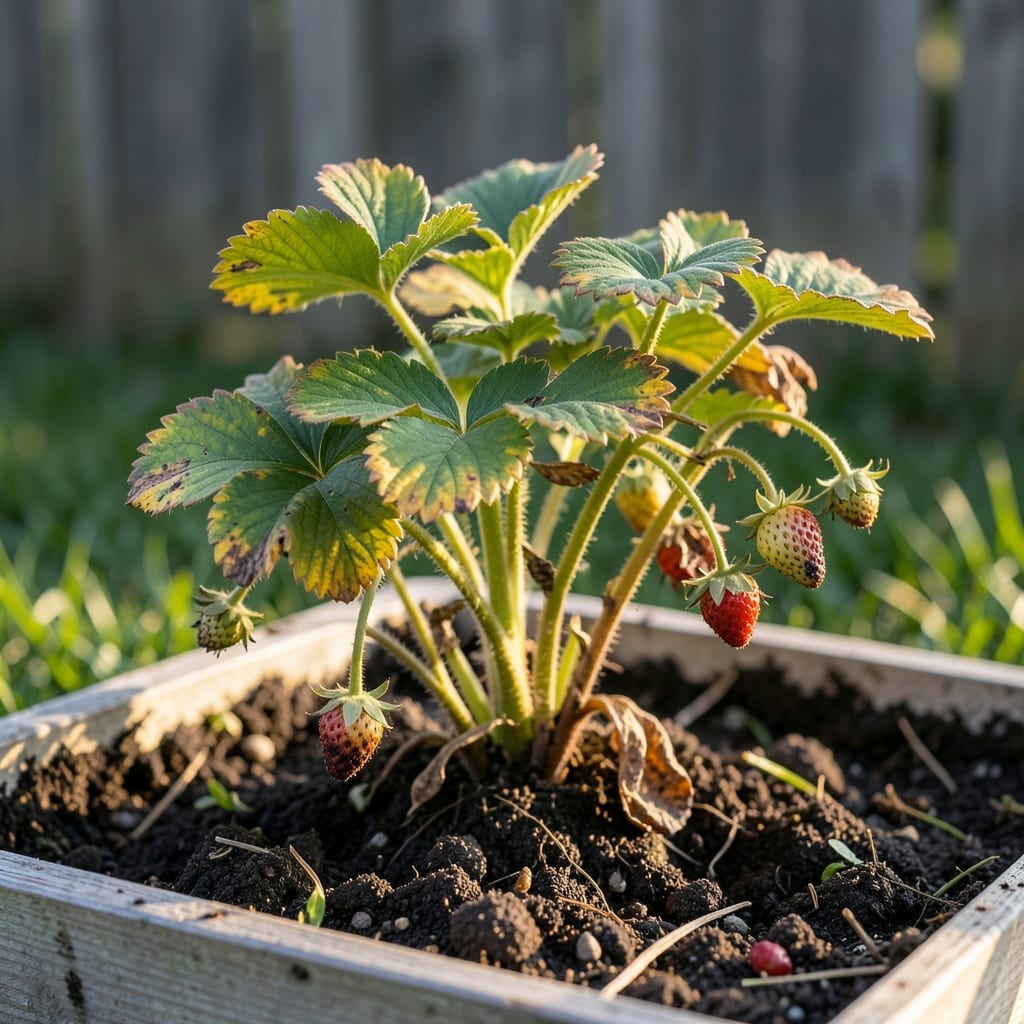
Your strawberry plants are begging for mercy. I’ve seen it too many times—leaves turning yellow, fruit turning to mush, and roots gasping for air.
Overwatering doesn’t just drown your plants; it creates the perfect environment for rot. The first sign is usually yellowing leaves, but look closer and you’ll notice wilting despite the soggy soil.
Left unchecked, the berries turn soft and mushy, and the roots develop that telltale dark, mushy appearance. It’s a downward spiral that starts with good intentions but ends in plant loss.
Here’s the thing—this is 100% fixable with a few simple adjustments. Your plants can bounce back faster than you think.
Understanding why overwatering happens is the first step to preventing it. Here are the most common causes:
Strawberries have shallow root systems, so they don’t need deep or frequent watering. Overzealous gardeners often water them daily, assuming more moisture equals better growth. In reality, strawberries thrive with 1–1.5 inches of water per week (including rainfall), applied in short, controlled sessions to avoid waterlogging the soil.
Heavy clay soil or containers without drainage holes trap water around the roots. Strawberries require well-draining, loamy soil to prevent root asphyxiation. If water pools on the surface or the soil stays soggy for hours after watering, drainage is likely the culprit.
Too many strawberry plants in one area compete for space and airflow, creating a humid microclimate. This encourages fungal growth and reduces the soil’s ability to dry out between waterings. Space plants 12–18 inches apart to improve air circulation and evaporation.
Rainy seasons or high humidity reduce the need for supplemental watering. Failing to adjust your watering schedule during wet weather leads to over-saturation. Always check soil moisture (stick your finger 1 inch deep—if it’s damp, hold off on watering) before adding more.
Overwatered strawberries can bounce back with a few simple fixes. Here’s how to tackle the most common issues and prevent them from happening again.
If your strawberries are sitting in soggy soil, stop watering immediately and let the top 1-2 inches dry out. For potted plants, ensure containers have drainage holes. For garden beds, mix in compost or sand to loosen compacted soil. Raised beds can also help prevent waterlogging in heavy clay soils.
Prevention tip: 💡 Water only when the top inch of soil feels dry. Use a moisture meter for precision.
Trim yellow or mushy leaves with clean scissors to redirect energy to healthy growth. Avoid fertilizing until the plant recovers—too much water can wash away nutrients, and adding more may burn the roots. Once the soil drains properly, resume a balanced, light feeding schedule.
Prevention tip: 🌱 Mulch with straw to retain moisture without oversaturating the roots.
Space plants at least 12-18 inches apart to improve airflow. Remove any rotting fruit immediately to prevent mold from spreading. Water at the base of the plant (not overhead) and do so in the early morning to allow foliage to dry during the day.
Prevention tip: ☀️ Use drip irrigation or a soaker hose to keep leaves dry and reduce fungal risks.
If roots are brown, mushy, or smelly, the plant may have root rot. Gently remove the plant, trim affected roots, and repot in fresh, well-draining soil. For severe cases, discard the plant to protect others. Disinfect tools and pots with a 10% bleach solution to prevent reinfection.
Prevention tip: ✨ Choose disease-resistant strawberry varieties like ‘Albion’ or ‘Seascape’ for wetter climates.
Check the soil by sticking your finger 1 inch deep—if it feels damp, hold off on watering. Wilting despite soggy soil is a classic sign of overwatering.
Yellowing leaves often mean roots are suffocating from too much water. Trim affected leaves and let the soil dry out to help recovery.
Remove any mushy berries immediately to prevent mold spread. Improve airflow by spacing plants 12-18 inches apart.
Use drip irrigation or water at the base in the early morning. Aim for 1-1.5 inches per week, including rainfall.