
Beautiful Plants For Your Interior
Beautiful Plants For Your Interior
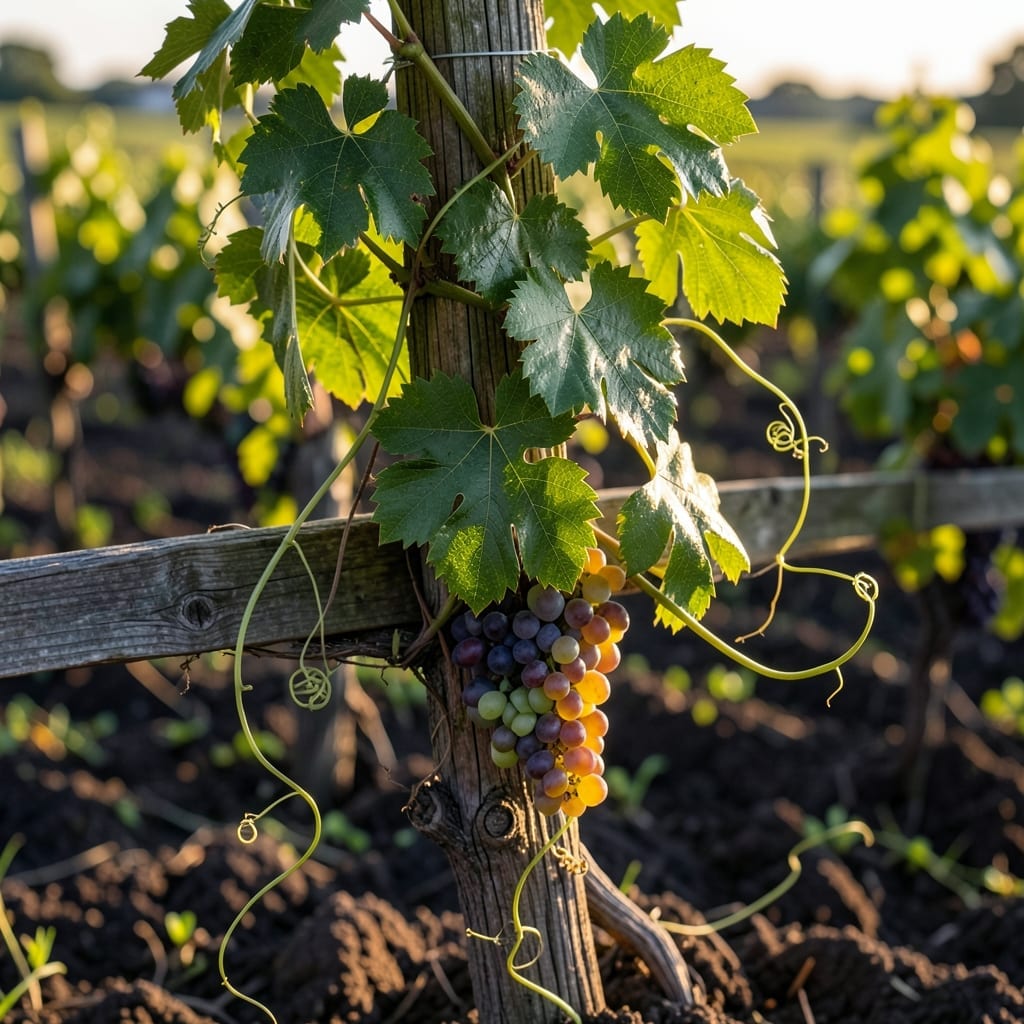
Grape leaves are large, palmately lobed with 3-5 prominent points, vibrant green when fresh, and turn golden or crimson in fall. They have a slightly heart-shaped base and smooth, slightly leathery texture.
I notice these leaves often have a distinct vein pattern that radiates from the center, giving them a star-like appearance. The edges can be slightly toothed, and their size varies depending on the vine’s age and variety. In autumn, the color transformation is dramatic, moving from deep green to fiery reds and golds. ✨
What’s fascinating is how their texture changes too—young leaves are softer, while mature ones develop that characteristic leathery feel that makes them ideal for dolmas. 💫
💡 In This Article
The palmately lobed structure of grape leaves typically features 3-5 main points radiating from a central point, resembling an open hand. This shape maximizes sunlight capture for photosynthesis, with each lobe positioned to avoid shading its neighbors. The lobes often have shallow sinuses between them, creating a scalloped edge effect. 🔥
Venation patterns are equally distinctive, with 5-7 primary veins extending from the leaf’s base to each lobe tip. These veins create a network that supports the leaf’s broad surface, typically measuring 4-12 inches across. The secondary veins form a web-like pattern between the primary ones, visible when held to light. ✨
What many miss is the leaf’s underside, which often appears lighter green with prominent veins. The heart-shaped base, called the petiole attachment, connects to the stem at an angle. Young leaves emerge with a reddish tint before maturing to vibrant green, a process driven by chlorophyll development. 💫
This structure isn’t random—it’s evolved to optimize the vine’s growth. The lobes reduce wind resistance while the vein network efficiently transports water and nutrients. The slight tooth along the edges (called crenations) helps with gas exchange, a crucial factor for the vine’s respiration process. ⚡
The texture evolves too: new leaves are velvety soft, while mature ones develop a waxy cuticle that gives that characteristic leathery feel. This adaptation helps conserve water during hot summers, explaining why grapevines thrive in Mediterranean climates. 🌟
Fresh grape leaves start as bright green but change dramatically with seasons. In autumn, they turn stunning golden yellow, deep crimson, or even purple hues as chlorophyll breaks down. This color shift helps identify mature vines.
Young leaves are smaller with a reddish tint and soft, velvety texture. Mature leaves reach 4-12 inches across, develop a leathery feel, and display deeper lobes. The underside of mature leaves often shows prominent veins.
The 3-5 lobes maximize sunlight exposure for photosynthesis while reducing wind resistance. This palmate shape allows each lobe to capture light without shading others, an efficient evolutionary adaptation.
No, leaf shapes vary significantly. Wine grapes have smaller, deeply lobed leaves, while table grapes feature larger, broader leaves. Ornamental varieties may display unique colors or divided lobes for visual appeal.