
Beautiful Plants For Your Interior
Beautiful Plants For Your Interior
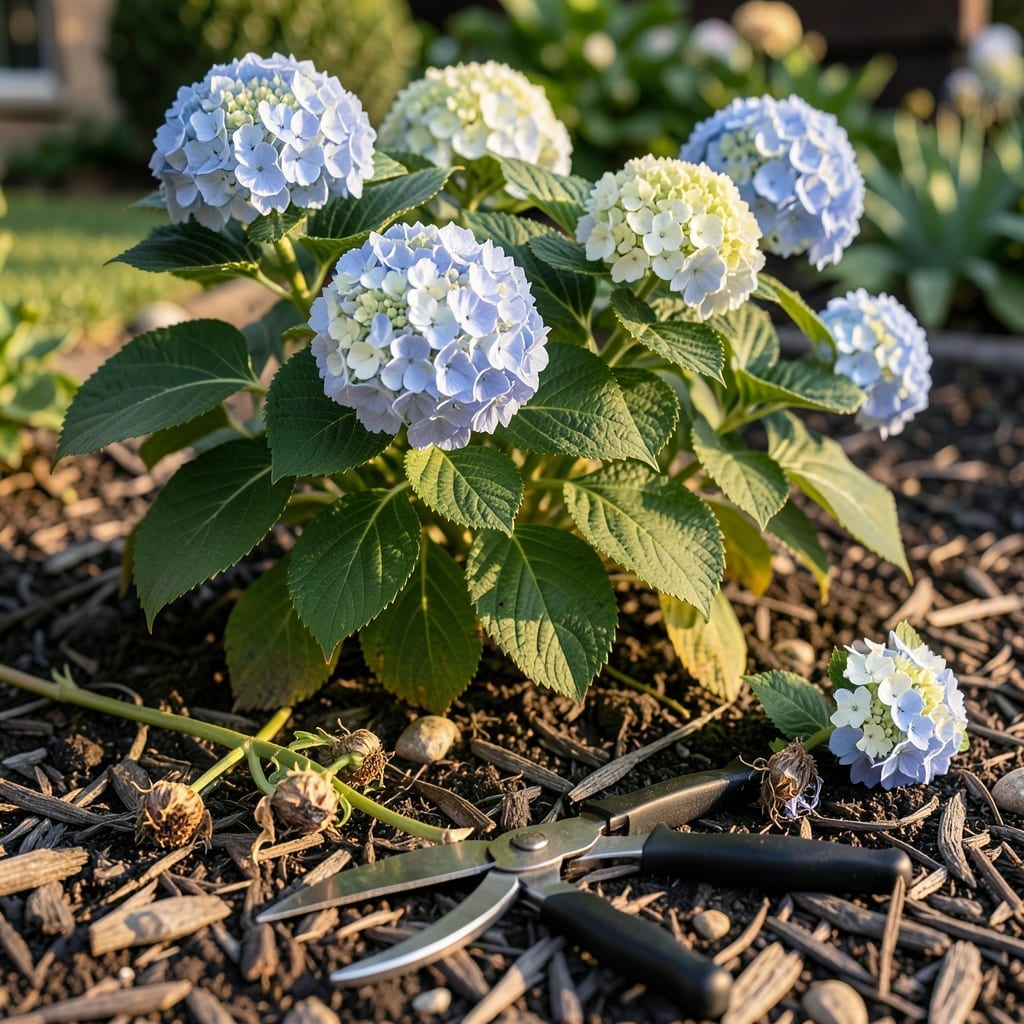
Deadheaded hydrangeas look surprisingly tidy at first glance. The old flower clusters are gone, leaving just green stems with fresh leaves sprouting from their bases.
I noticed my hydrangeas looked neater after deadheading, with no brown, wilted blooms dragging down the branches. The plant focuses its energy on new growth instead of struggling with spent flowers.
You’ll see healthier foliage and stronger stems within weeks. The plant directs its resources toward next year’s blooms rather than maintaining this year’s fading ones.
This practice keeps your hydrangeas looking vibrant and encourages more abundant flowering next season. It’s a simple way to maintain plant health and appearance.
Deadheading hydrangeas is a natural part of their growth cycle, but several factors can influence when and how it happens. Understanding these causes helps gardeners manage their plants more effectively.
Hydrangeas follow a biological lifecycle where blooms eventually fade and die as part of their reproductive process. After pollination (or attempted pollination), the flowers lose their petals and transition into seed production. This is the plant’s way of conserving energy for future growth. In hydrangeas, spent blooms often turn brown, papery, or leathery, signaling the end of their display phase.
Harsh conditions like extreme heat, drought, or excessive rain can accelerate flower decay. High temperatures speed up petal wilting, while waterlogged soil may cause blooms to rot prematurely. Wind and heavy storms can also physically damage flowers, leading to early deadheading. Hydrangeas in full sun without adequate moisture are especially prone to this.
Infestations of aphids, Japanese beetles, or spider mites can weaken hydrangea blooms by sucking out sap or chewing petals. Fungal diseases like powdery mildew or botrytis blight also cause flowers to brown and wither faster. Damaged blooms often deadhead unevenly, with some petals clinging while others fall off.
Improper care, such as over- or under-fertilizing, can disrupt normal flowering. Too much nitrogen promotes leafy growth at the expense of blooms, while phosphorus deficiency may lead to weak, short-lived flowers. Additionally, pruning at the wrong time (e.g., cutting back old wood hydrangeas in spring) can remove potential blooms before they even form, resulting in fewer flowers that deadhead later.
Deadheading hydrangeas is a simple way to encourage more blooms, but if your plant looks lackluster afterward, these fixes will help it bounce back. Below are targeted solutions for common post-deadheading issues.
If your hydrangeas look limp after deadheading, they may be thirsty or stressed. Water deeply at the base (not the leaves) in the early morning to allow roots to absorb moisture before the heat of the day. Prevention tip: 💡 Mulch around the base with organic material (like bark or compost) to retain moisture and keep roots cool.
Hydrangeas that aren’t reblooming may need a nutrient boost. Use a balanced, slow-release fertilizer (10-10-10) or one formulated for flowering shrubs. Avoid high-nitrogen options, which promote leaf growth over blooms. Prevention tip: ✨ Feed hydrangeas in early spring and again after the first bloom cycle to support continuous flowering.
Yellow leaves often signal nutrient deficiency or overwatering. Test your soil—hydrangeas prefer slightly acidic to neutral pH (5.5–7.0). If the soil is too alkaline, amend it with sulfur or peat moss. If the issue is soggy roots, improve drainage by mixing in perlite or sand. Prevention tip: 🌡️ Water only when the top inch of soil feels dry to the touch.
Spotted or chewed leaves? Inspect for aphids, spider mites, or powdery mildew. Spray off pests with a strong jet of water, or use insecticidal soap. For fungal issues, remove affected leaves and improve air circulation by pruning crowded stems. Prevention tip: 🎯 Space plants properly and avoid overhead watering to reduce humidity around foliage.
With these fixes, your hydrangeas will recover quickly and reward you with vibrant, healthy blooms all season long!
Look for blooms that have turned brown, papery, or dry. These spent flowers signal it’s time to deadhead and redirect energy to new growth.
No, when done correctly, deadheading is beneficial. It encourages new blooms and prevents the plant from wasting energy on spent flowers.
For most varieties, wait until late winter or early spring. Some hydrangeas bloom on old wood, so fall deadheading may remove potential next-year blooms.