
Beautiful Plants For Your Interior
Beautiful Plants For Your Interior
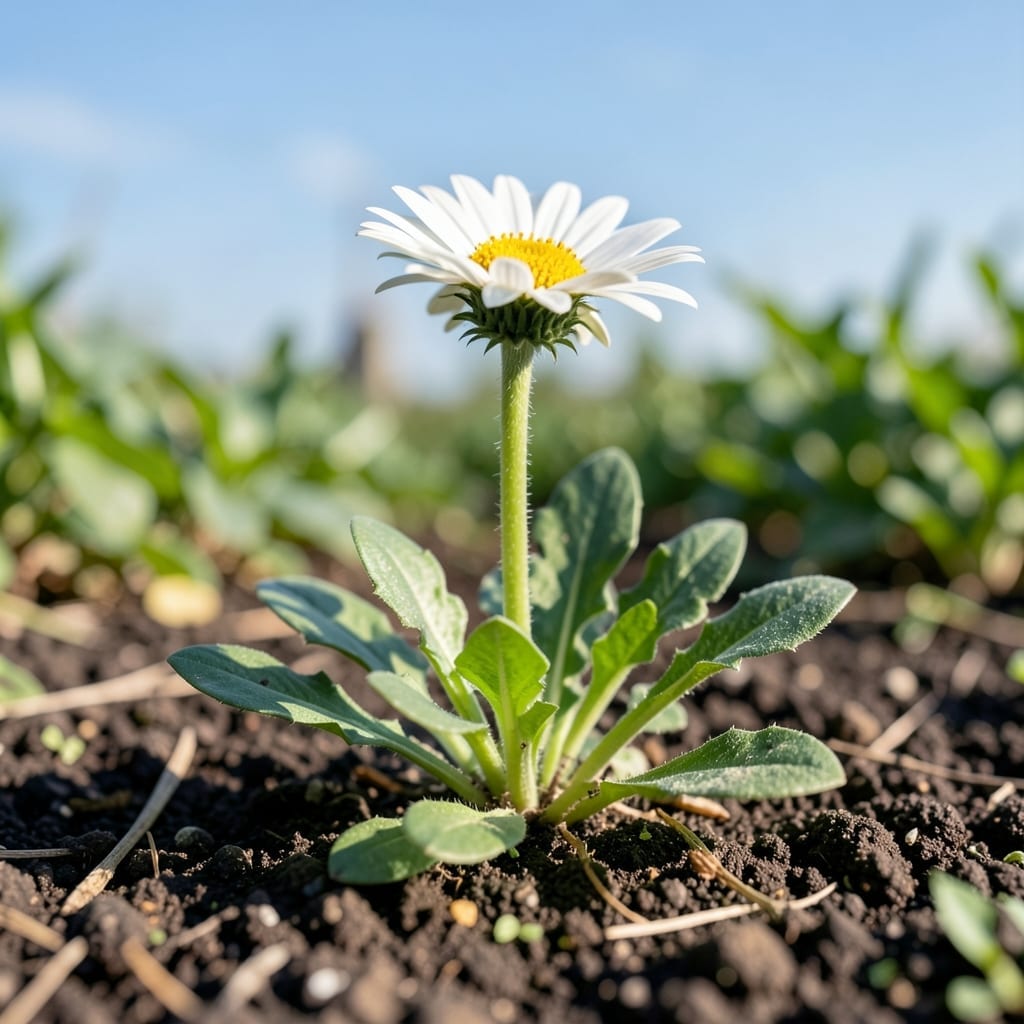
First daisy sprouts appear as tiny green loops pushing through soil about 7-14 days after planting. They’re easy to miss—just two thin, grass-like leaves standing straight up.
These initial leaves, called cotyledons, are smooth and oval, about 1/4 inch long. The real daisy leaves show up later, looking jagged and spoon-shaped. Color stays bright green with no variegation.
Weed seedlings often have broader leaves or red stems. Daisy sprouts cluster where you planted, growing in neat little rows if sown carefully.
Within 3-4 weeks, you’ll see the first true leaves forming that classic daisy shape. That’s when they really start looking like the flowers you’re expecting.
Daisy sprouts can look different due to several natural and environmental factors. Understanding these causes helps gardeners identify healthy growth and address potential issues early.
Daisies (Bellis perennis and other species) have genetic variations that influence sprout appearance. Some may develop thicker cotyledons (seed leaves) or slightly reddish stems due to inherited traits. This is normal and doesn’t indicate poor health.
Sprouts grown in low light often appear pale, leggy, or stretched as they reach for sunlight. Conversely, those in bright, direct light develop compact, green leaves. Adjust light conditions to encourage sturdy, vibrant growth.
Overwatering can cause yellowing or wilting sprouts, while underwatering leads to dry, brittle leaves. Nutrient deficiencies (e.g., nitrogen) may result in stunted or discolored growth. Use well-draining soil and a balanced fertilizer for optimal results.
Extreme heat or cold can stress sprouts, causing purple-tinged leaves (phosphorus deficiency) or slow germination. Maintain consistent temperatures (60–70°F for most daisies) to support uniform development.
If your daisy sprouts don’t match the expected visual guide, here’s how to troubleshoot common problems with practical fixes and prevention tips.
Cause: Poor soil quality or insufficient sunlight.
Fix: Enrich the soil with compost or organic fertilizer. Move pots to a sunnier spot (6+ hours of light daily). For garden beds, thin out nearby plants to reduce competition.
Prevention Tip: 💡 Test soil pH (daisies prefer 6.0–7.0) before planting. Use a balanced, slow-release fertilizer at planting.
Cause: Overwatering or underwatering.
Fix: Check soil moisture—it should feel damp but not soggy. Water deeply 1–2 times per week, allowing the top inch to dry between waterings. Ensure pots have drainage holes.
Prevention Tip: 💧 Use a moisture meter or the finger test (stick your finger 1 inch into soil) to gauge water needs accurately.
Cause: Pests like slugs, snails, or caterpillars.
Fix: Handpick pests off leaves in the early morning. Apply organic slug bait or spray neem oil (diluted) for a natural deterrent. For severe infestations, use insecticidal soap.
Prevention Tip: ✨ Encourage natural predators like ladybugs by planting companion flowers (e.g., marigolds). Keep the garden free of debris where pests hide.
Cause: Insufficient light causing sprouts to stretch toward the sun.
Fix: Provide 8–10 hours of bright, indirect light daily. If growing indoors, use a grow light 6–12 inches above seedlings. Outdoors, relocate to a sunnier area.
Prevention Tip: 🎯 Rotate pots weekly to ensure even light exposure. Start seeds in a well-lit area from the beginning.
New sprouts are tiny—about 1/4 inch tall with two thin, grass-like leaves. They’re so small you might overlook them if not checking closely.
Healthy ones are bright green with no spots or yellowing. Stems stay green too—reddish or purple hints at stress from cold or nutrients.
Daisy sprouts grow in neat rows where planted. Weeds often have broader leaves or appear randomly. True daisy leaves later develop jagged edges.
Expect the classic daisy-shaped leaves in 3-4 weeks. Before that, only the smooth cotyledons are visible.