
Beautiful Plants For Your Interior
Beautiful Plants For Your Interior
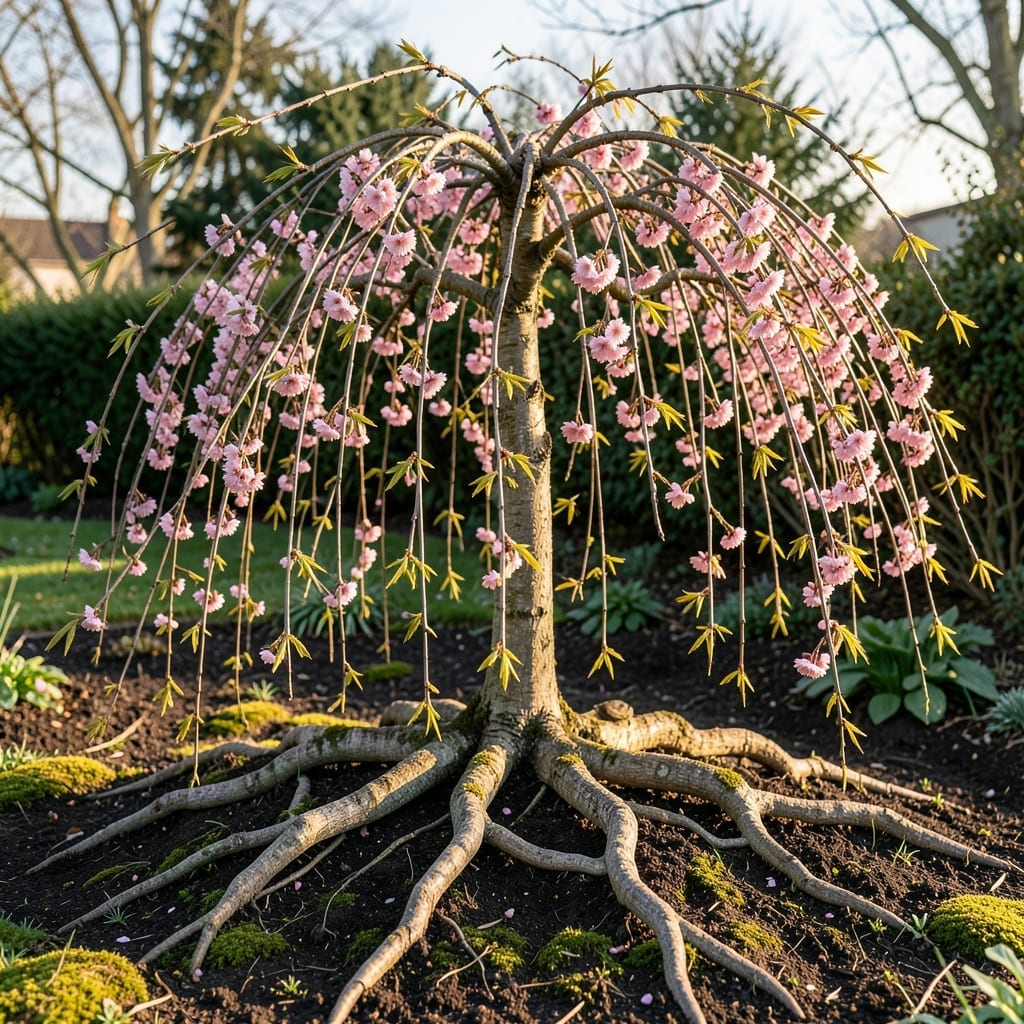
Beneath the graceful cascading branches of the 🌸 Weeping Cherry lies a root system that might surprise you. Unlike many trees, its roots spread wide rather than deep, creating a network that’s both efficient and adaptable.
This unique structure affects everything from watering needs to planting location. Getting it right means the difference between a thriving tree and one that struggles to establish itself.
Discover how to work with this root system’s natural tendencies for healthier growth and long-term beauty in your landscape.
The weeping cherry tree develops a shallow and fibrous root system that spreads horizontally rather than diving deep. This adaptation helps it quickly absorb water and nutrients from the top layers of soil.
Most roots stay within 12-18 inches of the surface, making them sensitive to drought conditions and soil compaction. The fibrous nature creates a dense mat that stabilizes the tree while maximizing surface area for uptake.
| Characteristic | Specification |
|---|---|
| Type | Fibrous |
| Depth | 12-18 inches |
| Spread | 2-3x canopy width |
| Soil Preference | Well-draining loam |
| Sensitivity | Drought, compaction |
This horizontal root spread can extend 2-3 times the width of the tree’s canopy. In urban settings, this makes weeping cherries ideal for planting near sidewalks or driveways where deep roots might cause damage.
The fibrous roots also mean the tree recovers quickly from transplant shock. I’ve seen newly planted weeping cherries establish themselves within 2-3 weeks when given proper care and consistent moisture.
However, this shallow root system comes with vulnerabilities. It’s particularly susceptible to drought stress during hot summers. I always recommend mulching heavily around the base to retain moisture and regulate soil temperature.
For best results, plant your weeping cherry in well-draining soil with a pH between 6.0-7.5. Avoid heavy clay soils which can suffocate the roots and lead to poor growth or disease.
The root density also affects how you should approach fertilization. Since the roots are concentrated near the surface, top-dressing with compost or using slow-release fertilizers works better than deep soil amendments.
Remember that this root structure means the tree may need staking in windy areas. The shallow anchors can be pulled loose in strong storms, especially with younger trees.
Finally, when planting near other trees or structures, give the weeping cherry ample space. Its spreading roots need room to grow without competition, typically 15-20 feet from other large plants.
Understanding these root characteristics helps explain why weeping cherries thrive with regular watering and careful soil management. It’s all about working with nature’s design rather than against it. 🌳
Planting a weeping cherry with its shallow root system requires special attention to soil preparation and placement. I always dig a hole twice as wide as the root ball but no deeper than the container.
This extra width gives the fibrous roots room to spread naturally. Avoid planting too deep, as this can suffocate the roots and lead to poor establishment.
For optimal root health, I recommend spacing weeping cherries at least 15-20 feet apart. This prevents root competition while allowing each tree to develop its full horizontal spread.
When selecting a location, avoid areas with poor drainage or high foot traffic. The shallow roots are particularly sensitive to soil compaction, which can restrict water and nutrient uptake.
I also suggest staking young trees for the first year. The shallow root system may not provide enough stability against strong winds until the tree is fully established.
After planting, maintain consistent moisture for the first growing season. The fibrous roots will quickly establish in well-draining soil with regular watering and proper care. 🌳