
Beautiful Plants For Your Interior
Beautiful Plants For Your Interior
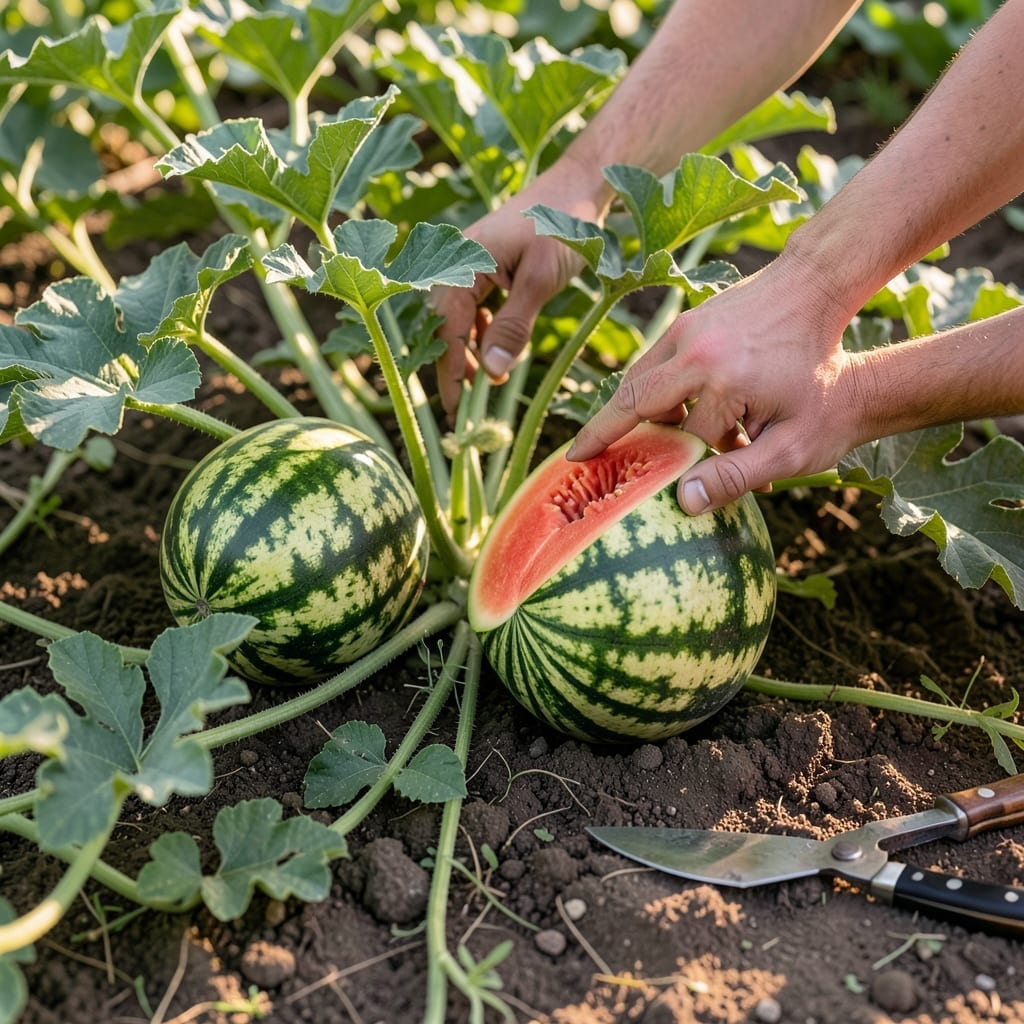
Nothing beats the disappointment of cutting into an unripe 🍉 Watermelon—except knowing the simple tricks to pick a perfectly sweet one every time.
Whether you’re harvesting from your garden or selecting at the market, these ripeness tests will save you from guesswork. I’ve tested countless methods, and what I’m about to share works reliably.
From the sound test to visual cues, you’ll discover exactly how to determine when your Watermelon is at peak sweetness. These techniques take seconds to perform.
No more gamble with your harvest. Let me show you how to make every Watermelon you pick the juiciest one yet.
I’ve learned that watermelon ripeness can’t be judged by size or shape alone. The real clues lie in subtle details like the field spot and stem condition. These methods work whether you’re in the garden or at the market.
From my experience, the best watermelons reveal their readiness through multiple signals. Combining visual checks with tactile tests ensures you pick the sweetest fruit every time.
Look for a creamy yellow spot on the rind where the melon rested on the soil. A white or green spot means it’s not ripe.
A dry, brown stem indicates ripeness. If the stem is green, the watermelon isn’t ready yet.
Tap the watermelon and listen for a deep, hollow sound. A flat or high-pitched sound means it’s underripe.
A rough, dull rind is a sign of ripeness. A smooth or shiny surface suggests it’s not ready.
Check the tendril near the stem. If it’s brown and dry, the watermelon is ripe.
The field spot is my go-to first check. It’s the area where the melon touched the ground, and its color change from green to yellow is a reliable indicator of ripeness.
For the sound test, I use my knuckles to tap the melon. A deep, resonant sound means the flesh inside is juicy and sweet. It takes practice, but it’s worth mastering.
The stem condition is another clear signal. In my garden, I watch for the stem to dry out completely. This tells me the watermelon has stopped drawing nutrients and is ready to harvest.
I also pay attention to the surface texture. A ripe watermelon often has a slightly rough or matte finish. This is a subtle but effective clue when combined with other tests.
Finally, the tendril test is foolproof. When the curly tendril near the stem turns brown and brittle, it’s a sure sign the fruit is at peak ripeness.
Using these five tests together gives me confidence in my harvest. I never rely on just one method, as each provides a different piece of the puzzle.
By combining these proven techniques, I consistently pick the sweetest watermelons from my garden. 🌱
I love that there are non-destructive ways to check if your watermelon is ready. The sound test is my favorite—just thump the melon and listen for a deep, hollow sound. A high-pitched tone means it’s not ripe yet.
Another reliable method is checking the field spot, the area where the melon rested on the ground. A creamy yellow spot indicates ripeness, while white or green means it needs more time.
🌱 Pro Tip:
For the sound test, use your knuckles to thump the watermelon. A ripe melon will produce a deep, resonant hollow sound. Compare a few to train your ear!
The stem check is also useful. If the stem is dry and brown, the watermelon is likely ready. A green stem means it’s still growing and not ready for harvest.
Don’t forget to examine the tendril near the stem. When it turns brown and brittle, your watermelon is at peak ripeness. This is one of the most accurate signs for gardeners.
For the best results, combine multiple tests. I always check the field spot, thump the melon, and inspect the stem. This way, I’m confident I’m picking the sweetest watermelons every time.
Remember, temperature matters. Testing a cold watermelon can give false results, so always check at room temperature for the most accurate assessment. ☀️