
Beautiful Plants For Your Interior
Beautiful Plants For Your Interior
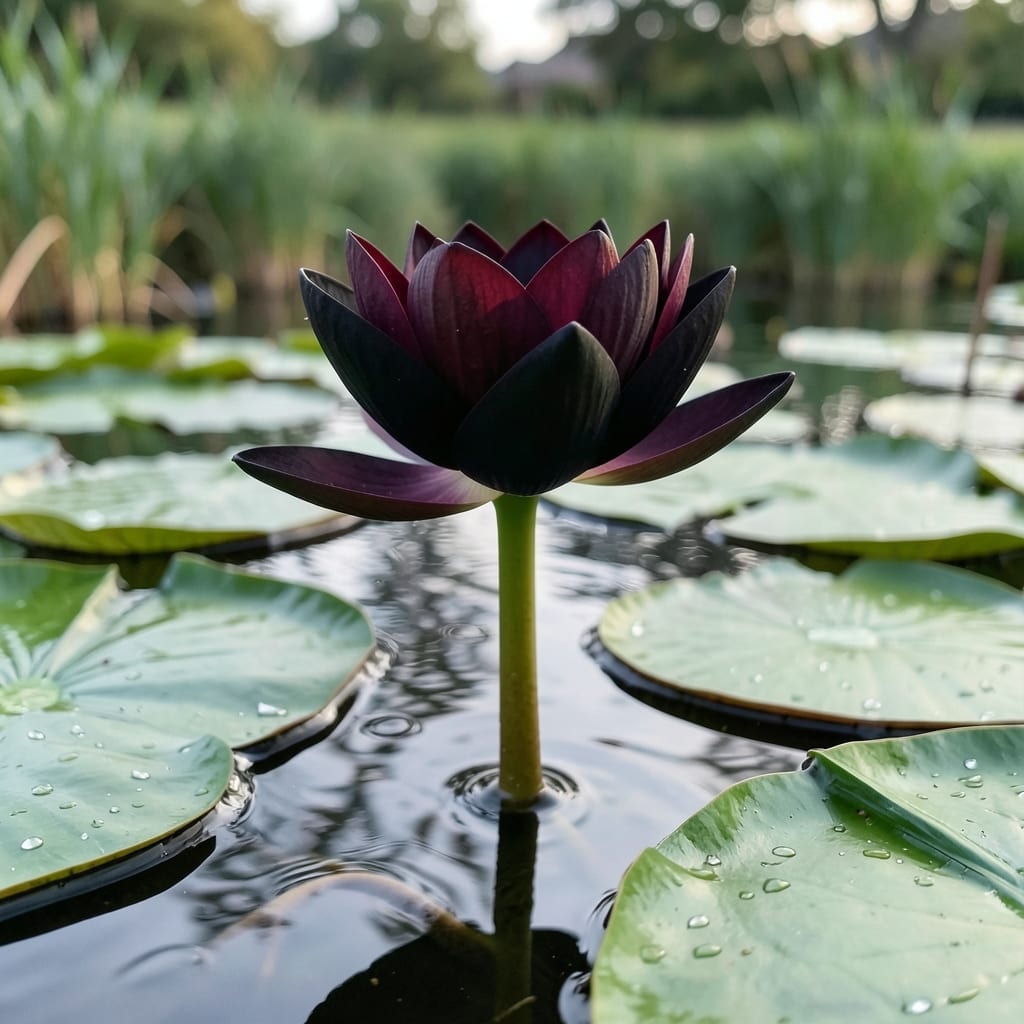
Dark water lilies create the most dramatic pond display imaginable. I first saw one in a botanical garden and couldn’t believe how the deep burgundy blooms seemed to absorb light rather than reflect it.
These aren’t your typical pastel pond plants. The near-black varieties demand full sun and 6-18 inches of water depth to thrive, with soil temperatures staying above 60°F for reliably dark blooms.
What you get is flowers so rich they look velvet, with leaves that provide perfect shade for fish. The contrast against lighter pond plants is stunning, and the blooms last 3-4 days each.
Perfect for formal ponds or naturalistic water features. Here’s how to cultivate that deep, mysterious beauty in your own water garden.
Dark, almost black water lilies are a stunning result of natural and cultivated factors. Here’s why this striking coloration occurs.
Some water lily varieties, like Nymphaea ‘Black Princess’, are bred to produce deep purple or near-black blooms. These cultivars contain high levels of anthocyanins, pigments that absorb light in the blue-green spectrum, creating a dark appearance. If your lily has this trait, its color is simply part of its DNA.
Anthocyanins intensify with increased sunlight. Water lilies grown in full sun (6+ hours daily) often develop darker hues as the plant produces more pigments for UV protection. Conversely, shaded lilies may appear lighter. To deepen the color, ensure your pond receives ample sunlight.
Slightly acidic water (pH 6.0–6.5) enhances anthocyanin absorption, darkening petals. Hard or alkaline water (pH 7.5+) can dilute pigment vibrancy. Test your pond’s pH and adjust with natural additives like peat moss if needed.
Cooler water temperatures (60–70°F) slow pigment breakdown, preserving darker tones. In warmer climates, blooms may fade faster. Shading the pond during heatwaves or planting in deeper water can help maintain color intensity.
A deficiency in phosphorus or excess nitrogen can stress the plant, sometimes leading to color changes. Use a balanced aquatic fertilizer (e.g., 10-14-8 NPK) to support healthy pigment development.
If your water lily blooms are losing their deep, almost-black hue, these targeted fixes will bring back their dramatic color. Address the root cause, and your pond will shine with striking dark blooms again.
If leaves appear bleached or blooms fade, add shade. Use a pond umbrella, floating plants like water lettuce, or position taller aquatic plants nearby. Aim for 4–6 hours of direct sun max, especially in hot climates. Prevention tip: 💡 Plant new lilies in spring to help them acclimate before summer heat.
Test your water for high nitrates or debris, which can dull flower color. Do a partial water change (20–30%) and add a pond filter or beneficial bacteria. Avoid overfeeding fish, as uneaten food sparks algae blooms that compete with lilies. Prevention tip: 🎯 Clean the pond base annually to remove organic buildup.
Extreme heat or cold can cause color loss. In summer, add aeration to keep water cool and oxygenated. In cooler zones, move potted lilies to deeper water (18–24 inches) to protect roots from freezing. Prevention tip: ❄️ Use a pond heater in winter if temperatures drop below 10°F.
Yellowing leaves or weak blooms signal a lack of nutrients. Fertilize with aquatic plant tablets every 4–6 weeks during growing season. Press them into the soil near the roots, not the water. Prevention tip: ✨ Use slow-release fertilizer to avoid sudden nutrient spikes that harm water balance.
Plant in full sun and keep water slightly acidic (pH 6.0–6.5). Use balanced aquatic fertilizer to boost pigment.
Extreme heat or alkaline water can cause rapid fading. Add shade during peak sun and test water pH regularly.
Yes! Use a 5-gallon container with aquatic soil. Place in 6–18 inches of water and fertilize monthly.
Spring is ideal when water temperatures reach 60°F. This gives roots time to establish before summer heat.