
Beautiful Plants For Your Interior
Beautiful Plants For Your Interior
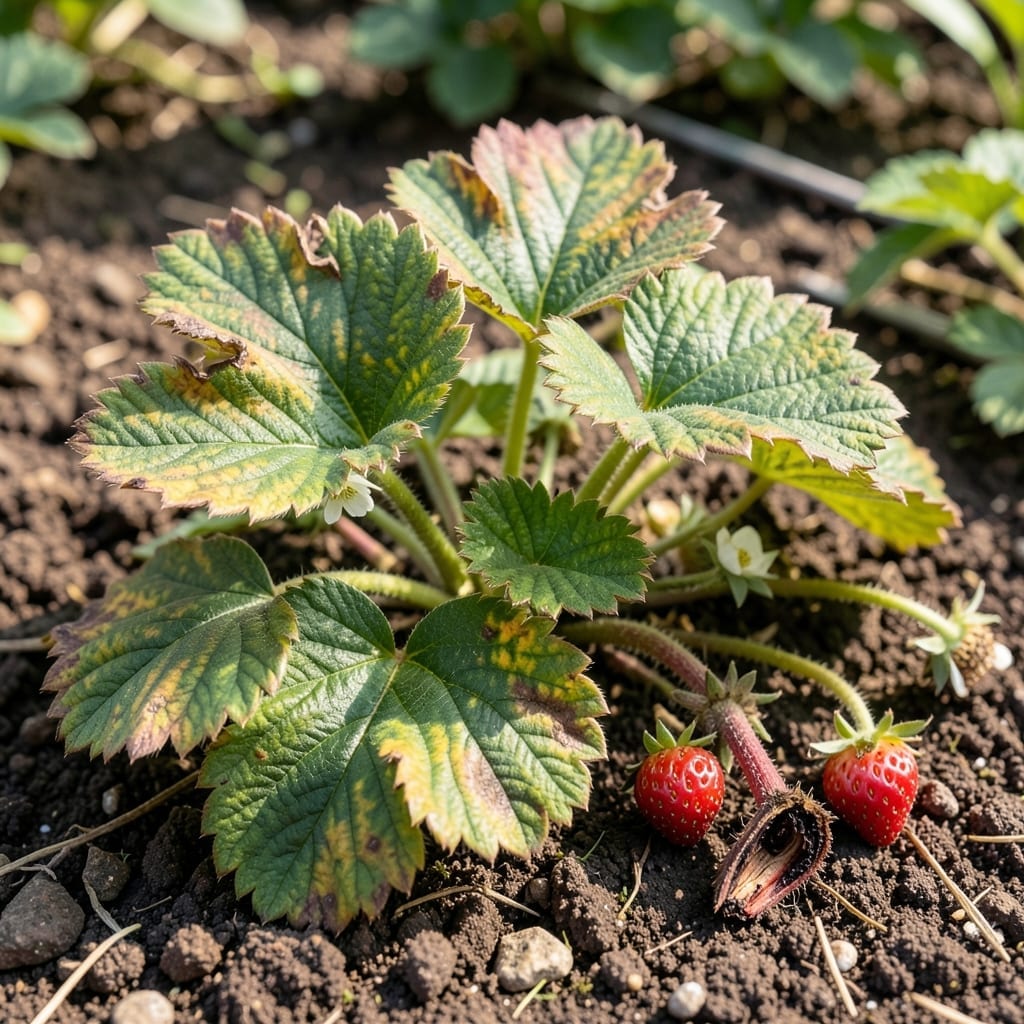
I first noticed the problem when my June-bearing strawberries started wilting midday, despite plenty of water. 🌱 Verticillium wilt sneaks in through the soil, attacking the plant’s vascular system before you even realize there’s trouble.
Leaves turn yellow between veins, then brown and crispy, while the center stays green. The plants look drought-stressed even when the soil is moist. I lost half my bed the first year before identifying this silent killer.
Here’s the thing—once it’s in your soil, verticillium lingers for years. That’s why prevention beats treatment every time. Crop rotation and resistant varieties are your best defense against this stubborn fungus.
You can save some plants with natural remedies, but the real win is stopping it before it starts. I’ll show you how to recognize it early and protect your patch for seasons to come.
Verticillium wilt in strawberries is a soilborne disease that thrives under specific conditions. Understanding why it happens is the first step toward prevention and control. Below are the primary causes of this devastating fungal infection.
The fungus Verticillium dahliae and V. albo-atrum persist in soil for years, often introduced through contaminated plant material, tools, or irrigation water. Strawberries planted in previously infected fields (especially after susceptible crops like tomatoes, potatoes, or eggplants) are at high risk. The pathogen overwinters in soil or decaying plant debris, ready to infect new hosts.
Verticillium thrives in cool to moderate temperatures (60–75°F) and high soil moisture. Overwatering, poor drainage, or heavy clay soils create the perfect environment for fungal growth and root infection. Stress from waterlogged conditions weakens strawberry plants, making them more susceptible.
Not all strawberry cultivars resist Verticillium equally. June-bearing and everbearing varieties are often more vulnerable than day-neutrals. Planting susceptible types in infested soil almost guarantees infection. Growers should opt for certified disease-resistant varieties when possible.
Fungal spores spread easily via contaminated tools, shoes, or equipment. Failing to sterilize pruning shears, transplanting tools, or even farm machinery between uses can transfer the pathogen to healthy plants. Similarly, reusing pots or trays without proper cleaning can introduce Verticillium to new batches of strawberries.
Soils lacking beneficial microbes or organic matter offer little competition to pathogenic fungi. Overuse of chemical fertilizers or frequent monocropping can degrade soil health, reducing its natural suppressiveness. Healthy, biodiverse soil helps outcompete and suppress Verticillium populations.
Verticillium wilt can be stubborn, but these targeted solutions can help you regain control and protect your strawberry plants. Focus on the root causes to implement the most effective fixes.
If your soil is contaminated, avoid planting susceptible crops (like strawberries, tomatoes, or potatoes) in the same spot for at least 4-5 years. Instead, opt for resistant plants like corn or beans. For faster results, try soil solarization:
Stressed plants are more vulnerable. Boost their defenses with:
If plants show wilting, yellowing, or stunted growth, act fast:
💡 Prevention Tip: Always start with certified disease-free plants and avoid overhead watering to minimize fungal spores. Rotate crops yearly and test soil for pathogens before planting.
Look for yellowing between leaf veins while the center stays green. Leaves may brown and crisp as the disease progresses. Plants wilt even with moist soil, often recovering at night but worsening daily.
Unfortunately, no. Once infected, strawberry plants won’t recover. Remove and destroy them to prevent spreading. Focus on prevention with resistant varieties and crop rotation.
The pathogen can linger for 4-5 years or more. Avoid planting susceptible crops in contaminated soil during this time. Solarization can help reduce its presence faster.