
Beautiful Plants For Your Interior
Beautiful Plants For Your Interior
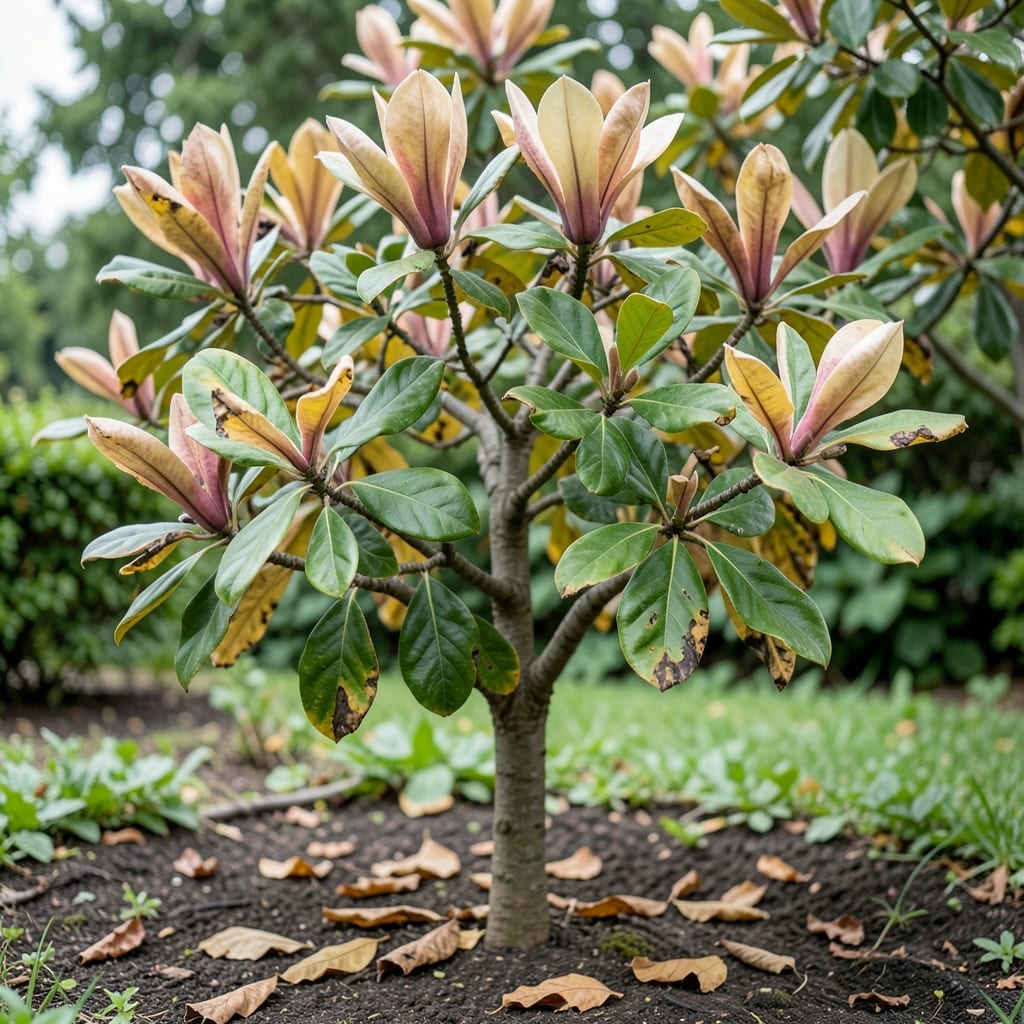
That sinking feeling when magnolia leaves suddenly wilt and brown? I’ve been there. Verticillium wilt hits fast, often on one side of the tree, leaving branches looking scorched in 24-48 hours.
This soil-borne fungus blocks water flow, so leaves can’t drink even when roots are fine. It’s sneaky—symptoms mimic drought stress, but the wood stays green underneath the bark.
Here’s the thing—once it’s in your soil, it’s there for years. But early action can save your tree and protect the rest of your garden.
Organic treatments focus on boosting the tree’s defenses and starving the fungus. We’ll cover what actually works.
Verticillium wilt in magnolias is triggered by a soil-borne fungus, Verticillium dahliae or Verticillium albo-atrum, which invades the plant’s vascular system. Here’s a breakdown of the primary causes:
The fungus thrives in soil and can persist for years, even without a host. Contaminated soil, compost, or leftover plant debris from previously infected plants are common sources. Magnolias planted in such areas are at high risk, as the pathogen enters through the roots.
Drought, waterlogging, or extreme temperature swings weaken a magnolia’s defenses, making it more susceptible. Stressed plants produce fewer protective compounds, allowing the fungus to colonize the xylem (water-conducting tissues) more easily.
Pruning cuts, transplanting shocks, or root damage create open wounds for the fungus to enter. Even minor injuries from gardening tools or pests can serve as gateways. Always sterilize tools and avoid unnecessary stress to the tree.
Dense plantings or overcrowded garden beds reduce airflow, increasing humidity around the magnolia. This encourages fungal growth and spread, especially in warm, moist conditions where Verticillium spores thrive.
Addressing these root causes—through soil testing, proper spacing, and stress reduction—can significantly lower the risk of infection.
Verticillium wilt in magnolias can be managed with targeted actions. Start by pruning infected branches—use sterilized shears and cut at least 6 inches below visible damage to remove the fungus. Always disinfect tools with rubbing alcohol between cuts to prevent spreading spores. 🌿
Remove and destroy (do not compost) all infected wood, leaves, or debris. This reduces the fungus’s ability to persist in the soil. If the tree is severely affected, consider complete removal to protect nearby plants.
Boost your magnolia’s defenses by amending soil with compost or organic matter to improve drainage and microbial activity. Avoid overwatering, as soggy soil encourages fungal growth. Mulch with wood chips to suppress weeds and retain moisture without waterlogging.
Prevention is key:
💡 Pro Tip: Solarize soil before planting by covering it with clear plastic for 4–6 weeks in summer to kill lingering fungal spores.
Yes, if caught early! Remove infected branches and improve soil health to help the tree rebound. Severe cases may require removal to prevent spreading.
Check the wood under the bark—if it’s green, it’s likely the fungus. Drought stress affects the whole tree evenly, while this often starts on one side.
Burn or bag them for trash—never compost! This prevents the fungus from returning to the soil. Always sterilize pruning tools after use.