
Beautiful Plants For Your Interior
Beautiful Plants For Your Interior
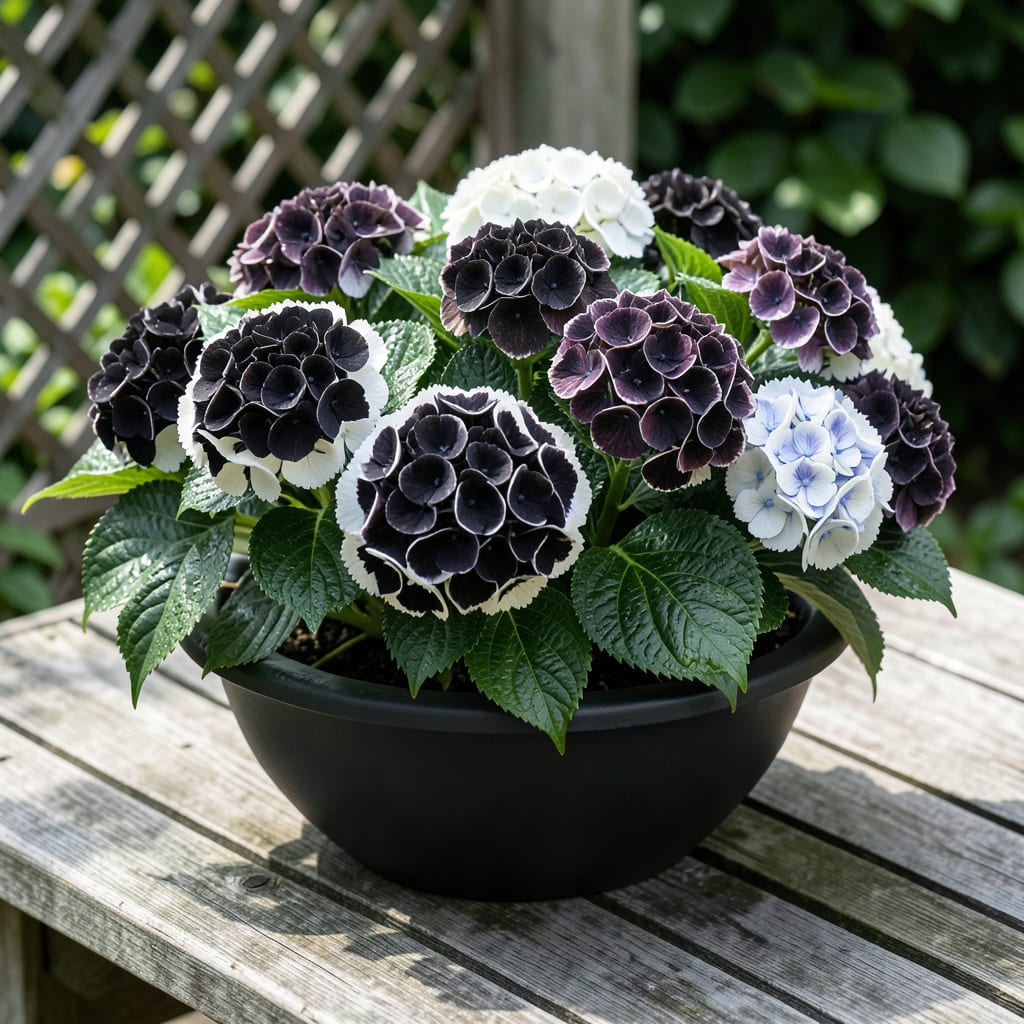
This hydrangea stops traffic with its deep black stems and pure white blooms. I planted mine near the front walk, and neighbors actually slow down to ask about it.
It thrives in partial shade with rich, well-draining soil. Give it consistent moisture and watch those 8-inch flower heads appear from early summer through fall. The contrast is that dramatic.
📚 In This Guide
This striking variety thrives with the right location and consistent care.
Select a spot with partial to full sun in cooler climates or morning sun with afternoon shade in hotter regions. Tuxedo Black Tie prefers well-draining soil rich in organic matter. Avoid low-lying areas where water pools, as soggy roots will quickly kill the plant.
I always test drainage by digging a 12-inch deep hole and filling it with water. If it doesn’t drain within 2-3 hours, pick another location. The soil pH should be between 5.5 and 6.5 for best results.
Loosen the soil in a 2-3 foot wide area to a depth of about 18 inches. Work in 2-3 inches of compost or aged manure to improve fertility and drainage. This variety grows 6-8 feet tall and 5-7 feet wide, so space plants accordingly.
Dig the planting hole twice as wide as the root ball but no deeper. Setting the plant too deep can suffocate the roots. If your soil is heavy clay, consider planting in a raised bed to ensure proper drainage.
Gently remove the plant from its container and loosen any circling roots. Place it in the hole so the top of the root ball is level with or slightly above the surrounding soil. Backfill with the amended soil, pressing lightly to remove air pockets.
Water deeply after planting to settle the soil and hydrate the roots. Apply a 2-3 inch layer of mulch around the base, keeping it 6 inches away from the stems to prevent rot. This helps retain moisture and regulate soil temperature.
Water 2-3 times per week for the first 4-6 weeks to help the plant establish. After that, water deeply once a week, or more often during dry spells. The soil should stay evenly moist but not waterlogged.
Fertilize in early spring with a balanced, slow-release fertilizer, following the package instructions. Avoid high-nitrogen fertilizers, which can reduce blooming. I’ve found that a light application of compost in late spring gives the plant an extra boost.
This hydrangea blooms on old wood, so prune only after flowering, typically in late summer. Remove dead or weak stems at the base and trim back up to one-third of the oldest stems to encourage new growth.
Monitor for pests like aphids or spider mites, which can stress the plant. A strong blast of water or insecticidal soap usually takes care of minor infestations. With proper care, your Tuxedo Black Tie hydrangea will reward you with stunning, high-contrast blooms for years.
Here’s what I’ve learned from years of growing these stunning shrubs—avoid these pitfalls for the best results.
Soil Testing Tip: In Step 1, that drainage test with a 12-inch hole is non-negotiable. If water doesn’t disappear within 2-3 hours, you’ll save yourself heartache by relocating. Soggy roots are the #1 killer of hydrangeas, and I’ve lost count of how many I’ve revived by simply improving drainage first.
Planting Depth Matters: In Step 3, resist the urge to bury the root ball deeply. Planting it even an inch too low can suffocate the plant. I mark the soil level with a stick across the hole to ensure the top of the root ball stays at or slightly above ground level—this prevents crown rot and encourages strong root growth.
Watering Wisdom: During the first 4-6 weeks, stick to that 2-3 times per week schedule in Step 4. It’s tempting to baby new plants with daily watering, but overdoing it creates the same soggy conditions you’re trying to avoid. Deep, infrequent watering trains roots to grow downward, making the plant more drought-tolerant long-term.
Mulching Mistake to Avoid: When applying that 2-3 inch mulch layer in Step 3, keep it 6 inches away from the stems. I’ve seen too many gardeners pile mulch right up against the base, which traps moisture and invites rot. Think of it as a donut shape—mulch around, not on top of, the root zone.
This hydrangea stands out with its striking black stems and deep green foliage, paired with large, white lacecap flowers that turn pinkish as they age. It’s a showstopper for dramatic garden contrast!
Plant in early spring or fall to avoid extreme heat. This gives the roots time to establish before summer stress or winter dormancy. Aim for well-draining, moist soil for best results.
Yes! Use a large container with drainage holes and rich potting mix. Keep the soil consistently moist, and place it in partial shade to prevent stress. Perfect for patios or small spaces.
Yellowing leaves often signal overwatering, poor drainage, or nutrient deficiency. Check soil moisture and ensure proper drainage. A balanced fertilizer can help restore healthy growth.
