
Beautiful Plants For Your Interior
Beautiful Plants For Your Interior
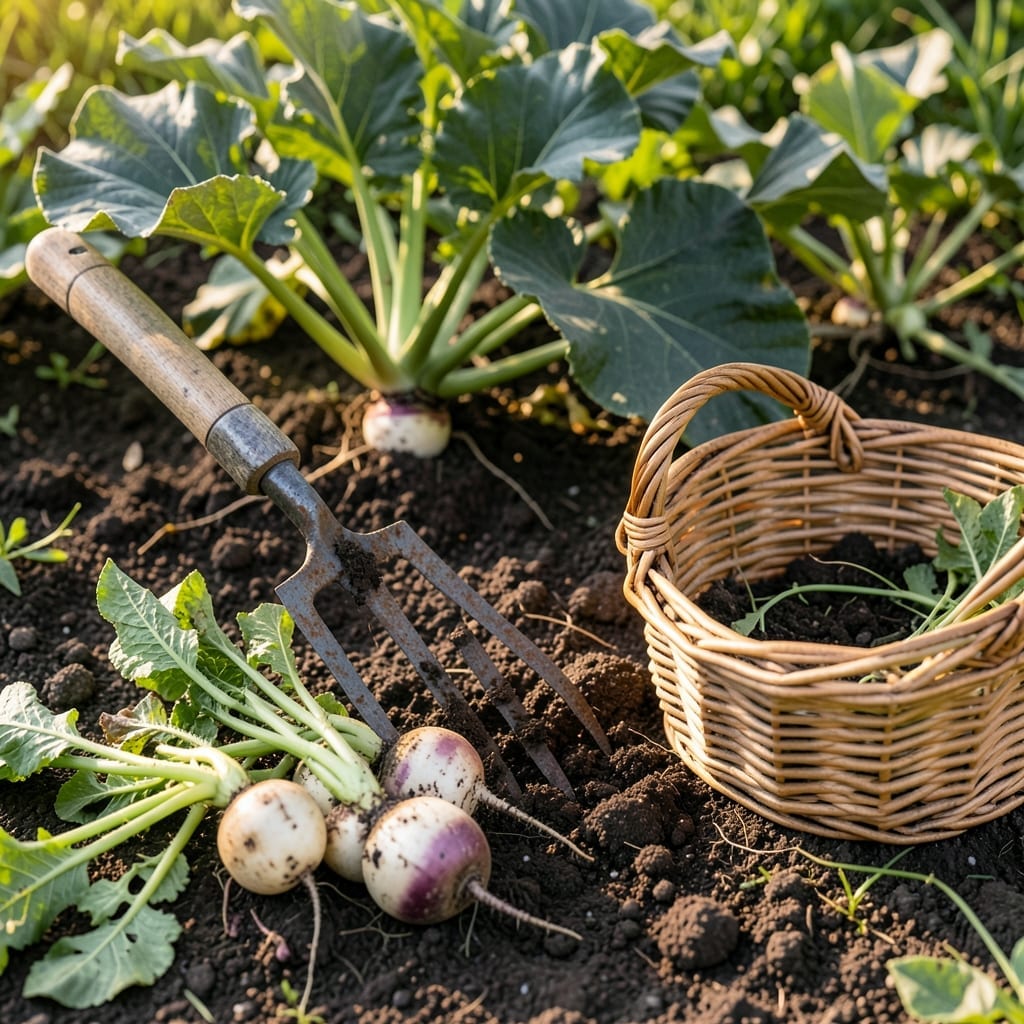
There’s nothing worse than pulling up a turnip only to find it woody and bitter. I’ve been there, and it taught me that timing is everything when it comes to harvesting.
The 🥬 Turnip doesn’t announce when it’s ready—it’s up to you to spot the subtle signs. Whether you planted in spring or fall, knowing these cues makes all the difference.
Discover the visual and tactile indicators that guarantee sweet, tender roots every time. It’s simpler than you might think.
Let me walk you through the key moments to check your crop, so you never miss that perfect harvest window again.

I always check for 2-3 inch diameter roots as the first sign my turnips are ready. This size ensures they’re sweet and tender, not woody or bitter. The shoulders often peek above the soil line when they’re nearing maturity.
Another clear indicator is the firmness test. Gently press the exposed root—it should feel solid, not soft or spongy. I also look for vibrant green leaves that show the plant is still actively growing.
| Harvest Sign | Description |
|---|---|
| Root Size | 2-3 inches in diameter |
| Leaf Color | Vibrant green and healthy |
| Root Exposure | Shoulders visible above soil |
| Firmness | Solid texture when pressed |
I’ve noticed purple-top turnips often show color changes as they mature, with the purple shoulder becoming more pronounced. White turnips stay uniformly pale but develop a smooth, rounded shape.
For tactile checks, I gently tug on the greens. If the root resists slightly, it’s a good sign. If it pulls up too easily, it might be underdeveloped. Over-mature turnips can feel hard and may crack when pressed.
Timing matters too. I aim to harvest spring turnips before temperatures rise above 75°F, as heat can make them bitter. For fall crops, a light frost can actually sweeten the roots.
I also watch for yellowing leaves, which might indicate the turnips are past their prime. However, a few outer leaves turning yellow isn’t always a concern—focus on the inner greens and root condition.
If you’re growing baby turnips, they can be harvested earlier, around 1-2 inches in diameter. These are perfect for quick meals and have an especially tender texture.
Remember, consistent watering in the days leading up to harvest helps prevent cracking. I reduce watering slightly 24 hours before picking to concentrate the flavors.
Finally, I always use a garden fork to gently lift turnips from the soil to avoid damaging the roots. This is especially important in clay-heavy soils where roots might be stubborn to remove.
By combining these visual and tactile cues, I’ve never been disappointed with my turnip harvest. It’s all about paying attention to the little details that nature provides.
☀️Timing your turnip harvest depends heavily on when you planted. Spring turnips typically mature in 30-60 days, while fall crops can handle a bit more time in the ground.
I’ve found that cooler temperatures actually sweeten the roots, so fall turnips often taste better if left until after the first light frost. Just don’t wait too long—hard freezes can damage them.
| Season | Days to Maturity | Flavor Impact | Harvest Window |
|---|---|---|---|
| Spring | 30-50 days | Mild, earthy | May-June |
| Fall | 50-70 days | Sweeter, tender | Oct-Nov |
| After Frost | 60+ days | Peak sweetness | After first frost |
Spring turnips grow quickly in warming soil, so I check them at 30 days. If the roots are 2-3 inches wide, they’re ready. Waiting longer risks woody texture.
For fall turnips, I plant in late summer. The cooling soil slows growth, but the flavor improves. A light frost can boost sugar content, making them ideal for harvest.
If you’re unsure, do a test pull. Dig up one turnip and taste it. If it’s sweet and firm, the rest are likely ready too. This simple check saves me from guessing every time.
Remember, consistent moisture is key. Dry spells before harvest can make turnips bitter and tough. Keep the soil evenly damp, especially in the final weeks.
With these seasonal guidelines, you’ll always pick turnips at their peak.