
Beautiful Plants For Your Interior
Beautiful Plants For Your Interior
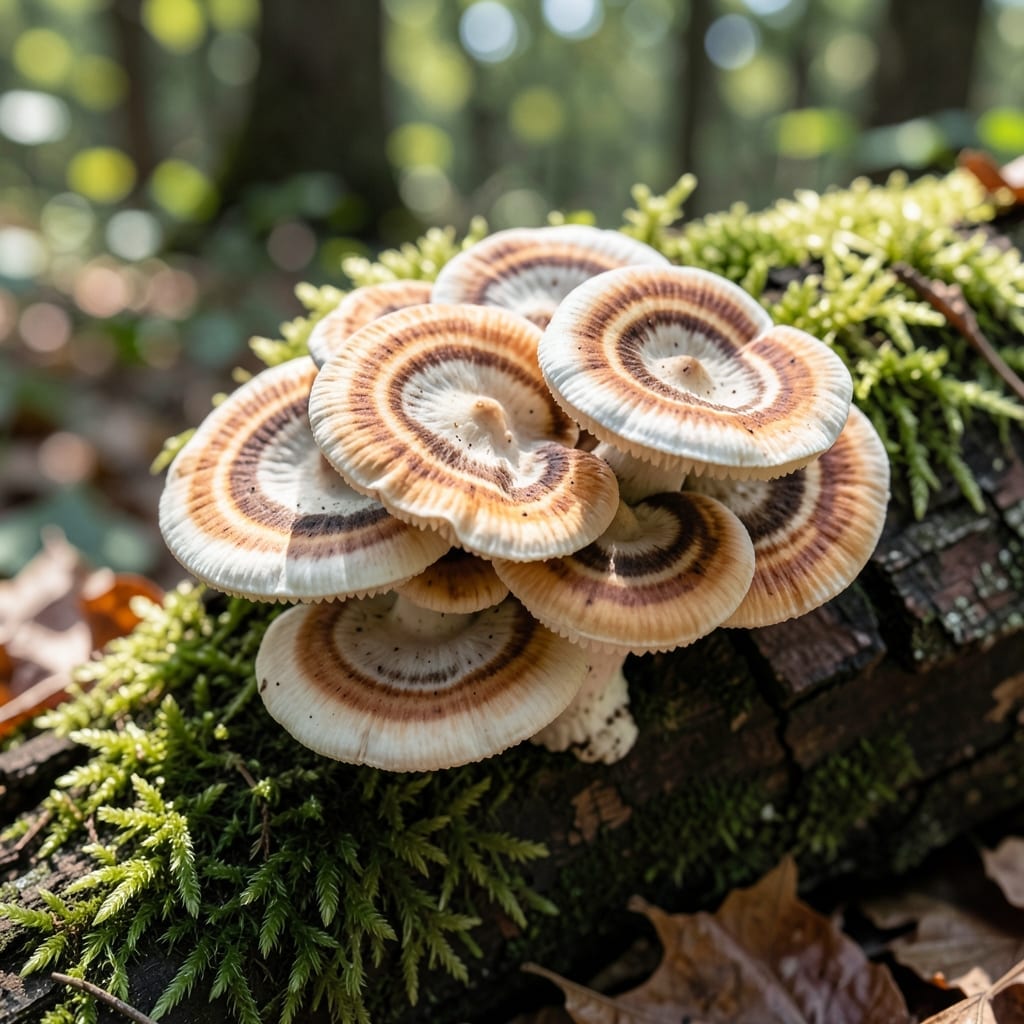
I first spotted turkey tail mushrooms on an old oak in my backyard three seasons ago. 🌿 Their concentric rings of browns, whites, and blues looked painted on the bark, not grown from it.
These fungi don’t harm trees—they’re nature’s recyclers, breaking down dead wood into nutrients. You’ll find them on stumps, fallen logs, or even living trees with damaged areas. The key is high humidity and plenty of decaying wood.
Identification is easy once you know the signs: thin, leathery caps with distinct color bands, no stem or a very short one, and a white underside with tiny pores. They appear year-round but flourish in cool, damp weather.
For cultivation, mimic their natural habitat with hardwood logs or chips. Keep the area moist and shaded, and they’ll spread on their own. A true low-maintenance addition to any forest garden.
Turkey tail mushrooms (Trametes versicolor) thrive on trees due to their unique ecological role as saprotrophic decomposers. Their growth is driven by specific environmental and biological factors. Below are the primary reasons why you’ll spot these vibrant fungi clinging to bark.
Turkey tails feed on lignin and cellulose, the tough structural components of dead or dying wood. Trees—especially hardwoods like oak, maple, and birch—provide the perfect substrate. As the tree weakens or dies, the mushroom’s mycelium (a network of thread-like structures) breaks down the wood, recycling nutrients back into the ecosystem.
These mushrooms flourish in damp, shaded environments. Trees in forested areas or near water sources (like ponds or streams) retain moisture, creating ideal conditions for turkey tail spores to germinate. High humidity also prevents the mushrooms from drying out, allowing them to grow in dense, overlapping clusters.
Turkey tails are perennial but grow most actively in cool, moderate climates. They appear year-round in temperate zones but peak in late summer to fall when temperatures range between 50–75°F (10–24°C). Seasonal changes, like increased rainfall, can trigger new growth spurts on existing wood.
While turkey tails prefer dead trees, they can also colonize living but stressed trees. Physical damage (e.g., broken branches, bark wounds) or disease weakens a tree’s defenses, allowing fungal spores to take hold. This is nature’s way of accelerating decomposition and nutrient cycling.
Pro tip: If you see turkey tails on a living tree, it may signal underlying health issues—inspect the tree for signs of decline.
If you’ve spotted turkey tail mushrooms growing on a tree in your yard and want to remove them, here’s how to do it safely and effectively while minimizing harm to the tree and surrounding ecosystem.
Use a clean, sharp knife or pruning shears to cut the mushrooms as close to the tree bark as possible. This removes the visible fruiting bodies without damaging the underlying mycelium (the fungal network). Pro tip 💡: Sterilize your tools with rubbing alcohol before and after to prevent spreading spores or disease.
Place the removed mushrooms in a sealed bag and dispose of them in the trash—do not compost. Turkey tail mushrooms are tough and woody, so they won’t break down easily in a home compost pile. This also prevents accidental ingestion by pets or wildlife.
Turkey tail is a saprotrophic fungus, meaning it feeds on dead wood. If the tree is otherwise healthy, the mushrooms won’t harm it. However, if the tree is already weakened or diseased, consider consulting an arborist. To prevent regrowth, improve the tree’s health by ensuring proper watering, mulching, and pruning dead branches.
Prevention tip ✨: Regularly inspect trees for signs of decay or fungal growth to catch issues early.
No, turkey tails are saprotrophic and only feed on dead wood. They won’t harm a healthy tree but may appear on weakened or damaged ones.
Yes! Use hardwood logs or chips, keep the area shaded and moist, and they’ll colonize naturally. Ideal temperatures are 50–75°F (10–24°C).
True turkey tails have thin, leathery caps with concentric color bands and a white underside with tiny pores. Avoid false turkey tail, which has gills.
Only if the tree is stressed. Otherwise, leave them—they’re beneficial decomposers. If removing, cut at the base and dispose in trash, not compost.