
Beautiful Plants For Your Interior
Beautiful Plants For Your Interior
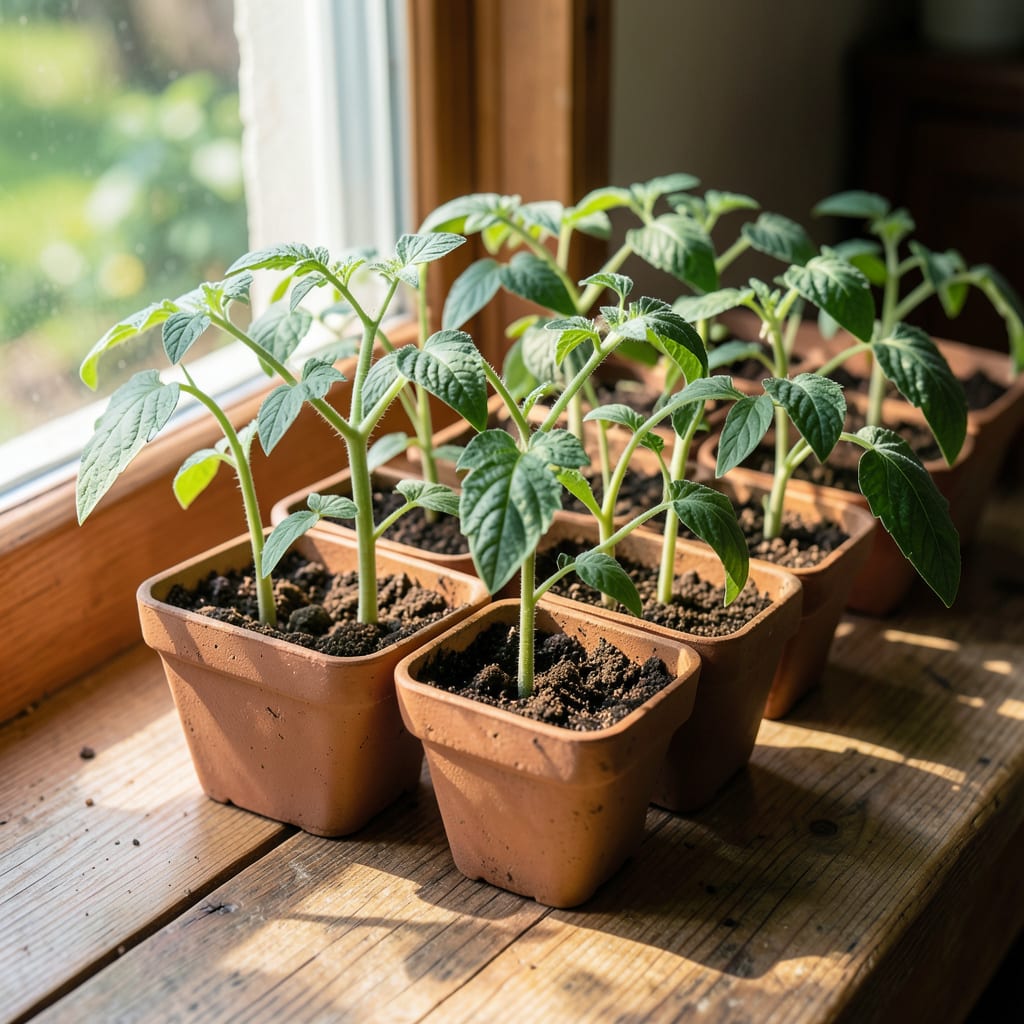
Watching your tomato seedlings’ leaves curl downward is frustrating—I’ve been there, staring at sad little plants wondering what went wrong.
Often it’s environmental stress: too much water, not enough light, or temperature swings. Sometimes it’s pests or disease, but usually it’s something simpler you can fix today.
With a few adjustments to watering, light, or air circulation, those leaves will perk back up within 24-48 hours. The key is acting fast before stress becomes permanent damage.
Prevention is easier than cure. Once you nail the basics, your seedlings will grow strong and resist future stress like champs.
Tomato seedlings with leaves curling downward often signal stress from environmental or biological factors. Here are the most common causes, explained clearly so you can act fast:
Extreme temperatures disrupt cellular function in young tomato plants. When exposed to heat above 90°F (32°C) or cold below 50°F (10°C), leaves curl downward to reduce surface area and conserve water. This is a survival mechanism, but prolonged stress stunts growth.
Inconsistent moisture levels are a top culprit. Underwatering causes leaves to curl and become crisp as the plant tries to minimize water loss. Conversely, overwatering suffocates roots, leading to poor nutrient uptake and drooping, curled foliage. Check soil moisture 1–2 inches deep—it should feel like a wrung-out sponge.
A deficiency in magnesium, calcium, or potassium can trigger leaf curling. Magnesium deficiency often shows as yellowing between leaf veins, while calcium deficiency causes new growth to distort. Excess nitrogen, on the other hand, leads to rapid but weak growth, making leaves curl under their own weight.
Sap-sucking pests like aphids, whiteflies, or spider mites drain fluids from leaves, causing them to curl downward as cells collapse. Inspect the undersides of leaves for tiny insects or sticky residue (honeydew), which confirms an infestation.
Pathogens such as Tomato Yellow Leaf Curl Virus (TYLCV) or fungal infections like early blight can cause curling. Viral infections often produce yellow, mottled leaves, while fungal issues may include dark spots. These require immediate removal of affected plants to prevent spread.
When your tomato seedlings’ leaves start curling downward, quick action can turn things around. Below are targeted fixes for the most common causes, along with prevention tips to keep your plants thriving. 🌱
Fix: Move seedlings to a cooler spot with indirect light or add shade cloth during peak heat. Water deeply in the early morning to help roots absorb moisture before temperatures rise. A light misting can also provide temporary relief.
Prevention: Use row covers or plant in well-ventilated areas. Monitor soil temperature—ideally, keep it below 85°F (29°C).
Fix: Give your seedlings a thorough drink at the base (avoid wetting the leaves). Check soil moisture by sticking your finger an inch deep—if it’s dry, it’s time to water.
Prevention: Maintain consistent moisture with a drip irrigation system or self-watering trays. Mulch around the base to retain moisture.
Fix: Inspect leaves for aphids, whiteflies, or spider mites. Blast them off with a strong stream of water or apply insecticidal soap. For severe infestations, use neem oil (follow label instructions).
Prevention: Introduce beneficial insects like ladybugs or lacewings. Rotate crops and remove plant debris to discourage pests.
Fix: Shield seedlings with a windbreak (e.g., burlap or a DIY barrier). Stake or cage young plants to reduce movement stress.
Prevention: Plant in sheltered locations or use containers that can be moved indoors during windy spells.
Fix: Flush the soil with water to leach out excess salts. Hold off on fertilizing until plants recover (usually 1–2 weeks).
Prevention: Use a balanced, slow-release fertilizer and follow dosage guidelines. Test soil before adding amendments.
Pro Tip: 💡 Always start with the simplest fix—check soil moisture first! Many curling issues stem from inconsistent watering.
Most seedlings perk up within 24-48 hours once the stressor is removed. Severe cases may take up to a week to fully recover.
Yes, too much fertilizer creates salt buildup in soil, burning roots. This prevents water uptake, leading to curled leaves. Flush soil with water to correct it.
Not always. Temporary stress from temperature swings or missed waterings often resolves quickly. Persistent curling may signal pests or disease.
Only remove severely damaged leaves. Mildly curled leaves can still photosynthesize and recover. Use clean scissors to avoid spreading disease.
