
Beautiful Plants For Your Interior
Beautiful Plants For Your Interior
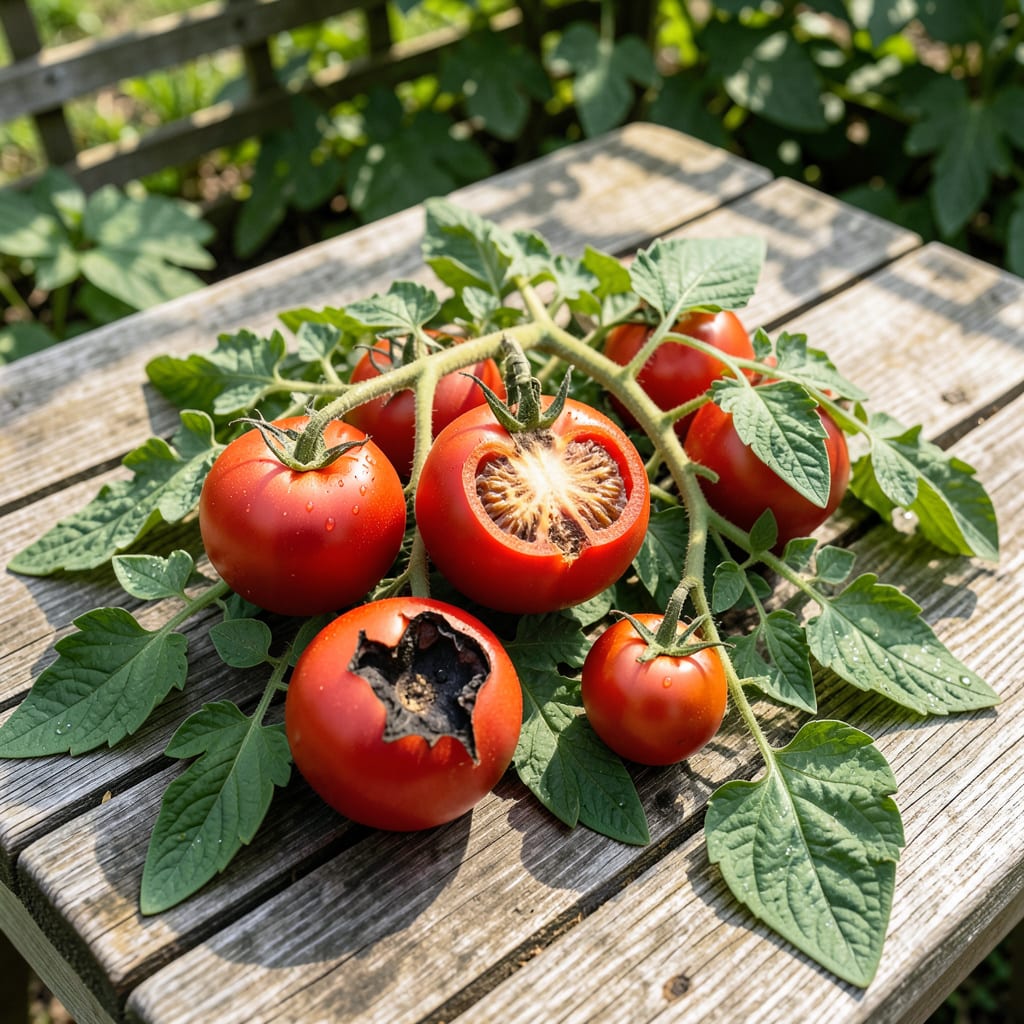
That sunken black spot on your tomato’s bottom isn’t sunburn—it’s end rot. I’ve lost count of how many perfect-looking fruits I’ve had to toss because I missed the early signs.
This happens when plants can’t pull enough calcium from the soil, often because of uneven watering or poor soil. The good news? It’s fixable mid-season with the right adjustments to your routine.
You’ll start seeing healthier fruits within 2-3 weeks of addressing the issue. No more wasted harvests, just firm, vibrant tomatoes that actually make it to your kitchen.
Works for container and in-ground plants alike. Here’s how to stop it in its tracks.
Tomato plant end rot is primarily triggered by calcium deficiency in the fruit, but several underlying factors can disrupt calcium uptake or distribution. Here’s why it happens:
Even if your soil contains calcium, uneven moisture levels or low pH (acidic soil) can lock it out. Tomato plants absorb calcium through water, so drought stress or waterlogged roots prevent proper uptake. Test your soil—ideal pH for calcium availability is 6.0–6.8.
Fluctuating soil moisture—too dry, then too wet—causes blossom end rot by disrupting calcium transport to developing fruit. Deep, regular watering (1–1.5 inches weekly) maintains steady uptake. Mulching helps retain moisture.
During heatwaves or fertility spikes (e.g., excess nitrogen), tomatoes grow too fast for calcium to reach the fruit’s distal end. Balance fertilization—avoid high-nitrogen feeds early in fruiting. Foliar calcium sprays can supplement during growth surges.
Extreme temperatures (below 50°F or above 90°F) slow calcium movement in the plant. Row covers or shade cloth mitigate stress during temperature swings.
Actionable fix: Combine soil testing, consistent irrigation, and stress reduction to stabilize calcium flow.
End rot doesn’t have to spell disaster for your tomatoes. Here’s how to tackle each cause with simple, actionable fixes—and prevent it from coming back.
Keep soil consistently moist (not soggy) by watering deeply 1–2 times per week, depending on heat. Use drip irrigation or soaker hoses to deliver water directly to roots. Pro tip: 💡 Mulch with straw to retain moisture and reduce fluctuations.
Apply a calcium-rich amendment like crushed eggshells (powdered for quick absorption), gypsum, or a foliar calcium spray. For immediate results, mix 1 tablespoon of calcium chloride per gallon of water and drench the soil. Avoid high-nitrogen fertilizers, which can block calcium uptake.
Test your soil pH (ideal range: 6.0–6.8). If it’s too acidic, add lime; if alkaline, amend with sulfur or peat moss. Prevention tip: ✨ Test soil before planting next season to start with balanced conditions.
Avoid over-tiling or compacting soil around roots. If transplanting, handle seedlings by their leaves (not stems) to prevent shock. Use a transplant solution with mycorrhizal fungi to help roots recover faster.
Consistency is key—sticky notes on your watering schedule can help! ⏰
Remove affected fruit immediately to prevent spread. The plant can still produce healthy tomatoes once calcium levels stabilize.
With consistent watering and calcium treatment, new fruit should develop without rot within 2-3 weeks. Older fruit won’t recover.
Yes! Try ‘Mountain Merit’, ‘Defiant PhR’, or ‘Jasper’—these are bred for better calcium uptake and stress tolerance.
Crushed eggshells work best when powdered and worked into soil. Steeping them in water (eggshell tea) provides minimal calcium compared to gypsum or lime.
