
Beautiful Plants For Your Interior
Beautiful Plants For Your Interior
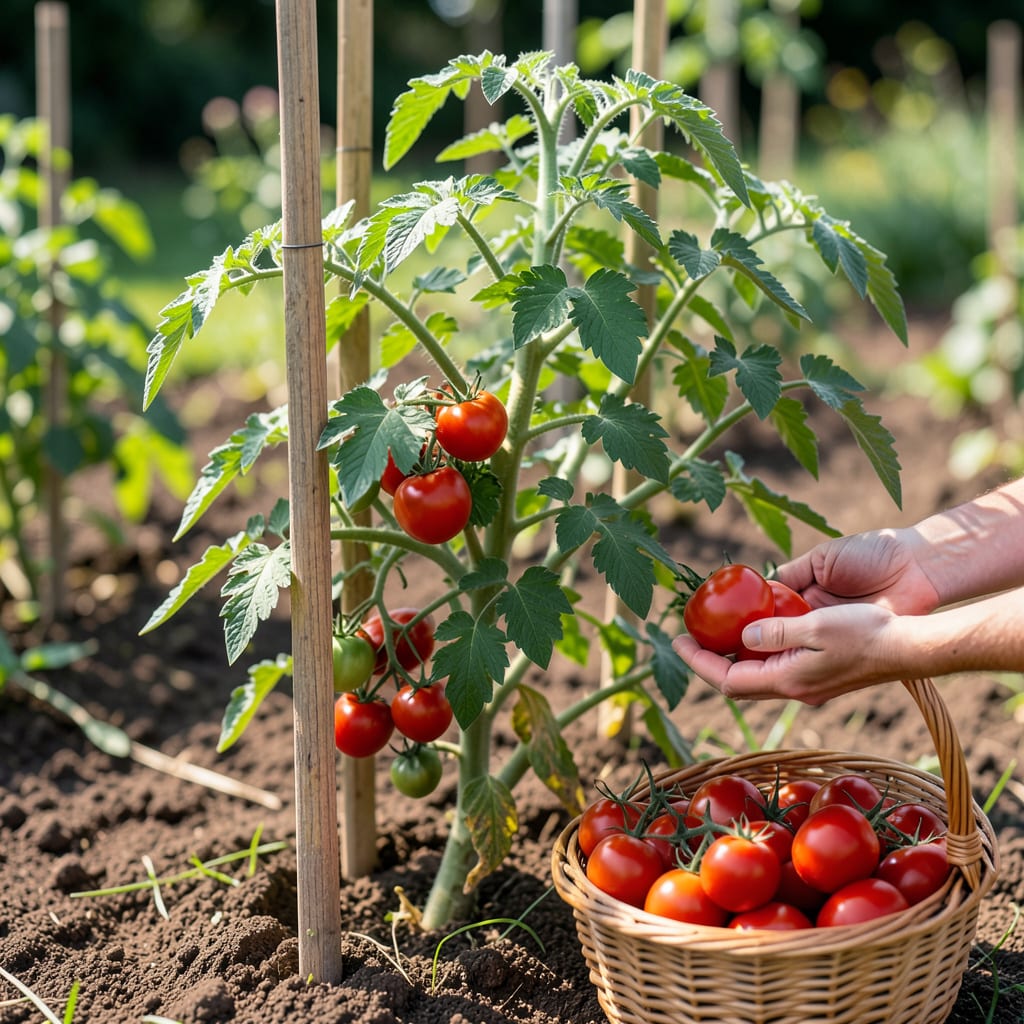
Waiting for your 🍅 Tomato plants to ripen can test any gardener’s patience. But here’s the good news: those days to harvest aren’t a mystery.
I’ve learned that knowing your variety’s timeline turns waiting into smart planning. Whether you’re growing quick producers or slow-ripening heirlooms, we’ll break down what to expect.


Understanding tomato days to harvest starts with knowing your variety type. Early-season tomatoes like ‘Early Girl‘ can ripen in as few as 50-60 days after transplanting.
Mid-season varieties such as ‘Better Boy’ typically take 70-80 days, while late-season heirlooms like ‘Brandywine’ may need 80-100 days to fully mature. 🌱
Climate plays a huge role in these timelines. In warmer zones, you might shave off 5-10 days from the average days to maturity. Cooler climates often add 10-15 days to the process.
Soil quality matters too. I’ve seen nutrient-rich soil speed up growth by 10-20% compared to poor soil. Consistent watering and full sun exposure are non-negotiable for hitting those target days. ☀️
Determinate varieties tend to ripen all at once, making them perfect for canning or sauce-making. These usually fall in the mid-season range of 70-85 days.
Indeterminate types keep producing until frost. They often have longer days to harvest but give you continuous yields. Expect these to take 80-100 days for the first fruits.
Cherry tomatoes are the speed champions. Varieties like ‘Sweet 100’ or ‘Sun Gold’ often ripen in 55-65 days, perfect for impatient gardeners. 🌿
For paste tomatoes like ‘San Marzano’, the wait is longer at 80-90 days, but the rich flavor makes it worthwhile. These are ideal for sauces and preserving.
Remember, these are average estimates. Your actual days to harvest can vary based on planting date, care routine, and local weather patterns.
I’ve found that tomato days to harvest aren’t set in stone. With a few simple tweaks, you can nudge your plants to ripen faster or slower depending on your needs.
Starting seeds indoors 6-8 weeks before the last frost gives your plants a head start. This can shave off 10-14 days from the total time to harvest. 🌱
For a faster harvest, black plastic mulch works wonders. It warms the soil by 2-4°F, which can accelerate growth by 5-7 days in cooler climates.
If you need to delay ripening, try shade cloth during peak afternoon sun. This is especially useful in hot climates where tomatoes might ripen too quickly. ☀️
Remember that over-watering can actually slow down your days to harvest. Stick to 1-2 inches per week and water deeply but infrequently for best results.
Another pro tip: prune suckers on indeterminate varieties to direct more energy toward fruit production. This can reduce your days to maturity by 3-5 days in some cases. ✂️
Finally, don’t forget that container gardening gives you more control over growing conditions. You can move pots to optimize sunlight and temperature, potentially adjusting your harvest window by a week or more.
While tomato days to harvest give a good timeline, I always check for visual cues too. Color change is the first sign—most varieties turn from green to red, but some go yellow or orange when ripe.
Another telltale sign is gentle softness. A ripe tomato yields slightly to pressure, unlike the hard unripe fruit. The stem area also darkens and loosens as it matures. 🌱
✅ Full color for the variety
✅ Slight give when gently squeezed
✅ Stem darkens and separates easily
✅ Glossy skin with uniform texture
For determinate varieties, most fruits ripen within a 2-week window. I watch closely during this period to catch them at peak ripeness. Indeterminate types produce continuously, so I check plants every 2-3 days in summer.
Smell matters too—ripe tomatoes have a strong sweet aroma at the stem end. If it smells grassy or green, it’s not ready yet. This is especially helpful for heirloom varieties with unusual colors. ☀️
Don’t rely on size alone. Some cherry tomatoes stay small but ripen quickly, while beefsteaks can be large but unripe. Always combine size with color and texture checks for accuracy.
Finally, if you’re unsure, pick one and taste-test. Experience is the best teacher for mastering your tomato days to harvest. 🌿
Cherry tomatoes like ‘Early Girl’ or ‘Sweet 100’ typically ripen in just 50-60 days. These are perfect for gardeners eager for quick results or short growing seasons.
In warmer zones, you may see fruits 5-10 days earlier than average. Cooler climates often add 10-15 days to the typical timeline. Consistent full sun and proper care help maintain predictable schedules.
Look for full color, a slight give when gently squeezed, and a darkened stem that separates easily. A ripe tomato will also have a sweet aroma at the stem end. These signs are more reliable than calendar estimates.
Yes! Starting seeds indoors 6-8 weeks before the last frost gives plants a head start. This can shave off 10-14 days from the total time to harvest, especially in cooler climates.
