
Beautiful Plants For Your Interior
Beautiful Plants For Your Interior
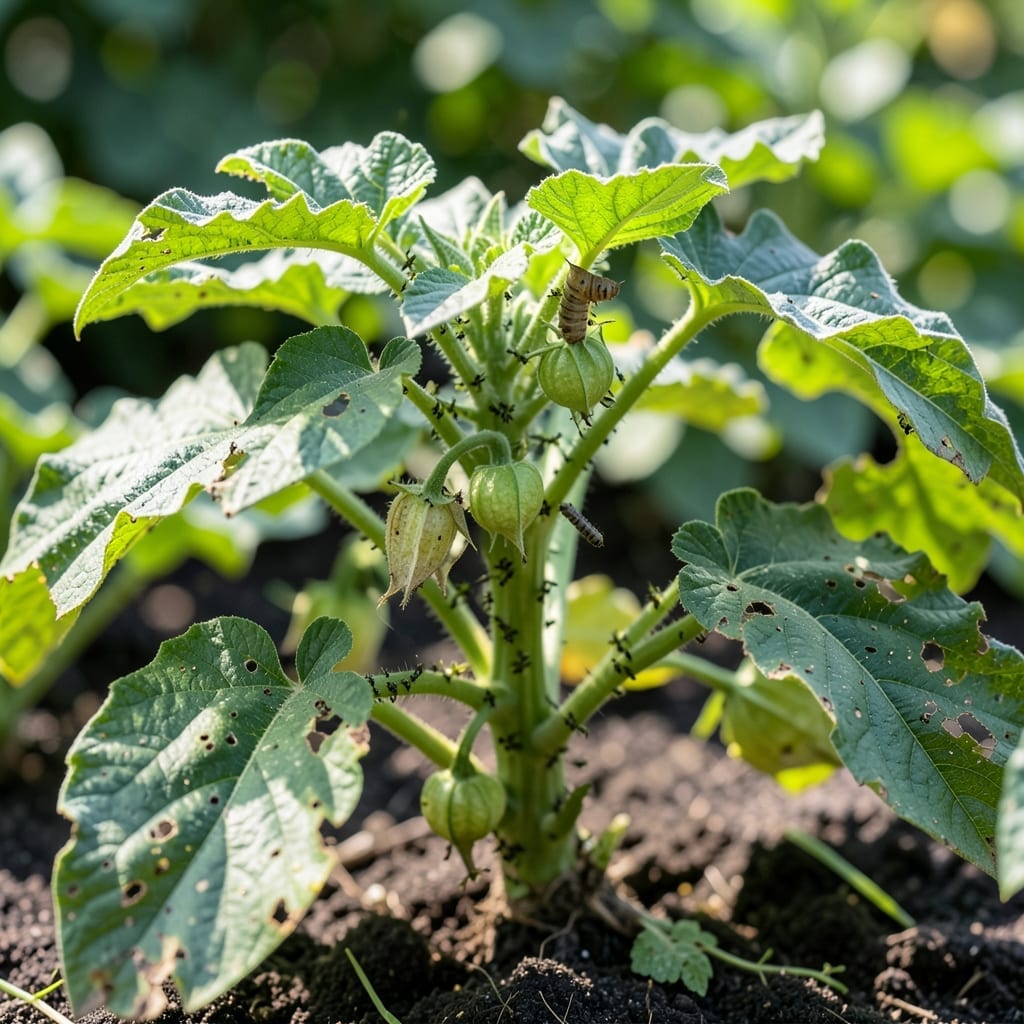
Tomatillos attract pests like aphids and flea beetles that can destroy your crop overnight. I lost an entire row last summer before realizing the early warning signs.
Spotting the problem starts with daily leaf inspections. Look for chewed edges, sticky residue, or tiny insects on the undersides. Most issues appear during hot, dry spells when plants stress.
Organic solutions work better than you’d expect. Neem oil, insecticidal soap, and companion planting with basil or marigolds keep pests away without chemicals.
Catch problems early and your tomatillos will reward you with that tangy, citrusy flavor all season long.
Pests target tomatillo plants for specific, often preventable reasons. Understanding these causes helps you address the root of the problem and protect your crop effectively.
Stressed or weakened tomatillo plants emit chemical signals that attract pests like aphids and whiteflies. Nutrient deficiencies, particularly in nitrogen or potassium, compromise the plant’s natural defenses. Overwatering or poor drainage can also create ideal conditions for root-knot nematodes, which thrive in soggy soil. Action: Maintain balanced soil fertility and proper drainage to keep plants resilient.
Monoculture gardens—where tomatillos are the sole crop—provide an open buffet for pests. Without natural predators (e.g., ladybugs, lacewings) or companion plants (like marigolds or basil), populations of tomato hornworms or flea beetles can explode. Action: Introduce companion plants and beneficial insects to disrupt pest life cycles.
Decaying plant matter and fallen fruit harbor pests like slugs, snails, and cucumber beetles. These materials also create damp, sheltered spaces for fungal diseases, which further weaken plants. Action: Remove debris regularly and practice crop rotation to break pest reproduction cycles.
Extreme heat or drought stresses tomatillos, making them vulnerable to spider mites and thrips. Conversely, excessive humidity encourages fungal growth, attracting soft-bodied pests like mealybugs. Action: Use mulch to retain moisture and shade cloth to mitigate temperature swings.
When pests strike your tomatillo plants, quick and effective solutions are key to saving your harvest. Below are targeted fixes for common invaders, along with prevention tips to keep them from returning.
Spray a strong stream of water from a hose to dislodge aphids from leaves and stems. For stubborn infestations, apply neem oil or insecticidal soap in the early morning or late evening. Prevention tip: 💡 Encourage ladybugs—natural predators—by planting companion flowers like marigolds or alyssum nearby.
These tiny pests thrive in dry conditions. Mist your plants regularly to increase humidity, or use a soapy water spray (1 tsp mild soap per quart of water). For severe cases, introduce predatory mites like Phytoseiulus persimilis. Prevention tip: 🌡️ Avoid overhead watering to reduce dust, which attracts mites.
Create a copper tape barrier around plant bases or use beer traps (bury a shallow dish filled with beer—they’ll drown in it). Handpick pests at dusk or dawn when they’re most active. Prevention tip: ✨ Remove debris and mulch where they hide, and keep the garden bed dry.
Hang yellow sticky traps near plants to catch adults. Apply reflective mulch to disorient them, or spray with a garlic or pepper solution to deter feeding. Prevention tip: 🎯 Rotate crops annually to break their life cycle.
Remove adult beetles by hand in the early morning and drop them into soapy water. Apply diatomaceous earth around the base of plants to deter larvae. Prevention tip: 🔥 Use floating row covers to block adults from laying eggs on leaves.
Consistency is your best defense—check plants weekly for early signs of trouble and act fast!
Look for chewed leaves, sticky residue (honeydew), or tiny holes in foliage. Yellowing or curling leaves often signal aphids or mites.
Check leaves, stems, and undersides 2-3 times per week during growing season. Early morning is ideal for spotting active pests.
Avoid harsh chemicals—organic solutions like neem oil or insecticidal soap work effectively without harming beneficial insects.
If you skip prevention, pests rebound. Always combine treatments with companion planting, crop rotation, and debris removal.