
Beautiful Plants For Your Interior
Beautiful Plants For Your Interior
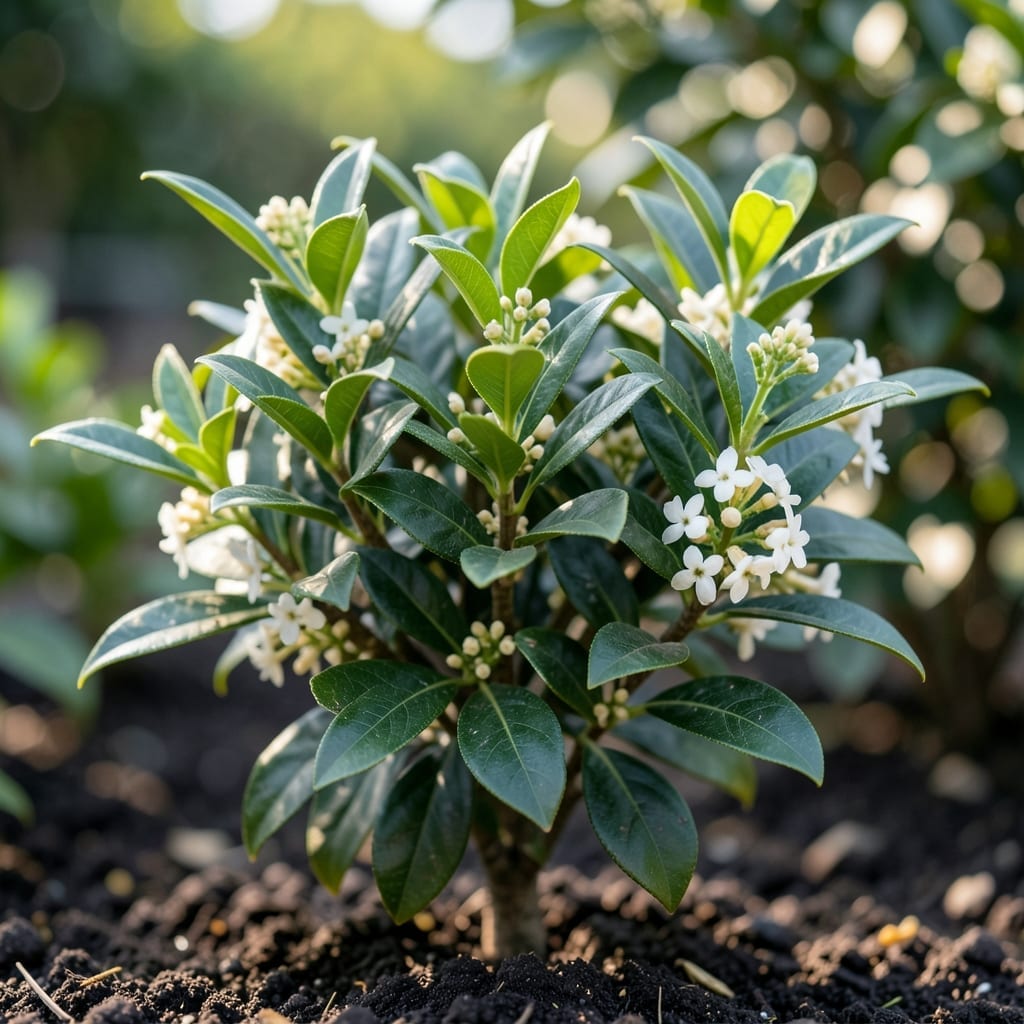
Tea olive leaves bring year-round fragrance that stops neighbors in their tracks. I planted my first one near the porch, and now every breeze carries that sweet, floral scent through the windows.
This evergreen thrives with minimal fuss—just well-draining soil, occasional pruning, and protection from harsh afternoon sun. The glossy, dark green foliage stays vibrant through every season with proper care.
📚 In This Guide
Here’s the method I use to cultivate healthy, aromatic foliage year after year.
Tea olive thrives in partial to full sun, but it tolerates light shade as well. I always test the spot first—spend a day observing how much direct sunlight the area gets. Aim for 4-6 hours of morning sun for the best fragrance and compact growth.
Soil drainage is non-negotiable. These plants despise soggy roots, so avoid low-lying areas or heavy clay. If your soil is dense, amend it with organic matter to improve structure. A slightly acidic to neutral pH (6.0-7.0) is ideal for vibrant foliage.
Dig a hole twice as wide as the root ball but no deeper. Tea olive roots spread outward, not down, so width matters more than depth. Gently loosen the roots if they’re circling the container—this encourages outward growth.
Space plants 6-10 feet apart to allow for mature width. If you’re using them as a hedge, plant 4-6 feet apart for a dense screen. After placing the plant, backfill with native soil, tamper lightly to remove air pockets, and water deeply to settle the roots.
Water newly planted tea olive 2-3 times per week for the first 6-8 weeks, keeping the soil evenly moist but never waterlogged. Use your finger to test—water when the top 1-2 inches of soil feel dry.
Once established, tea olive is drought-tolerant. I reduce watering to once every 10-14 days, depending on rainfall. Overwatering is a bigger risk than underwatering; yellowing leaves are a classic sign you’re giving it too much love.
Prune in late winter or early spring, just before new growth starts. This timing ensures you don’t cut off flower buds (which form in summer) and allows the plant to recover quickly. Use clean, sharp shears to make precise cuts.
Remove one-third of the oldest stems annually to rejuvenate the plant and encourage bushier growth. Thin out crowded branches to improve air circulation, which reduces the risk of fungal issues. The pruned branches? Crush a few leaves to release that incredible fragrance—it’s a gardener’s reward.
Apply a balanced, slow-release fertilizer in early spring, following the label’s rates. Tea olive isn’t a heavy feeder, so less is more. I use a 10-10-10 or 8-8-8 formula and scatter it around the drip line, then water it in.
Mulch with 2-3 inches of organic material like pine bark or wood chips to retain moisture, suppress weeds, and regulate soil temperature. Keep the mulch 3-4 inches away from the trunk to prevent rot. Refresh the mulch layer annually as it decomposes.
Small adjustments in planting and care make a surprising difference for these fragrant evergreens.
The Light Factor: That 4-6 hours of morning sun in Step 1 isn’t just a suggestion—it’s what unlocks the most intense fragrance. Afternoon sun works too, but morning light is gentler and reduces leaf scorch risk in hotter climates. Confession: I planted one in deep shade and wondered for a year why it smelled like nothing.
Drainage Non-Negotiable: In Step 1’s soil prep, if your native soil is clay-heavy, don’t just dig and hope. Create a raised bed or amend with at least 50% organic matter—compost, pine bark fines, or coarse sand. Tea olive roots will rot in standing water faster than you can say “soggy.”
Pruning Timing Secret: The late winter or early spring window in Step 4 exists for a reason. Prune any later and you risk cutting off the summer-formed flower buds that create next year’s blossoms. I learned this the hard way after a zealous summer pruning session left me with no blooms the following spring.
Mulch Placement Matters: That 3-4 inches away from the trunk rule in Step 5 prevents more than just rot—it also deters rodents from nesting against the bark. Use a rake to create a small mulch-free ring around each plant, then spread your 2-3 inches of organic material outward from there.
You can propagate tea olive (Osmanthus) through semi-hardwood cuttings in late summer. Dip the cut end in rooting hormone, plant in well-draining soil, and keep it moist in indirect light until roots develop.
Prune after flowering in late spring or early summer to shape the plant and encourage bushier growth. Avoid heavy pruning in fall, as it may reduce next year’s blooms.
Yellow leaves often indicate overwatering, poor drainage, or nutrient deficiencies. Check soil moisture and fertility, and ensure the plant has good airflow.
Yes! Consider sweet bay laurel, gardenia, or star jasmine for similar fragrance and evergreen qualities in your garden.
Spray with neem oil or insecticidal soap for common pests like aphids or scale. Regularly inspect leaves and maintain plant health to prevent infestations.