
Beautiful Plants For Your Interior
Beautiful Plants For Your Interior
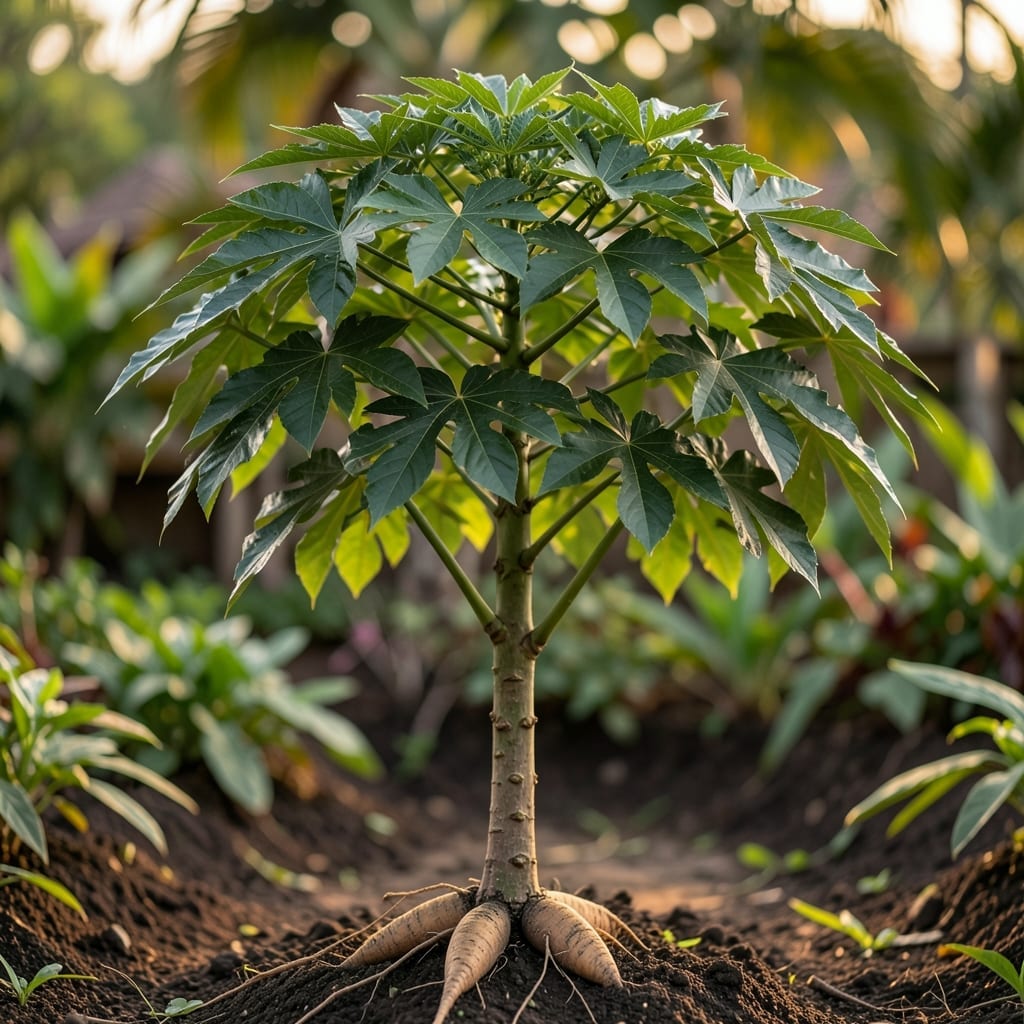
Tapioca cassava changed my tropical garden game. I started with one plant and now harvest 20-pound roots from a small patch every fall.
This isn’t your typical backyard crop—it thrives in heat, handles drought, and grows where other plants wilt. The key is well-drained soil and full sun, with a long growing season to develop those starchy roots.
You’ll get tall, bushy plants with lobed leaves that look as good as they produce. The roots store well in the ground, giving you flexibility on harvest timing.
Perfect for gardeners in zones 9-11 or anyone with a greenhouse. Here’s how to make it work in your space.
The tapioca cassava plant, while hardy, can face several issues due to environmental, biological, and cultural factors. Understanding these causes helps prevent problems and ensures a healthy harvest. Below are the primary reasons behind common cassava plant issues.
Cassava thrives in well-drained, sandy loam soils with a pH of 5.5 to 6.5. Poor drainage or heavy clay soils can lead to root rot, as waterlogged conditions suffocate the roots. Similarly, nutrient-deficient soils (particularly low in potassium or nitrogen) result in stunted growth or low yields. Testing soil before planting and amending it with organic matter can mitigate these risks.
Extreme weather is a major culprit. Drought can cause leaf drop and reduced tuber development, while excessive rainfall may trigger fungal diseases like bacterial blight or anthracnose. Cassava is drought-tolerant but requires consistent moisture during the first 3–5 months. Mulching helps retain soil moisture, and planting in raised beds improves drainage in wet climates.
Insects like mealybugs and green mites suck sap from leaves, weakening the plant and spreading viral diseases such as cassava mosaic virus. Whiteflies also transmit viruses, while root-knot nematodes attack underground, causing galls and poor tuber formation. Regular scouting, resistant varieties, and biological controls (e.g., ladybugs) are effective countermeasures.
Fungal and bacterial diseases often arise from poor air circulation or infected planting materials. Cassava bacterial blight (caused by Xanthomonas axonopodis) leads to leaf spots and dieback, while root rot (from Phytophthora spp.) destroys tubers. Using certified disease-free cuttings and rotating crops every 2–3 years reduces disease buildup.
Growing tapioca cassava plants can come with challenges, but most problems have simple solutions. Below are practical fixes for common issues, along with prevention tips to keep your crop thriving.
If your cassava cuttings aren’t sprouting, they may be too old or planted incorrectly. Fix: Use fresh, healthy stem cuttings (6-12 inches long) with at least 3-5 nodes. Plant them vertically, burying 2-3 nodes in well-draining soil. Keep the soil moist but not waterlogged.
Prevention: Store cuttings in a cool, dry place before planting, and avoid using woody or diseased stems. 💡 Pro tip: Soak cuttings in water overnight to encourage faster rooting.
Yellow leaves often signal nutrient deficiency or overwatering. Fix: Test your soil for deficiencies (especially nitrogen or magnesium) and amend with compost or a balanced fertilizer. Reduce watering if the soil feels soggy.
Prevention: Plant cassava in sandy, well-draining soil and water only when the top 1-2 inches of soil are dry. ✨ Pro tip: Mulch around the base to retain moisture without waterlogging.
Mealybugs, whiteflies, and spider mites love cassava. Fix: Spray infected plants with neem oil or insecticidal soap, focusing on the undersides of leaves. For severe cases, remove heavily infested leaves or stems.
Prevention: Inspect plants regularly, especially in dry conditions. Introduce beneficial insects like ladybugs to keep pests in check. 🎯 Pro tip: Companion planting with marigolds can deter pests naturally.
Root rot is usually caused by excessive moisture. Fix: Stop watering immediately and improve drainage by amending the soil with sand or perlite. If the rot is advanced, remove and discard affected plants to prevent spread.
Prevention: Plant cassava in raised beds or mounds to ensure proper drainage. Avoid overhead watering to keep foliage dry. 🌡️ Pro tip: Water in the morning so excess moisture evaporates during the day.
Tapioca cassava typically matures in 8-12 months in warm climates. For best yields, allow 18-24 months for full root development. Harvest when leaves start yellowing.
Yes, but use a large container (20+ gallons) with drainage. Dwarf varieties work best. Ensure 6-8 hours of daily sunlight and consistent moisture.
It thrives in sandy loam with pH 5.5-6.5. Avoid heavy clay. Amend with compost for fertility and perlite for drainage.
Look for mature stems (1-2 inches thick) and roots bulging at the base. Leaves may yellow. Harvest before first frost in colder zones.