
Beautiful Plants For Your Interior
Beautiful Plants For Your Interior
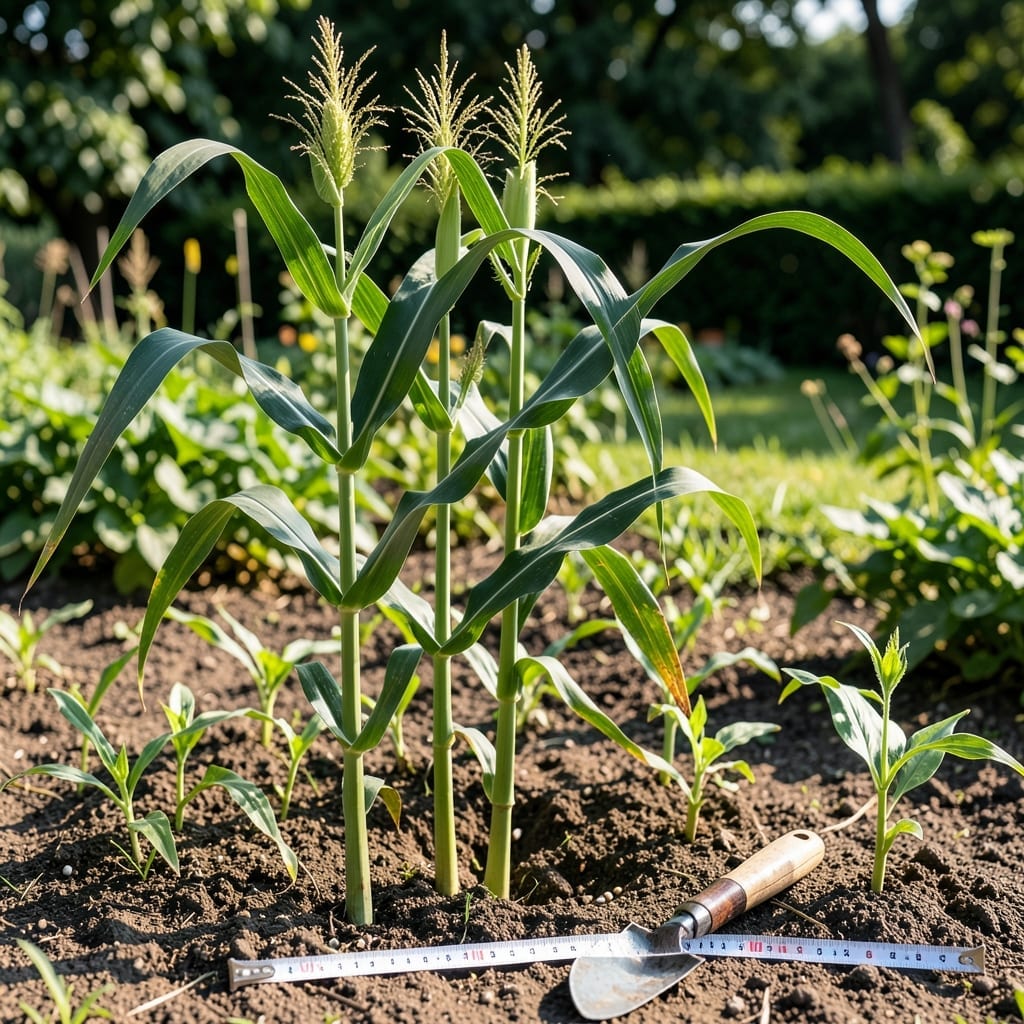
Proper sweet corn 🌽 plant spacing is the secret to healthy stalks, full ears, and a bountiful harvest. Get it wrong, and you’ll face stunted growth, poor pollination, and wasted garden space.
I’ve seen too many gardeners struggle with weak plants or small cobs simply because they didn’t plan their layout correctly. The good news? Fixing this is easier than you think.
With the right approach, you’ll ensure each 🌽 plant gets enough sunlight, water, and nutrients to thrive. No more guessing games—just proven methods for success.
Let me walk you through how to space your Sweet Corn for maximum yield and the healthiest crop possible this season.

I’ve learned that sweet corn plant spacing is the foundation of a successful harvest. Proper spacing ensures good pollination, airflow, and sunlight exposure for every stalk.
For most varieties, I plant seeds 12-18 inches apart in rows that are 30-36 inches apart. This setup gives roots room to spread while allowing wind to carry pollen between plants.
| Aspect | Specification |
|---|---|
| Plant-to-Plant | 12-18 inches |
| Row-to-Row | 30-36 inches |
| Block Formation | 3-4 rows minimum |
| Depth | 1 inch |
| Soil Temp | 60°F minimum |
I always plant in blocks of 3-4 rows rather than single lines. This block formation improves cross-pollination, which is crucial for kernel development.
If I crowd plants too closely, I notice smaller ears and poor kernel fill. On the flip side, spacing too far apart wastes garden space and reduces pollination efficiency.
For mini corn varieties, I tighten spacing to 8-12 inches between plants. These smaller types don’t need as much room but still require good airflow to prevent disease.
Super-sweet corn often needs the full 18-inch spacing because these varieties tend to have larger stalks and need more resources from the soil.
I’ve found that raised beds can use slightly tighter spacing. With their improved drainage and looser soil, I can plant seeds 12 inches apart in all directions.
Remember that soil fertility affects spacing too. In rich, well-drained soil, I can push plants a bit closer. In poorer soil, I give them more room to compete for nutrients.
Finally, I mark my rows with strings or stakes to maintain straight lines and consistent spacing. This small step makes a big difference in plant health and harvest quality. ☀️
Even experienced gardeners sometimes mess up sweet corn plant spacing. One of the biggest errors I see is overcrowding plants to squeeze more into a small garden. This leads to poor pollination and smaller ears at harvest time.
Another common mistake is planting corn in single long rows instead of blocks of 3-4 rows. Corn is wind-pollinated, and block planting ensures better pollen distribution between plants.
⚠️ Watch Out!
Avoid single-row planting—it reduces pollination success by up to 50%. Stick to blocks for fuller ears and higher yields.
I’ve also seen gardeners ignore row spacing, planting rows too close together. This creates shade competition and reduces airflow, which can encourage fungal diseases like rust or leaf blight.
If your corn plants are stunted or weak, check your spacing. 12-18 inches between plants and 30-36 inches between rows is ideal for most varieties. Any tighter and your plants will compete for nutrients and struggle to thrive.
For mini corn varieties, you can reduce spacing slightly to 8-12 inches between plants, but still keep rows 24-30 inches apart. This ensures they get enough sunlight and air circulation without overcrowding.
Finally, remember that soil preparation matters just as much as spacing. Even with perfect spacing, poor soil will limit growth. I always amend my soil with compost before planting to give my corn the best start. ☀️