
Beautiful Plants For Your Interior
Beautiful Plants For Your Interior
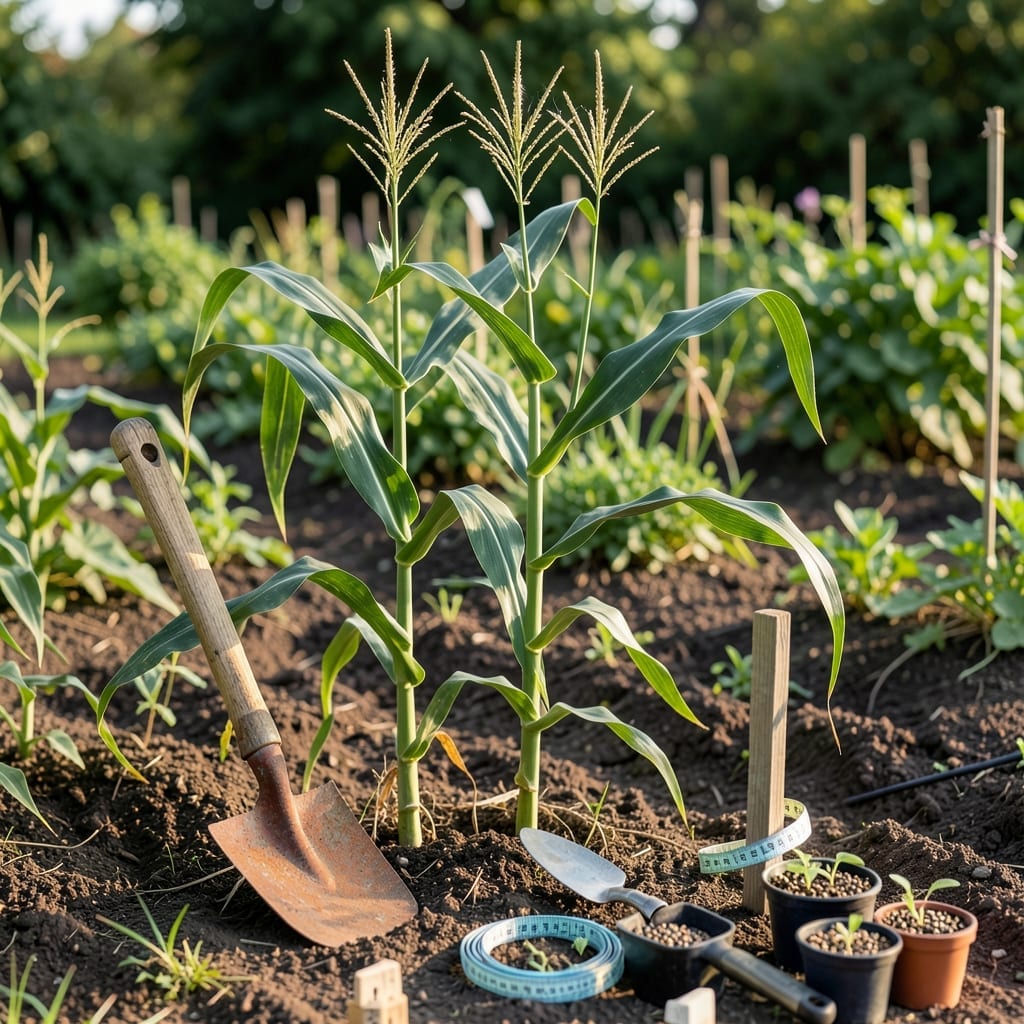
Proper corn planting depth and spacing can make or break your harvest. I learned this the hard way my first season when my 🌽 Corn came up sparse and stunted.
Getting these basics right means the difference between a bounty of sweet ears and a disappointing yield. It’s not just about tossing seeds in the dirt and hoping for the best.
I’ll share the exact depths and distances that work in Zone 6a, plus why they matter so much for your plants’ growth. These aren’t just guidelines – they’re the foundation of a successful crop.
Discover how small adjustments in your planting approach can lead to a more abundant harvest this summer. Let’s get started.

Getting the planting depth right is the first step to strong corn roots and a bountiful harvest. I always aim for a 1 to 2-inch depth in well-drained soil, as this encourages quick germination while protecting seeds from drying out. 🌱
In cooler climates, planting slightly deeper at 2 inches helps retain warmth, while in warmer regions, a 1-inch depth prevents rotting. The key is ensuring the soil temperature is at least 60°F for optimal growth. ☀️
| Variety | Depth | Soil Temp |
|---|---|---|
| Sweet Corn | 1-2 inches | 60-65°F |
| Field Corn | 1.5-2 inches | 60°F+ |
| Heirloom | 1-1.5 inches | 60-65°F |
For sandy soil, I recommend planting at the deeper end of the range to retain moisture. Meanwhile, clay soil benefits from shallower planting to avoid waterlogging. Always check soil moisture before planting to ensure a good start. 💧
If you’re planting in raised beds, stick to 1-inch depth since these warm up faster. For direct sowing in garden rows, 2 inches works best in most cases. This depth also helps anchor the plants against wind. 🌬️
I’ve found that pre-watering the soil before planting improves germination rates. After sowing, lightly cover seeds with soil and press down gently. This ensures good seed-to-soil contact for faster sprouting. 🌿
Avoid planting too deep, as it can delay emergence and weaken seedlings. Similarly, shallow planting exposes seeds to drying out or being eaten by birds. Balance is crucial for healthy corn growth. 🌽
For early season planting, consider using black plastic mulch to warm the soil faster. This trick can give you a 1-2 week head start in cooler climates. Just remove it once seedlings emerge. ☀️
Finally, mark your rows clearly to avoid disturbing seeds during weeding. I use stakes and string for straight lines and consistent depth. This simple step saves time and ensures uniform growth. ✂️
Proper corn spacing ensures each plant gets enough sunlight, water, and nutrients to thrive. Crowded plants compete for resources, leading to smaller ears and poor pollination.
For sweet corn, I recommend 12-18 inches between plants in rows 30-36 inches apart. This setup gives roots room to spread while allowing for easy air circulation.☀️
| Corn Type | Plant Spacing | Row Spacing |
|---|---|---|
| Sweet Corn | 12-18 inches | 30-36 inches |
| Field Corn | 8-12 inches | 30 inches |
| Heirloom | 12 inches | 36 inches |
For field corn, tighter 8-12 inch spacing works well in 30-inch rows. This denser arrangement maximizes yield per square foot but requires rich, well-drained soil.
Heirloom varieties often need more space—12 inches between plants and 36-inch rows—to accommodate their larger stalks and ears. Always check your seed packet for specific recommendations.
Remember, pollination is key. Corn is wind-pollinated, so plant in blocks of at least 4 rows rather than single rows. This formation improves kernel set and ear development.
If space is limited, try square foot gardening with 4 plants per square foot. Just ensure each plant still gets full sun and consistent moisture during tasseling.🌱
Finally, mark your rows with stakes or strings to maintain straight lines and even spacing. This simple step prevents overcrowding and makes weeding and harvesting much easier.