
Beautiful Plants For Your Interior
Beautiful Plants For Your Interior
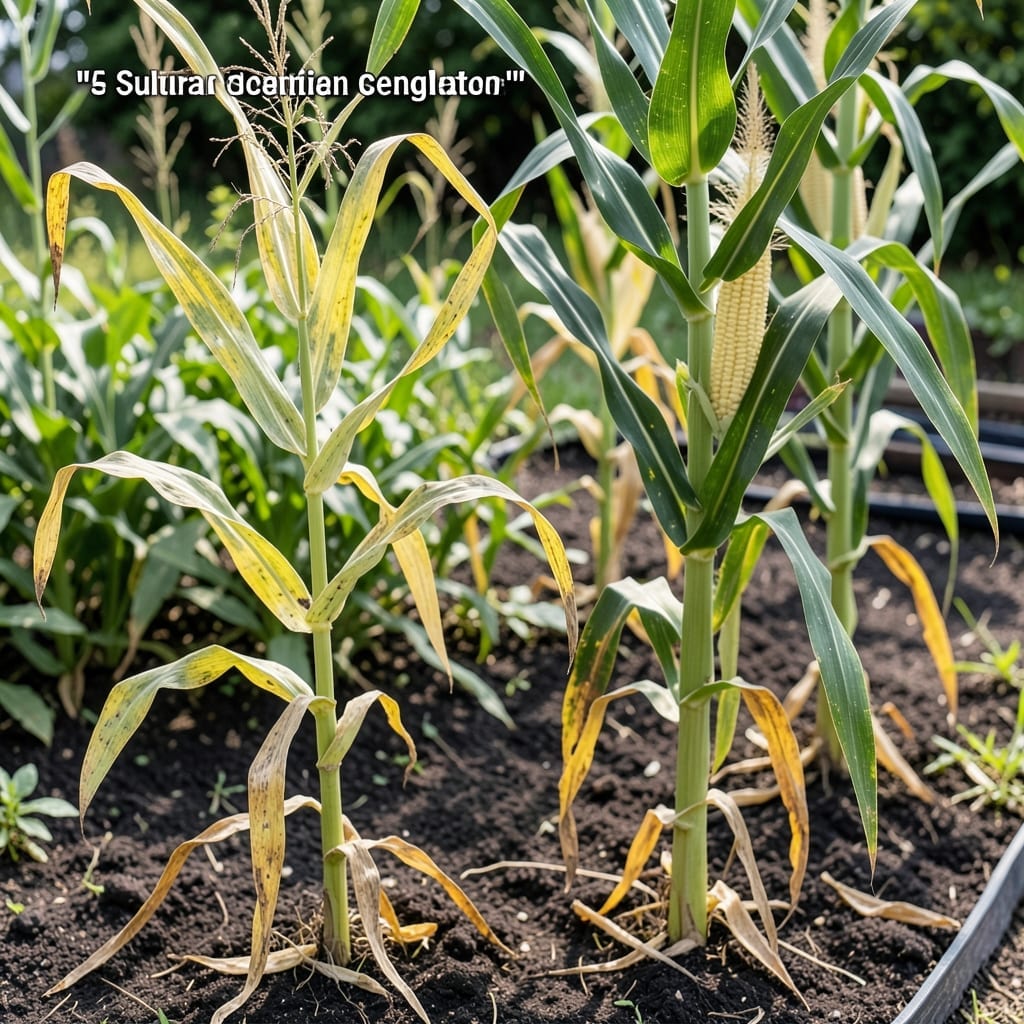
Yellow corn leaves got you worried? I’ve seen this exact pattern—pale green to yellow streaks between veins, especially on younger leaves—too many times in my own garden.
Sulfur deficiency sneaks up when soil lacks this essential nutrient, often after heavy rains or in sandy ground. It’s not just unsightly; stunted growth and weak stalks follow if left unchecked.
Here’s the thing—fixing it is simpler than you’d think. A quick soil test confirms the issue, and organic solutions like compost or gypsum can restore balance fast.
Prevention starts with rich, well-drained soil and a consistent feeding schedule. Your corn will thank you with deep green leaves and strong, steady growth.
Sulfur deficiency in corn often stems from environmental and management factors that disrupt nutrient availability. Here’s why it happens:
Intensive farming practices strip sulfur from the soil over time. Corn, a heavy feeder, requires consistent sulfur replenishment. Without organic matter or sulfur-containing fertilizers, reserves dwindle, leaving crops starved for this essential nutrient. Sandy or low-organic soils are particularly vulnerable.
Sulfur, in its sulfate form (SO₄²⁻), is highly mobile in water. Heavy rainfall or excessive irrigation can wash it deep into the soil profile, beyond the root zone. This is especially common in well-drained soils, where sulfur escapes before plants can absorb it.
Organic matter is a natural sulfur reservoir. When fields lack compost, manure, or cover crops, microbial activity declines, slowing sulfur mineralization. Without this process, sulfate—the form plants use—becomes scarce, leading to deficiency symptoms like yellowing leaves (chlorosis).
Extremely acidic (pH < 5.5) or alkaline soils (pH > 7.5) lock sulfur in unavailable forms. In acidic conditions, sulfur binds with aluminum, while high pH reduces sulfate solubility. Testing soil pH and amending it (e.g., with lime or sulfur) can restore balance.
Modern NPK fertilizers often omit sulfur, assuming it’s abundant in soils. However, high-yield corn demands more sulfur than these inputs provide. Overuse of nitrogen (which accelerates growth) can also dilute sulfur concentrations in plant tissues, exacerbating deficiency.
When your corn shows signs of sulfur deficiency—like yellowing leaves and stunted growth—act fast with these targeted fixes and prevention tips.
If a soil test confirms low sulfur levels, apply elemental sulfur (10–20 lbs per acre) or gypsum (calcium sulfate) to raise sulfur availability. For a quick boost, use ammonium sulfate (20–30 lbs per acre) as a side-dressing. Organic growers can opt for composted manure or alfalfa meal, which naturally release sulfur as they decompose.
Apply sulfur-based fertilizers before planting or early in the growing season for best absorption. Side-dressing during the V4–V6 growth stages can also correct mild deficiencies. Avoid over-applying, as excessive sulfur can lower soil pH and harm beneficial microbes.
For severe cases, foliar sprays with magnesium sulfate (Epsom salt) (1–2 lbs per 100 gallons of water) can provide a temporary fix, but soil correction is the long-term solution. Pro tip: Combine sulfur applications with nitrogen for balanced growth! ✨
Look for pale green to yellow streaks between leaf veins, especially on newer growth. Stunted plants and weak stalks follow if untreated.
Sandy or low-organic soils commonly lack sulfur. Heavy rainfall areas also see more leaching of this nutrient.
With proper amendments, you’ll notice greener leaves in 7-14 days. Full recovery takes 2-3 weeks depending on severity.
Yes! Composted manure or alfalfa meal work well. Apply 1-2 inches of compost around plants for steady sulfur release.