
Beautiful Plants For Your Interior
Beautiful Plants For Your Interior
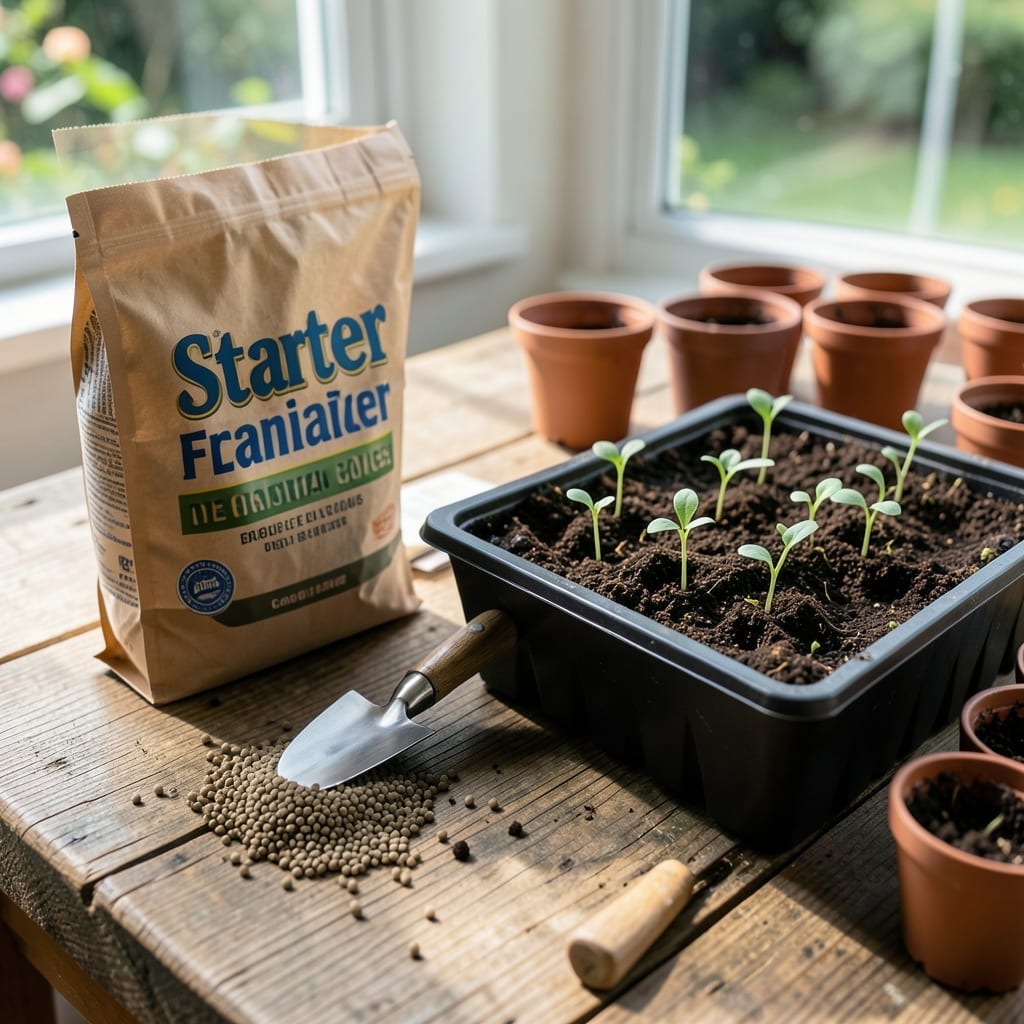
Giving your 🌱 seedlings the right nutritional boost from day one can mean the difference between struggling sprouts and thriving plants.
Those first few weeks are critical for development, and the proper nutrients make all the difference. I’ve seen firsthand how the right approach transforms weak starts into strong, healthy seedlings.
Let me show you how to give your plants the best possible beginning with simple, effective techniques that work every time.
Choosing the right starter fertilizer can feel overwhelming, but it’s all about understanding what young plants need most. Seedlings require gentle nutrition to avoid shock while promoting strong root and leaf development.
I always look for formulations with balanced N-P-K ratios, like 5-10-10, which provide nitrogen for leaf growth and phosphorus for root establishment. Potassium helps with overall plant health and disease resistance.
| Fertilizer Type | N-P-K Ratio | Best For | Application Method |
|---|---|---|---|
| Organic Compost Tea | 1-1-1 | Leafy Greens | Liquid Feed |
| Synthetic 5-10-10 | 5-10-10 | Root Crops | Granular Mix |
| Worm Castings | 3-2-2 | All Seedlings | Soil Amendment |
Organic options like compost tea and worm castings are my go-to for sensitive seedlings. They release nutrients slowly, reducing the risk of burning tender roots while improving soil structure.
On the other hand, synthetic fertilizers offer precise nutrient control and quick results. However, they require careful dosing to prevent over-fertilization, which can harm young plants.
For most seedlings, I recommend starting with half-strength liquid fertilizer every 2-3 weeks. This approach gives them a steady supply of nutrients without overwhelming their delicate systems.
Remember, the phosphorus content is crucial for root development. A higher middle number in the N-P-K ratio, like 10-20-10, can give your seedlings the root boost they need early on.
Always water your seedlings before applying fertilizer to prevent root burn. Moist soil helps distribute the nutrients evenly and reduces the risk of concentrated fertilizer touching the roots.
If you’re growing heavy feeders like tomatoes or peppers, consider a slightly stronger starter fertilizer. But for herbs and leafy greens, a gentler approach with lower nitrogen works best.
I’ve found that slow-release granules work well for seedlings that will stay in their containers for several weeks. They provide consistent nutrition without the need for frequent applications.
Ultimately, the best starter fertilizer is one that matches your seedlings’ specific needs and your gardening philosophy, whether that’s organic or conventional
Timing is everything when it comes to starter fertilizer for seedlings. I recommend applying it at planting time to give roots immediate access to nutrients as they begin to grow.
You can also fertilize after germination when the first true leaves appear, usually 7-10 days after sprouting. This is when seedlings start needing more than what the seed provides.
Water seedlings thoroughly before applying fertilizer to prevent root burn.
Apply half-strength liquid fertilizer or follow package instructions for granules.
Repeat every 2-3 weeks for container seedlings or as directed for in-ground plants.
For liquid fertilizers, I use a watering can with a fine rose to distribute the solution evenly. This prevents concentrated fertilizer from pooling around any single seedling.
With granular fertilizers, sprinkle the recommended amount around the base of each seedling, then gently work it into the top 1-2 inches of soil. Water immediately to activate the nutrients.
Always err on the side of caution with dosage. Seedlings are sensitive, and over-fertilizing can cause more harm than under-fertilizing. When in doubt, use less than recommended and observe how your plants respond.
Early morning is the best time to fertilize. This allows the plants to absorb nutrients before the heat of the day and reduces evaporation. Avoid fertilizing in direct sunlight or during the hottest part of the day.
I’ve found that seedlings in peanut pots or small containers need more frequent, lighter feedings than those in the ground. Their limited soil volume means nutrients get used up quickly.
Finally, remember that consistency is key. Regular, light applications work better than occasional heavy feedings for young plants.