
Beautiful Plants For Your Interior
Beautiful Plants For Your Interior
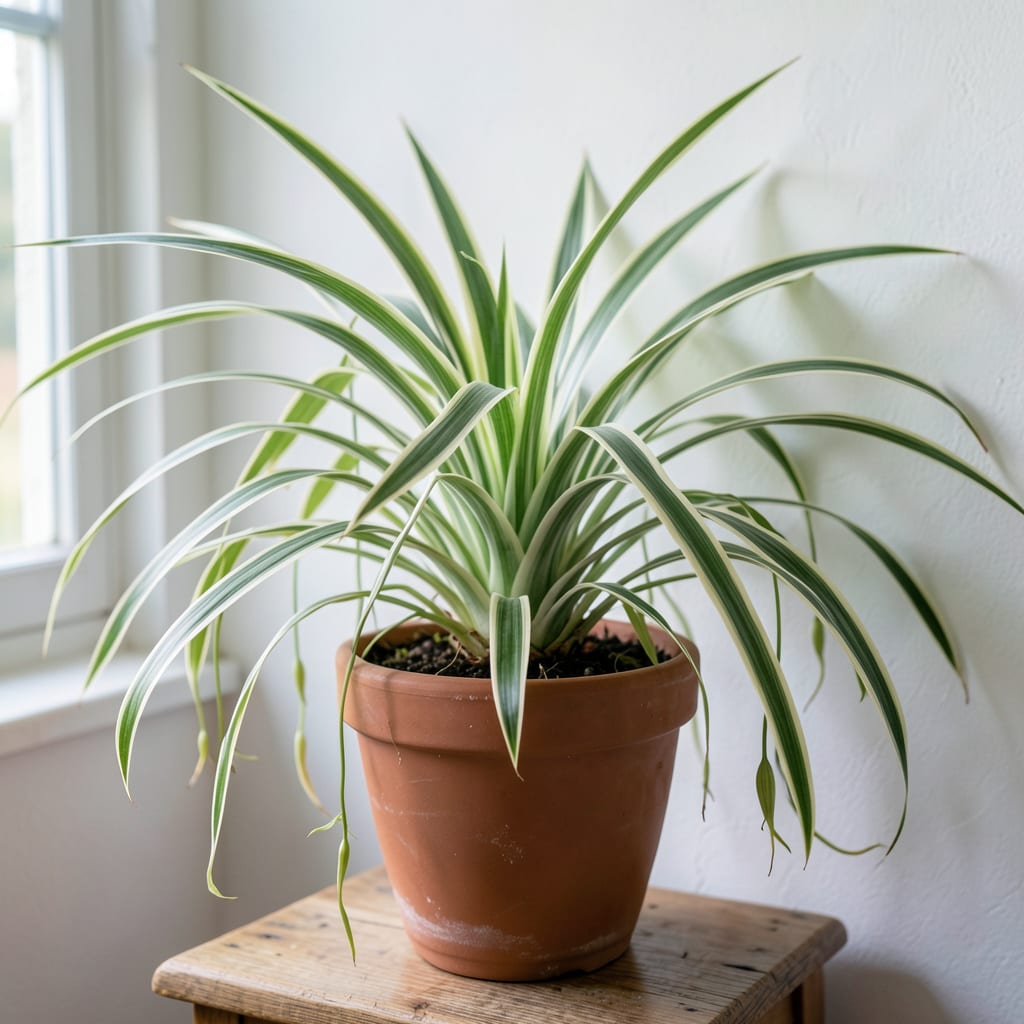
As I care for my Spider Plant 🌿, I’ve learned that getting its light requirements right is crucial for its health. Too little or too much light can affect its growth and beautiful cascading stems.
In this guide, I’ll share the optimal lighting conditions for your Spider Plant to thrive in USDA Zone 6, helping you create the perfect environment for it to flourish.


Spider plants are known for their adaptability to various light conditions, making them a popular choice for indoor gardening. I find that they can thrive in a range of light settings, from bright indirect light to low light conditions 🌿.
The key to understanding spider plant light tolerance is recognizing that while they can adapt to different light levels, their optimal growth occurs within specific lighting parameters. In my experience, providing the right amount of light is crucial for maintaining their health and promoting vigorous growth.
When it comes to light tolerance, spider plants are quite versatile. They can survive in low light conditions, although their growth may slow down, and they might lose some of their variegation. In bright indirect light, they thrive, producing more offsets and maintaining their attractive foliage.
I recommend placing spider plants near an east- or west-facing window to provide them with the ideal amount of bright, indirect light. This placement helps prevent direct sun exposure, which can cause leaf scorch 🔥.
It’s also worth noting that spider plants can adapt to fluorescent lighting, making them suitable for offices or rooms with limited natural light. However, their growth may not be as vigorous as they would in their optimal lighting conditions.
To ensure your spider plant receives the right amount of light, observe its response to the current lighting conditions. If the leaves appear leggy or pale, it may be a sign that the plant needs more light. Conversely, if the leaves show signs of scorching, it may be receiving too much direct sunlight 🌟.
By understanding and providing the appropriate light conditions, you can help your spider plant thrive and enjoy its beautiful, cascading stems for years to come.
In summary, spider plants can tolerate a range of light conditions, but they do best in bright, indirect light. By choosing the right location and monitoring the plant’s response, you can create an optimal environment for your spider plant to flourish.
For more specific guidance on caring for your spider plant, including tips on watering and fertilization, be sure to check out our other resources on spider plant care 🌱.
When it comes to spider plant care, understanding the optimal lighting conditions is crucial for promoting healthy growth and maintaining their signature cascading beauty 🌿.
Spider plants thrive in bright, indirect light, making them perfect for rooms with plenty of natural light. I recommend placing them near an east- or west-facing window to provide the ideal amount of light 🔥.
The key to optimal spider plant growth is providing 4-6 hours of bright, indirect light daily. This can be achieved by placing the plant near a suitable window or using supplemental lighting if necessary 🌟.
It’s also important to note that while spider plants can adapt to low light conditions, their growth may slow down, and they might lose some of their variegation. However, they can still survive in such conditions, making them versatile for different environments 🌱.
To ensure your spider plant receives the right amount of light, observe its response to the current lighting conditions. If the leaves appear leggy or pale, it may be a sign that the plant needs more light. Conversely, if the leaves show signs of scorching, it may be receiving too much direct sunlight 🔍.
By understanding and providing the appropriate light conditions, you can help your spider plant thrive and enjoy its beautiful, cascading stems for years to come.
For more specific guidance on caring for your spider plant, including tips on watering and fertilization, be sure to check out our other resources on spider plant care.
When caring for spider plants, it’s essential to be aware of common light-related issues that can affect their health and appearance 🌿.
One of the most frequent problems is leggy growth, which occurs when the plant doesn’t receive enough light. This can cause the stems to stretch and become weak, leading to an uneven appearance 🔍.
Too much direct sunlight can cause leaf scorch, leading to brown tips and damaged leaves. To prevent this, ensure your spider plant is placed in a spot with bright, indirect light 🔥.
On the other hand, too much direct sunlight can cause leaf scorch, resulting in brown tips and damaged leaves. To prevent this,
If you notice your spider plant is experiencing light-related issues, there are a few adjustments you can make. For leggy growth, try moving the plant to a brighter location or supplementing with grow lights 💡.
For leaf scorch, relocate the plant to a spot with filtered sunlight or use a sheer curtain to diffuse the light 🌟.
By being aware of these common light-related issues and taking steps to address them, you can help your spider plant thrive and maintain its beautiful, cascading stems 🌱.
For more tips on caring for your spider plant and addressing other potential issues, be sure to check out our other resources on spider plant care 🌿.
Spider plants thrive in bright, indirect light for 4-6 hours daily. Placing them near an east- or west-facing window is ideal. They can adapt to low light conditions but may lose some variegation and grow more slowly. Too much direct sunlight can cause leaf scorch .
Yes, spider plants can survive in low light conditions, although their growth may slow down and they might lose some variegation. They are versatile and can be used in rooms with limited natural light, making them suitable for offices or basements. However, they won’t produce as many offsets or maintain their full color .
If your spider plant is getting too little light, the leaves may appear leggy or pale. Conversely, if it’s receiving too much direct sunlight, the leaves may show signs of scorching, such as brown tips or discoloration. Adjust the plant’s location accordingly to provide optimal lighting conditions .
Yes, spider plants can thrive under fluorescent lighting, making them suitable for offices or rooms with limited natural light. You can also use grow lights to supplement natural light, especially during winter months or in low-light environments. This can help maintain their health and promote vigorous growth .
